The Source of the Loue
Original title: The Source of the Loue
kurzbeschreibung
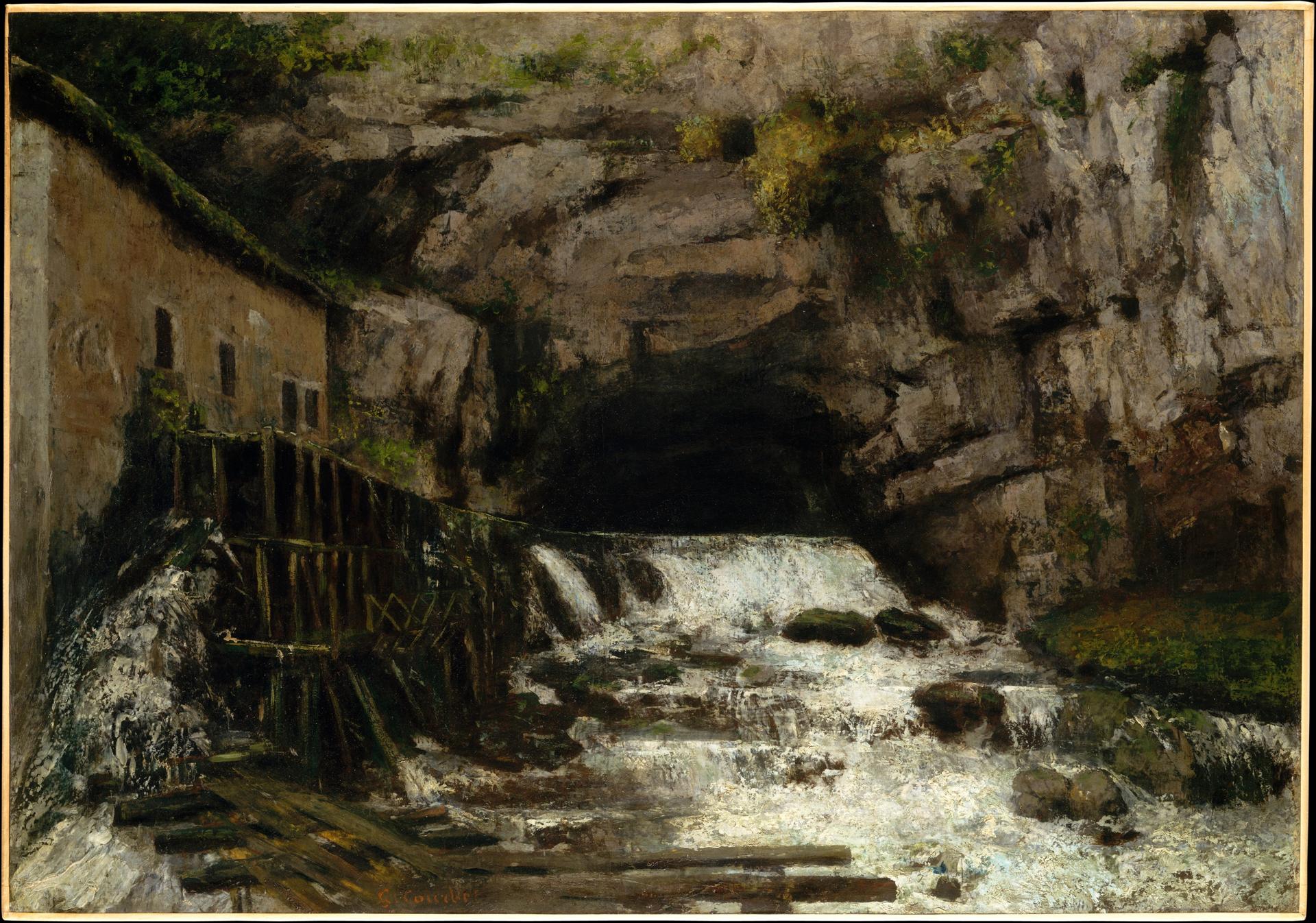
Gustave Courbet painted this oil on canvas in 1864, showing a waterfall beside an old mill in a rocky setting. The subject is the source of the Loue river in the Franche-Comté, treated as a naturalistic landscape study.
Description
A multi-tiered waterfall plunges into a deep gorge in the foreground. On the left rises an old mill with a large wooden waterwheel; the building, with its slanted roof, is covered in moss. A rock face behind is overgrown with trees and greenery. Greys, browns, greens and blues dominate the muted, natural palette. Light falling from above picks out the textures of stone and water.
Context
The painting belongs to a period when Courbet was deeply engaged with the landscapes of his native Franche-Comté. The source of the Loue recurs several times in his work; he made different versions of the theme. In those years the painter was moving away from strict realism toward a freer, naturalistic manner.
Impact
The precise rendering of rock and water gives the view an immediate, sensuous presence. A calm, earthbound mood emanates from it, inviting contemplation of a wild natural landscape that is not idealised.
Technique
Oil paint on canvas, applied thickly, models the surfaces of rock and water in relief. The colours are laid down in layers; contrasts of light and shadow create spatial depth.
AI-generated description text
Source: Metropolitan Museum of Art · Public Domain (CC0 1.0)