After the Hunt
Original title: After the Hunt
kurzbeschreibung
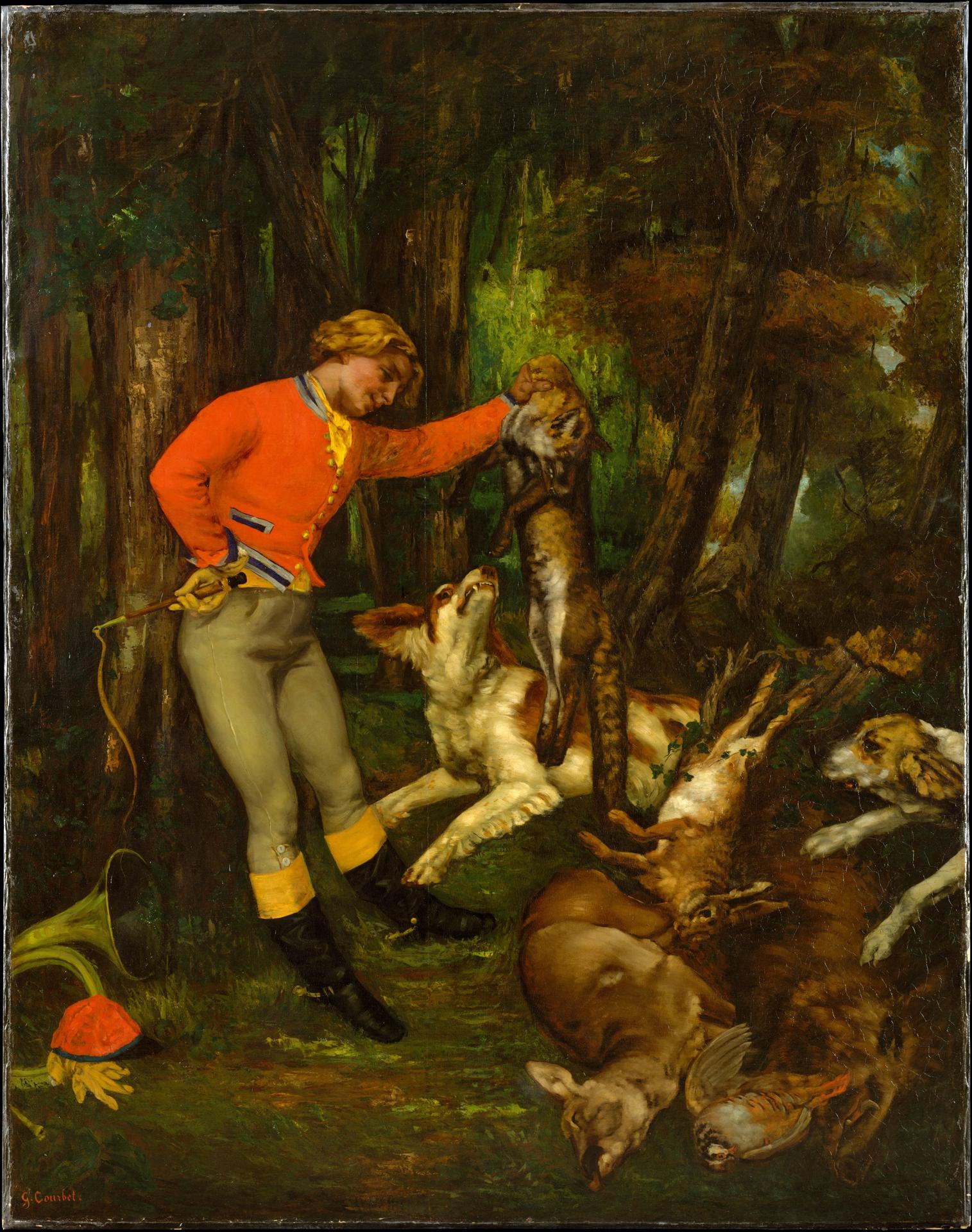
Painted in oil on canvas around 1859, Gustave Courbet's hunting scene presents a slice of nineteenth-century life. A hunter in an orange suit displays a deer hide; a dog looks up at him while fallen game rests in the foreground.
Description
A man in an orange hunting suit holds a deer hide in his hand, forming the still center of the scene. Beside him, a dog lifts its head and gazes up attentively. In the foreground, several dead deer and a rooster are laid out on the ground. Behind them stretches dense forest with dark trees and green undergrowth. Light falling from the left bathes the picture in warm, muted daylight.
Context
Created around 1859, the work belongs to a period when Courbet was deeply engaged with realistic depictions of rural life. Hunting subjects were highly popular in nineteenth-century French art, linking aristocratic tradition with closeness to nature. Courbet, who broke with academic conventions, presented the quarry without embellishment and directly.
Impact
The realistic rendering and lively, natural colors make the scene feel immediately present. Calm in the layout and warm light deepen the atmosphere, placing the viewer in the stillness of the forest after the hunt.
Technique
Oil on canvas, executed with vigorous brushstrokes and an earthy palette. The precise treatment of fur, feathers, and foliage demonstrates Courbet's technical skill and his commitment to naturalistic accuracy.
AI-generated description text
Source: Metropolitan Museum of Art · Public Domain (CC0 1.0)