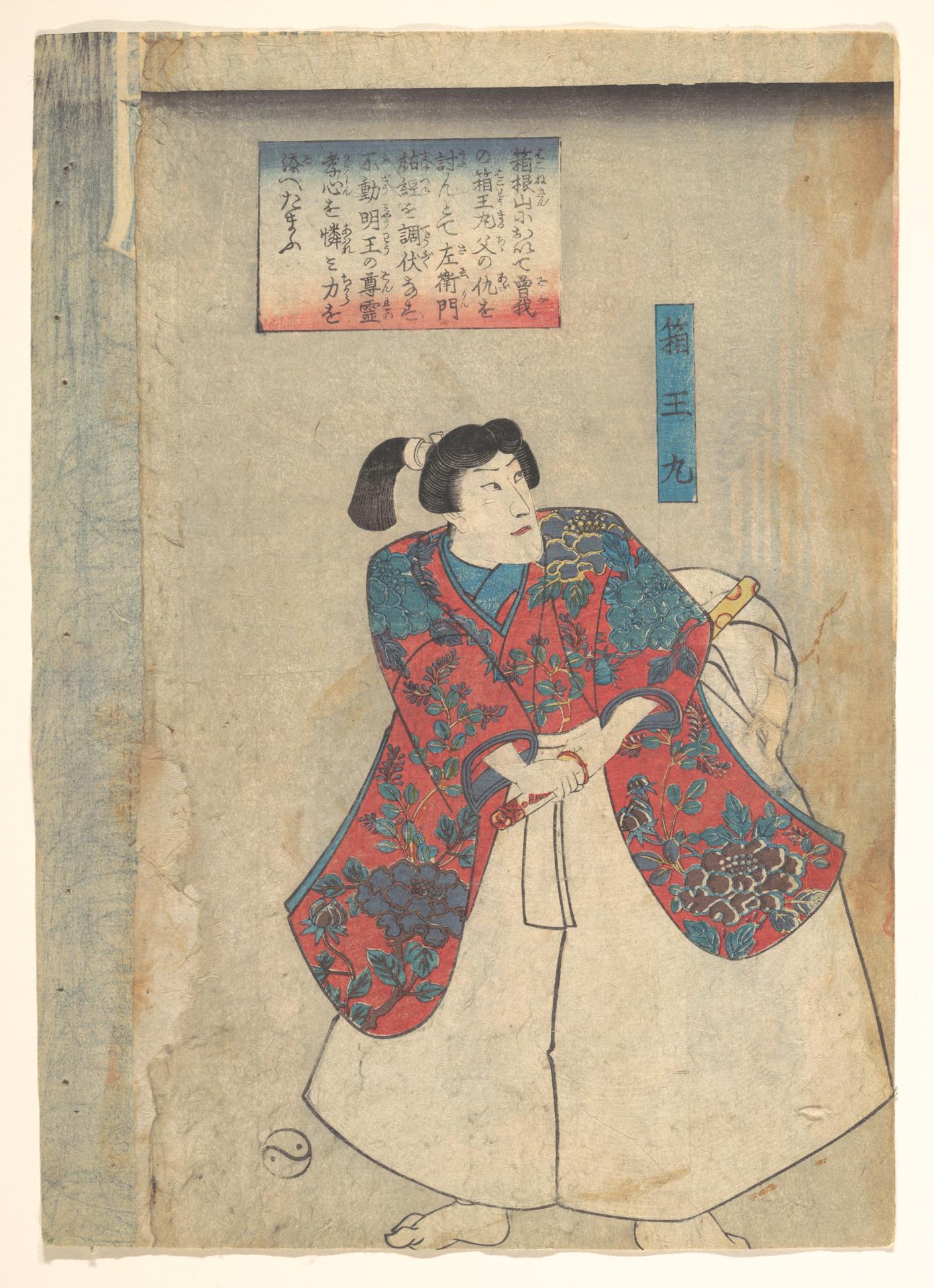
Hakoōmaru, Buyū chikara-gusa
Original title: Hakoōmaru, Buyū chikara-gusa
kurzbeschreibung
This nineteenth-century colour woodblock print by Utagawa Kuniyoshi shows a figure in traditional Japanese dress, identified as the hero Hakoōmaru from the series 'Buyū chikara-gusa'. Ink and colours are printed on paper.
Description
A red obi with blue floral patterns and a white underrobe distinguish the upright figure, who holds a sword in his right hand and wears his hair tied in a knot. At the upper left is a text box with Japanese characters; at the upper right, one reading '箱玉丸'. Red, blue and white dominate the colour scheme; the paper shows signs of age such as creases and stains. The lighting appears even, with no discernible shadows.
Context
Utagawa Kuniyoshi ranks among the outstanding woodblock artists of the Edo period and is known for depictions of heroes and historical figures. The series 'Buyū chikara-gusa' (Herbs of Strength) is devoted to famous warriors and their deeds. Hakoōmaru is a historical figure handed down in Japanese literature and theatre. The prints in this series were made in the first half of the nineteenth century, when woodblock printing in Japan flourished.
Impact
Clear lines and strong colours give the print a dynamic yet elegant presence. The upright posture and the sword reinforce the figure's heroic air, while the floral patterns add ornamental refinement. The layout feels balanced and harmonious, as is typical of Edo-period aesthetics.
Technique
Japanese colour printing used several woodblocks for the different colours. Printers applied ink and pigments to paper. Precise contours and even colour distribution attest to the high craftsmanship of the printing process.
AI-generated description text
Source: Metropolitan Museum of Art · Public Domain (CC0 1.0)