Yamauba Combing Her Hair with Kintarō
Original title: Yamauba Combing Her Hair with Kintarō
kurzbeschreibung
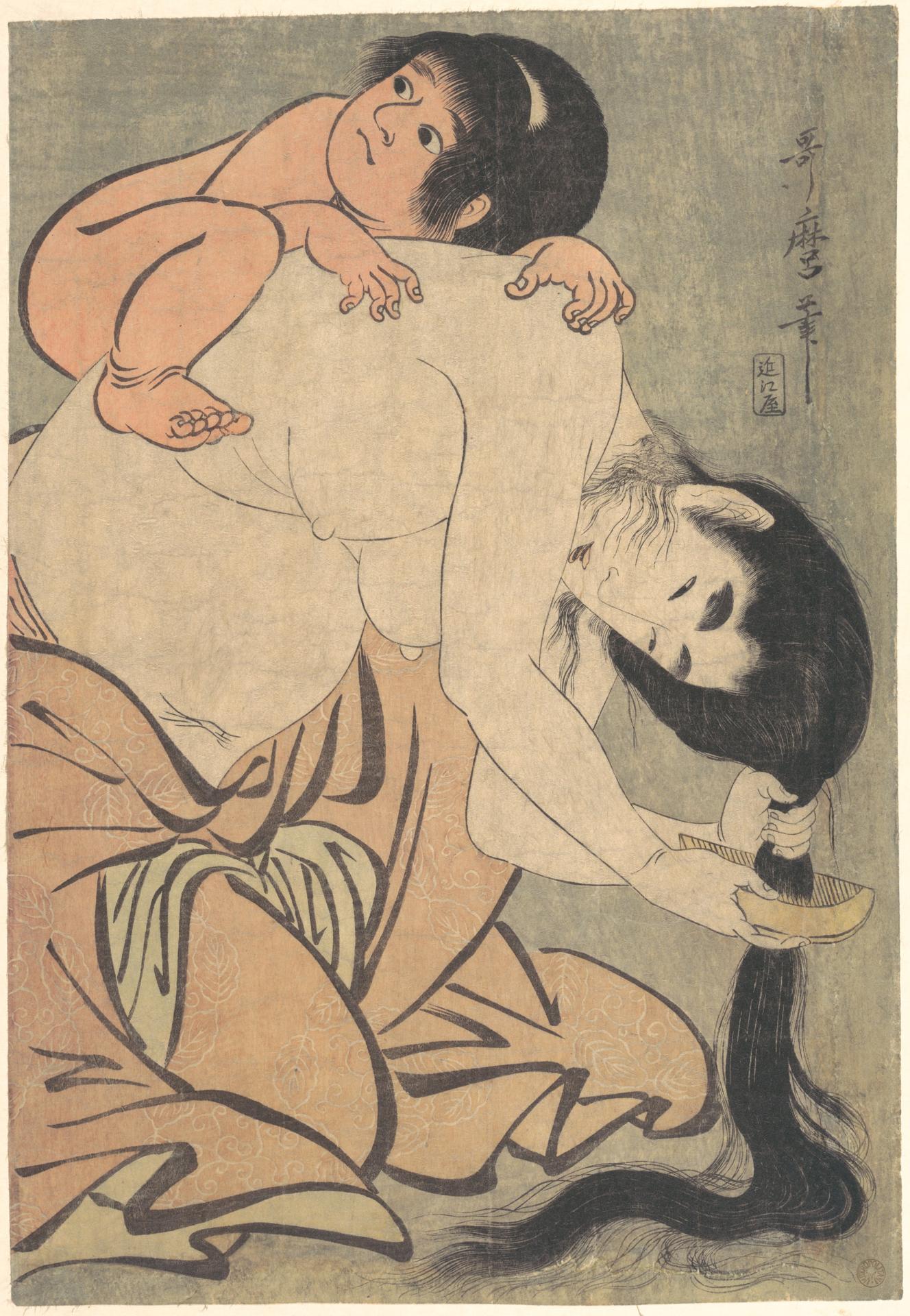
Around 1801, Kitagawa Utamaro made this nishiki-e woodblock print in ink and color on paper. It shows the mountain witch Yamauba combing her long black hair, with her son Kintarō perched on her back, reaching for her strands.
Description
A woman kneels on the ground, drawing a comb through her long black hair. A naked child sits astride her back, his hand touching the locks. Her robe carries a leaf-like pattern; the child's body looks muscular for his age. Earthy browns and blacks dominate the palette, with a few accents picking out the two figures. Even light without harsh shadows, typical of woodblock prints, draws the eye to the interplay between mother and child.
Context
In the late Edo period, when Japanese color woodblock printing had already reached great maturity, Utamaro turned to themes from folk legend. Yamauba, the mountain witch, and Kintarō, the legendary hero of superhuman strength, belong to the established repertoire of these tales. The pair was a popular subject in the art of the time and appeared in numerous variations.
Impact
The quiet, intimate encounter between mother and child comes across directly, yet the print's clear contours keep it at a certain distance. Earthy coloring and the absence of shading give the sheet a calm, almost timeless presence.
Technique
This nishiki-e used several woodblocks, each carrying its own color. That allowed delicate lines to be printed alongside flat areas of color, which here benefits above all the hair and the robe.
AI-generated description text
Source: Metropolitan Museum of Art · Public Domain (CC0 1.0)