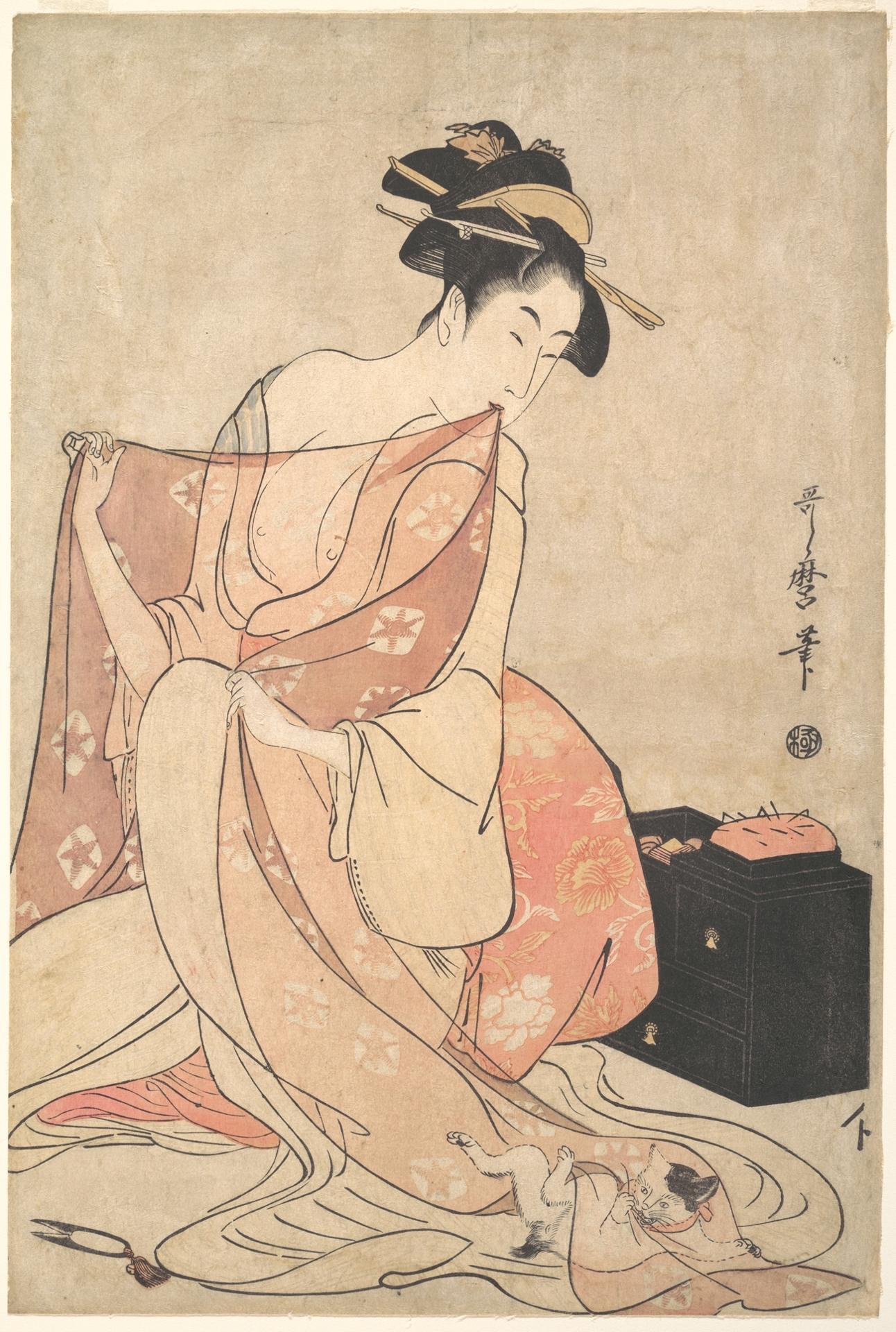
A Woman and a Cat
Original title: A Woman and a Cat
kurzbeschreibung
Kitagawa Utamaro made this sheet around 1793–94 as part of a triptych of woodblock prints in ink and color on paper. It shows a kneeling woman in traditional dress holding a kitten in her lap, while another animal has settled on a box beside her.
Description
The woman kneels at the center, a kitten resting in her lap. Her hair is swept up and ornamented in the traditional manner, and her kimono carries a floral pattern in pink and beige. A black box with a red lid stands to the side, and a second kitten sits on top of it. The colors stay mostly pastel, the light soft and even, the layout symmetrical. Crisp outlines and carefully observed textures define the style of the Japanese woodblock print.
Context
The sheet dates from the late Edo period, when ukiyo-e printing reached its height. Utamaro was known for pictures of women, often from the pleasure quarters, and for animal studies as well. The triptych to which this single sheet belongs probably showed everyday scenes with cats—a motif long popular in Japanese art. The dating around 1793–94 falls in Utamaro's most productive phase, when he produced numerous bijin-ga and genre pictures.
Impact
Soft pastel tones and the calm, symmetrical arrangement give the sheet a harmonious, intimate mood. The elegant female figure together with the playful kittens creates an atmosphere of tenderness and domestic idyll. Clear lines and precise textures lend the view a quiet, almost timeless grace.
Technique
This work, called nishiki-e, used several woodblocks, one for each color area. Ink and colors were printed on paper; fine lines and flat areas of color are typical of ukiyo-e. The careful execution speaks of the high craft standards of the printing workshops of the time.
AI-generated description text
Source: Metropolitan Museum of Art · Public Domain (CC0 1.0)