Thoroughbred Horse Walking
Original title: Thoroughbred Horse Walking
kurzbeschreibung
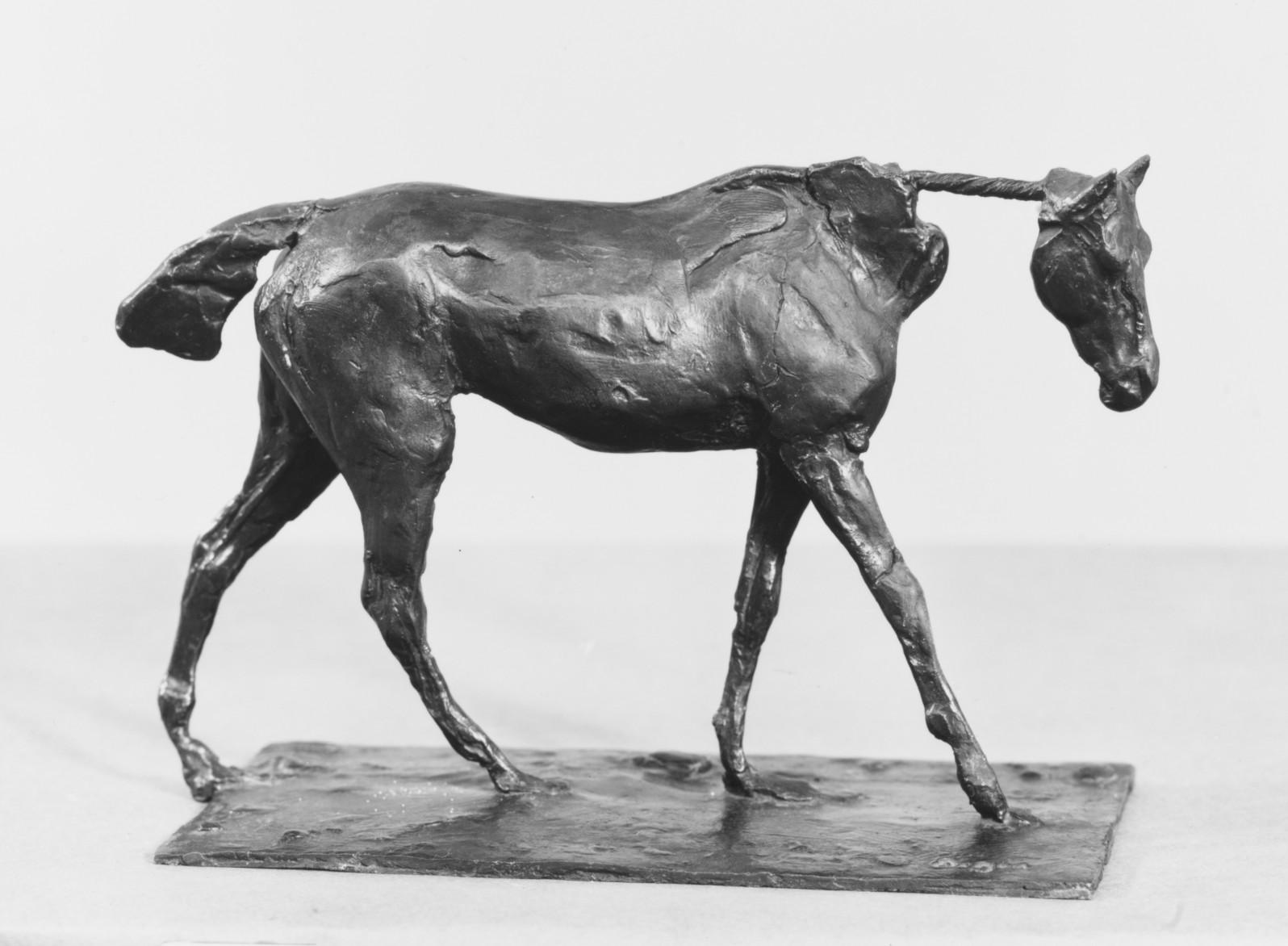
Edgar Degas modelled Vollblutpferd im Schritt (Thoroughbred Horse Walking) before 1881; the bronze cast followed in 1920. The animal is caught in dynamic movement and belongs to Degas's long engagement with the subject of horse racing.
Description
Seen from the side, the horse lowers its head slightly, the neck curving back in a flowing line. The hindquarters are lifted a little, the legs held in a movement that conveys speed and power. Light wear and scratches mark the bronze surface, betraying the interval between modelling and casting. A flat, rectangular base supports the figure and gives it stability.
Context
The sculpture was made in the late 1870s, when Degas was studying horse racing and the rendering of movement in depth. The wax model was cast in bronze only after his death in 1917, which explains the 1920 date of the cast. Degas's horse sculptures were not intended for public display but served as studies for paintings and drawings.
Impact
The statue radiates an immediate liveliness and dynamism that draws the viewer into the instant of movement. The rough surface and traces of modelling give the work a tactile presence that recalls the artist's working process.
Technique
Modelled in wax, the later bronze cast was made after Degas's death by his founder. Clear traces of the original wax modelling survive on the bronze, including fingerprints and marks of modelling tools.
AI-generated description text
Source: Metropolitan Museum of Art · Public Domain (CC0 1.0)