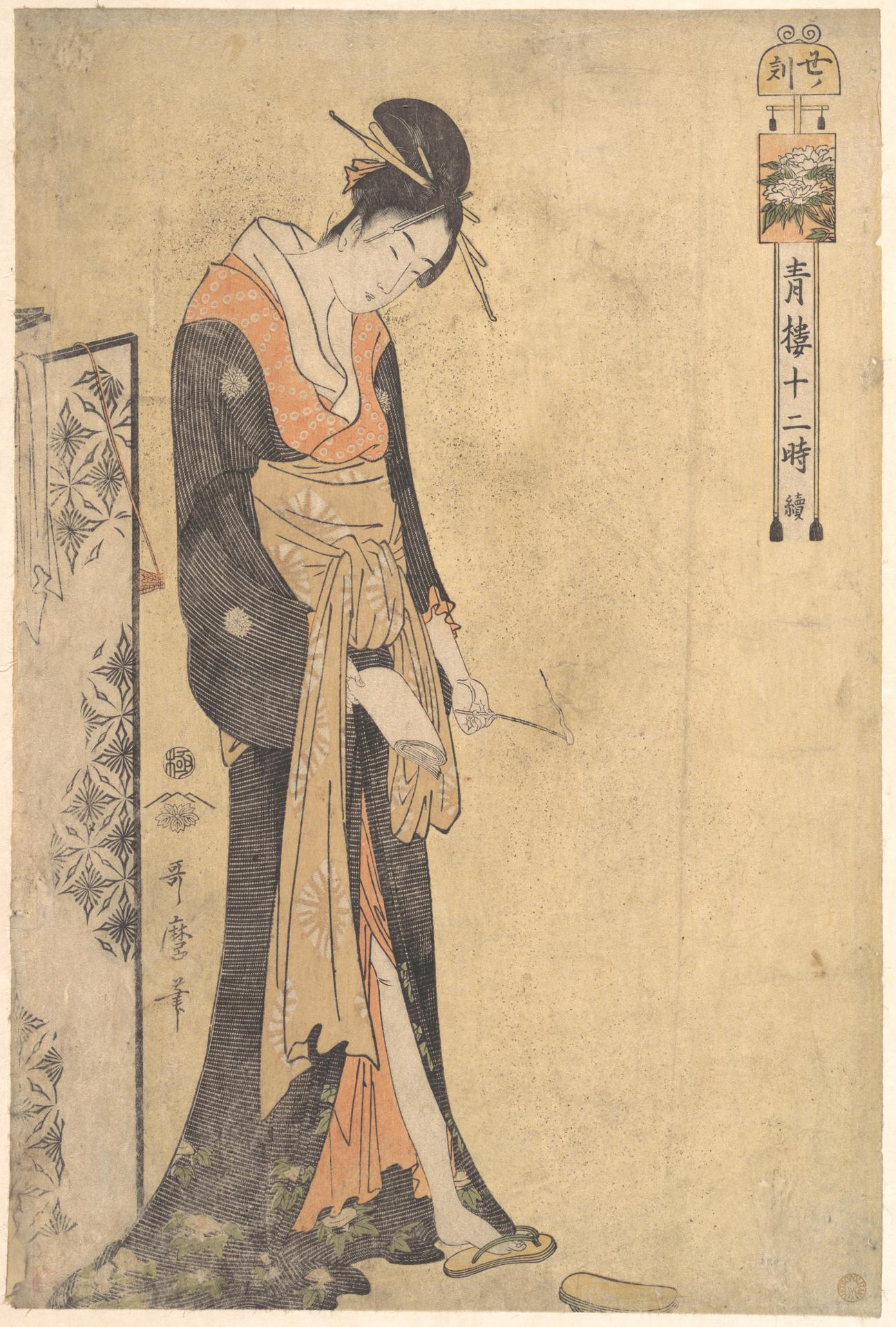
The Hour of the Ox (1 A.M.–3 A.M.)
Original title: The Hour of the Ox (1 A.M.–3 A.M.)
kurzbeschreibung
Kitagawa Utamaro's woodblock print "The Hour of the Ox (1–3 a.m.)" dates from around 1794. It shows a woman in a patterned kimono, calmly holding a fan in her hand. The print was made with ink and color on paper and measures approximately 37.1 × 24.4 cm.
Description
A kimono decorated with flowers and leaves dresses the figure; a sash is tied around her waist, and her hair is styled high and adorned with ornaments. The fan rests in her hand. A decorative border of leaves and flowers frames the image, with a small cartouche at upper right containing a flower and Chinese characters, and two shoes at lower right. Earth tones and blues dominate the palette, with accents of orange and white; the light brings out the contours of the figure and the surrounding space.
Context
During the Edo period, Japanese color woodblock printing (nishiki-e) reached its peak, and this print by Utamaro belongs to that phase. It comes from a series treating the hours of the day—a popular ukiyo-e subject that draws on scenes from the pleasure quarters and everyday life. Showing a woman in a domestic, familiar setting matched Utamaro's interest in the female ideal of his time.
Impact
A quiet, almost intimate mood emanates from the print, carried by even light and clear, sharp contours. The muted colors and ornamental framing give the work a decorative elegance that draws the eye to the careful linework and the calm presence of the figure.
Technique
The print was produced as a woodblock print, with water-based pigments printed on paper. Multicolor printing (nishiki-e) allowed for fine gradations and precise patterns, as seen in the kimono and the surrounding space. Sharp outline lines were created using key blocks integrated into the printing process.
AI-generated description text
Source: Metropolitan Museum of Art · Public Domain (CC0 1.0)