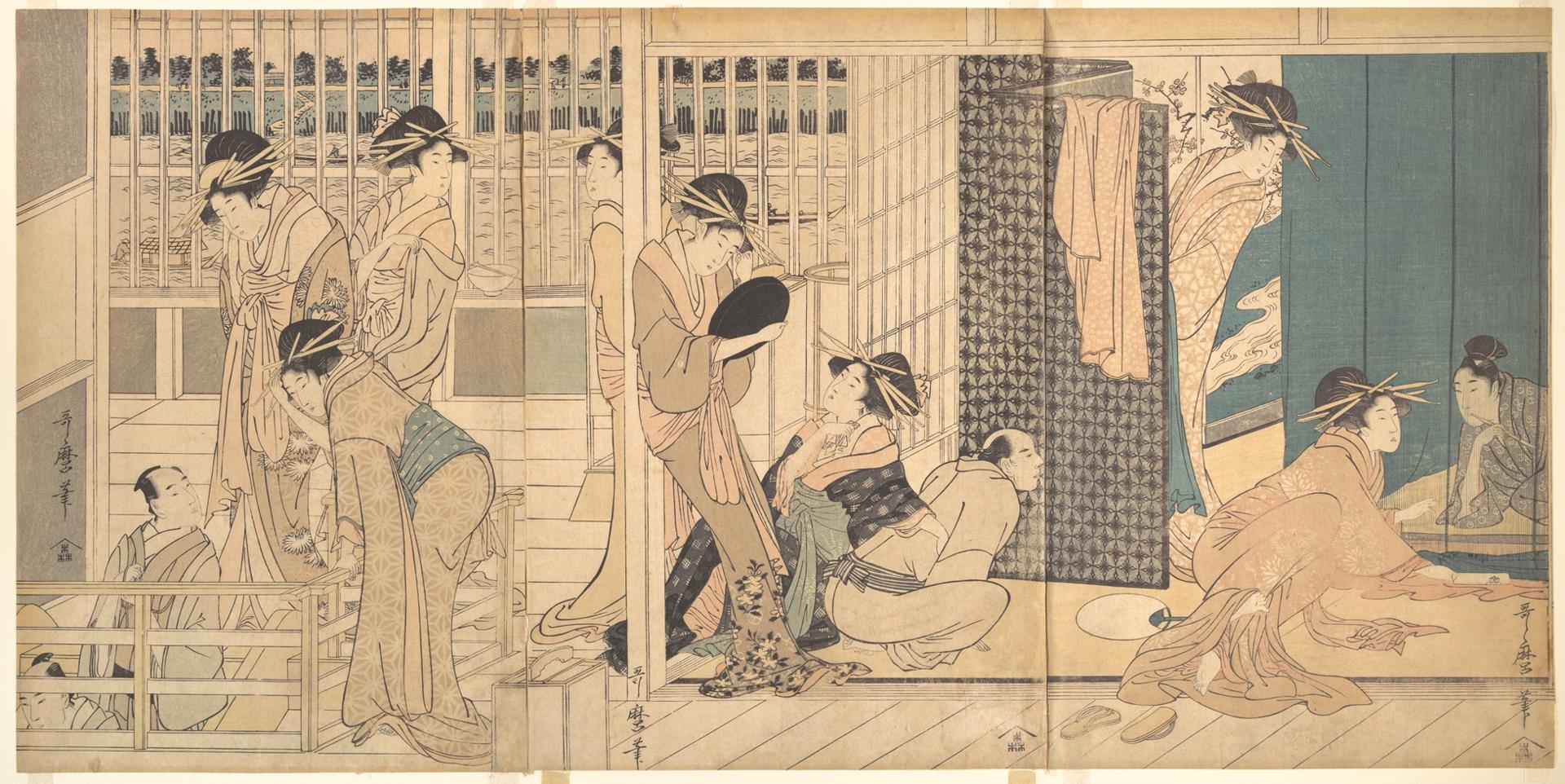
Scene in the Yoshiwara
Original title: Scene in the Yoshiwara
kurzbeschreibung
A triptych of woodblock prints by Kitagawa Utamaro, dated 1790, depicts a group of figures in traditional Japanese dress inside a room with shoji doors and tatami mats. The setting is Edo's famous pleasure district, Yoshiwara. The work is executed in ink and color on paper.
Description
Several people in traditional Japanese garments occupy a room with shoji doors and a tatami floor. Some stand, others sit or kneel; a few wear traditional hair ornaments and richly decorated robes. The palette is mostly earth tones, with accents of blue and orange. Light entering from outside bathes the scene in a warm, diffuse glow. The layout runs horizontally, arranging the figures from left to right.
Context
Created in 1790 during the late Edo period, when ukiyo-e prints were widespread in Japan. Utamaro was known for his portrayals of women, especially courtesans and beauties of the Yoshiwara pleasure district. The prints were produced as a triptych, a common format at the time for multi-part scenes. The depiction of Yoshiwara reflects the era's cultural fascination with the pleasure district.
Impact
Precise linework and clear colors create a calm, almost intimate atmosphere that draws the viewer into the scene. The warm lighting and relaxed poses of the figures convey a quiet, everyday moment typical of Utamaro's style.
Technique
For the triptych of woodblock prints, ink and colors were applied to paper. In this ukiyo-e technique, a separate block had to be made for each color and precisely aligned. The clear linework and flat areas of color are characteristic of this traditional Japanese printing method.
AI-generated description text
Source: Metropolitan Museum of Art · Public Domain (CC0 1.0)