Horse with Head Lowered
Original title: Horse with Head Lowered
kurzbeschreibung
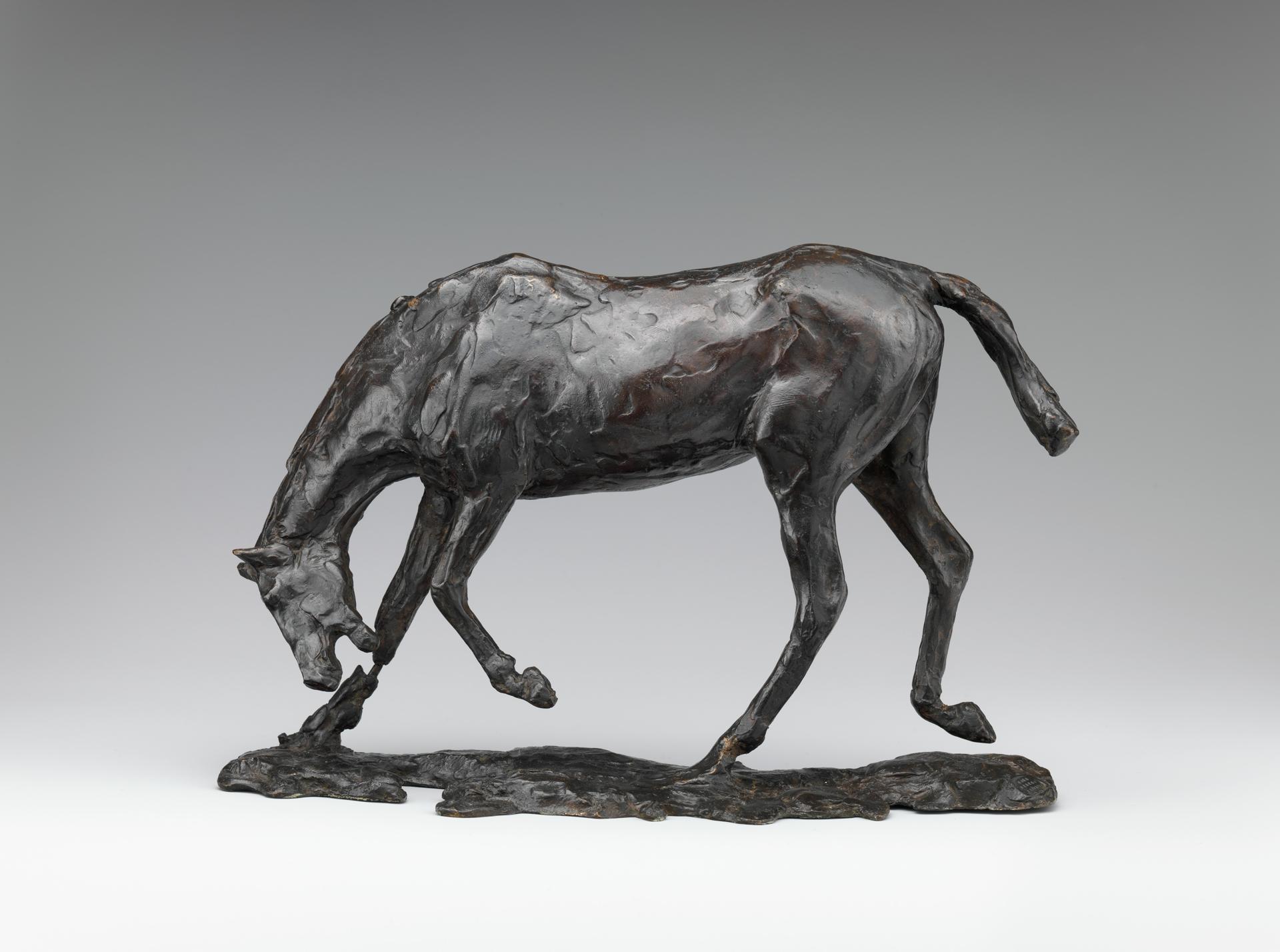
Edgar Degas modeled this horse with lowered head probably between 1883 and 1890; the bronze cast was made in 1920. The animal stands in a quiet, self-contained pose: on a flat, gently undulating base, its head deeply lowered and its gaze directed downward.
Description
A horse stands on a flat, softly uneven surface, its head bowed. The legs are in a natural, slightly bent stance that conveys both rest and latent movement. Muscles and grooves are clearly defined, bringing out the animal's physique. The bronze ranges from dark brown to almost black—a sign of mature patina. Raking light from the side emphasizes contours and surface textures, enhancing the spatial depth of the view.
Context
During those years Degas was deeply engaged with equine subjects, often inspired by scenes at the racetrack. The cast was made only after his death—a common practice for his wax sculptures, since he worked in wax and clay and the transfer to bronze occurred posthumously. The exact dating of the model remains uncertain; scholars assume it was created in the 1880s.
Impact
The horse's calm, familiar posture appeals directly and radiates a quiet composure. The nuanced surface and dark patina give the work a physical immediacy that draws the viewer close.
Technique
The bronze was cast using the lost-wax method. Fine surface structures with visible muscle areas and grooves point to the precise execution of the original wax model. The natural patina formed through oxidation of the bronze surface.
AI-generated description text
Source: Metropolitan Museum of Art · Public Domain (CC0 1.0)