Study of a Mustang
Original title: Study of a Mustang
kurzbeschreibung
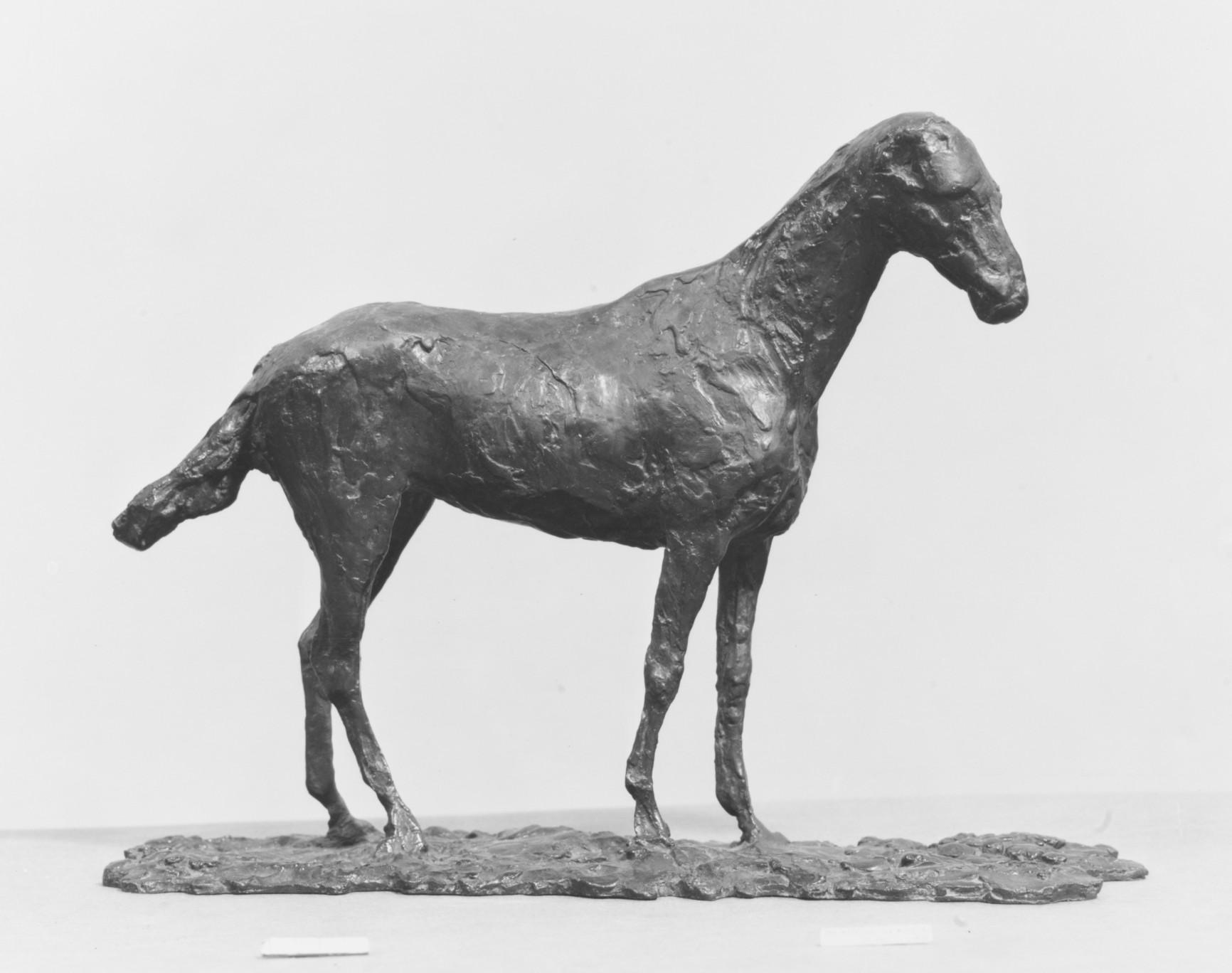
A mustang with its hind leg raised high and neck stretched far forward: Edgar Degas's bronze sculpture 'Study of a Mustang' was probably modeled before 1865 and cast in bronze in 1920. The animal stands on an irregular base.
Description
A horse on a flat, uneven ground shifts into a dynamic pose: one hind leg lifted, the neck extended long forward. The base feels like a piece of natural terrain. The bronze shows a uniform color with slight textures that trace the body forms of the mustang. Even light without hard shadows brings out the sculptural details clearly. The layout focuses entirely on the animal, with no other elements.
Context
The study was likely made before 1865, when Degas was deeply engaged with equine motifs. The bronze cast was only made in 1920, long after the artist's death, which shows the late reception of his sculptural work. Degas was known for his precise observation of movement, also evident in his paintings and drawings of horse races.
Impact
The dynamic pose and realistic rendering give the sculpture strength and liveliness. The even lighting and textured surface highlight the anatomical accuracy and the horse's energy, drawing the viewer in.
Technique
Cast in bronze, a material valued for durability and detail. The surface has slight textures from the casting process that emphasize the horse's muscle structure. Mounting on an irregular base enhances the natural impression.
AI-generated description text
Source: Metropolitan Museum of Art · Public Domain (CC0 1.0)