The Apple Pickers
Original title: The Apple Pickers
kurzbeschreibung
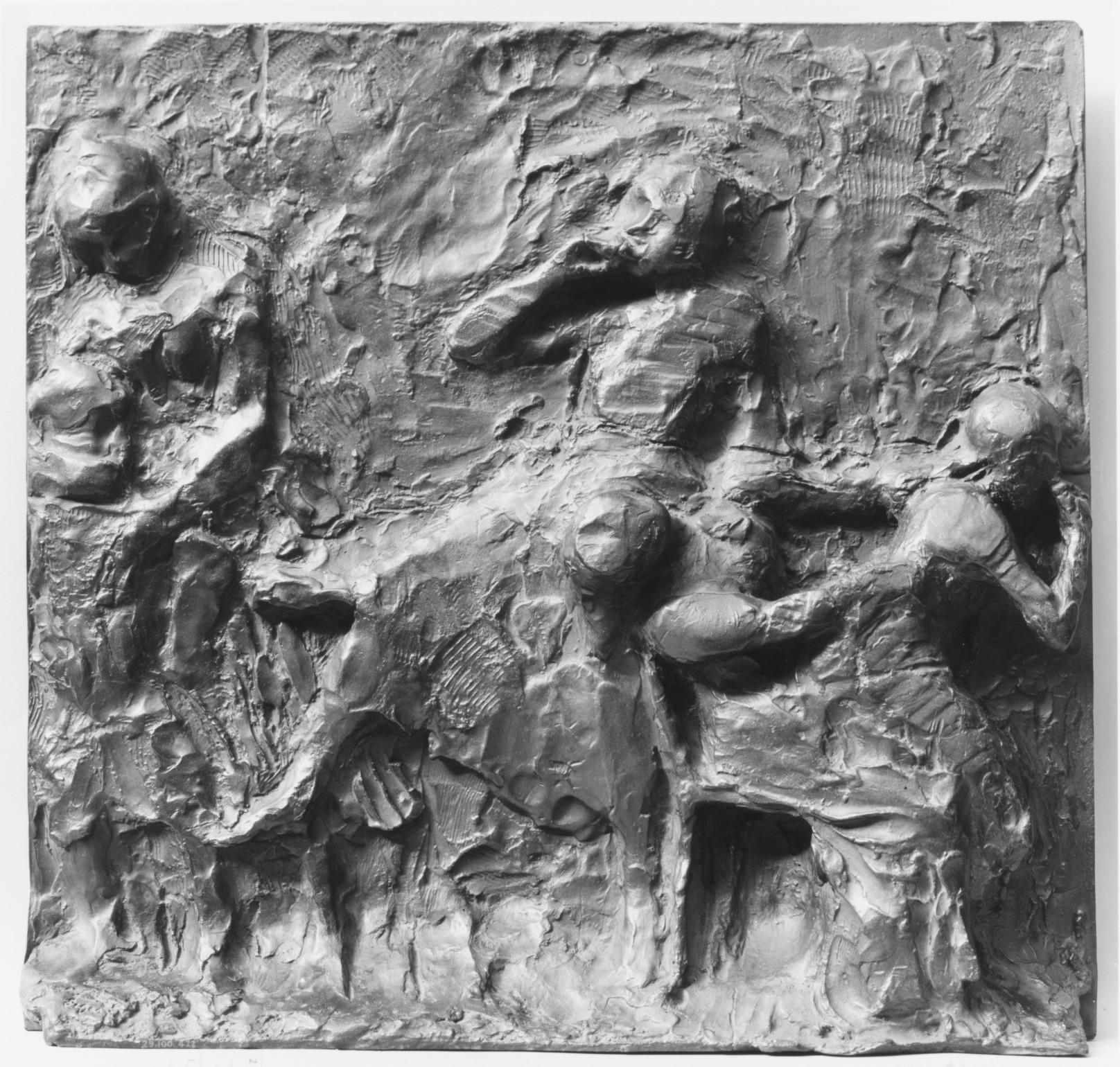
Edgar Degas modeled the Apple Pickers in wax around 1881–83, and it was cast in bronze only in 1920. This relief brings together several figures in a natural setting, each caught in a lively, animated pose. Degas's engagement with scenes of labor and bodily movement is evident here, as is his interest in translating such themes into material form.
Description
Across the bronze surface, a relief-like arrangement of several figures appears, set within a naturalistic landscape. Their varied stances and gestures suggest a scene of physical work. The relief technique makes the figures stand out sculpturally, while the bronze surface is roughened and textured. A uniform gray runs throughout, though it shifts with the changing texture. Light falls on the work without striking shadows, creating an impression of calm, unmoving reproduction.
Context
This work belongs to a period when Degas was closely studying the human body and its movements. It was modeled around 1881–83, and the cast was made in 1920, after the artist's death. Working people increasingly entered the focus of art in the late nineteenth century. Degas was known for his experiments with different materials and processes, including wax and bronze.
Impact
The animated poses and textured surface make the sculpture seem alive and rich in detail. At the same time, the uniform gray tone and even lighting give it a calm, almost static presence. The realistic style and precise execution encourage viewers to engage with the scene of labor depicted.
Technique
The sculpture was made of bronze, a material valued for its durability and its ability to capture detail. The relief technique separates the figures from the background and produces a textured appearance. The 1920 cast is thought to derive from a wax model by Degas.
AI-generated description text
Source: Metropolitan Museum of Art · Public Domain (CC0 1.0)