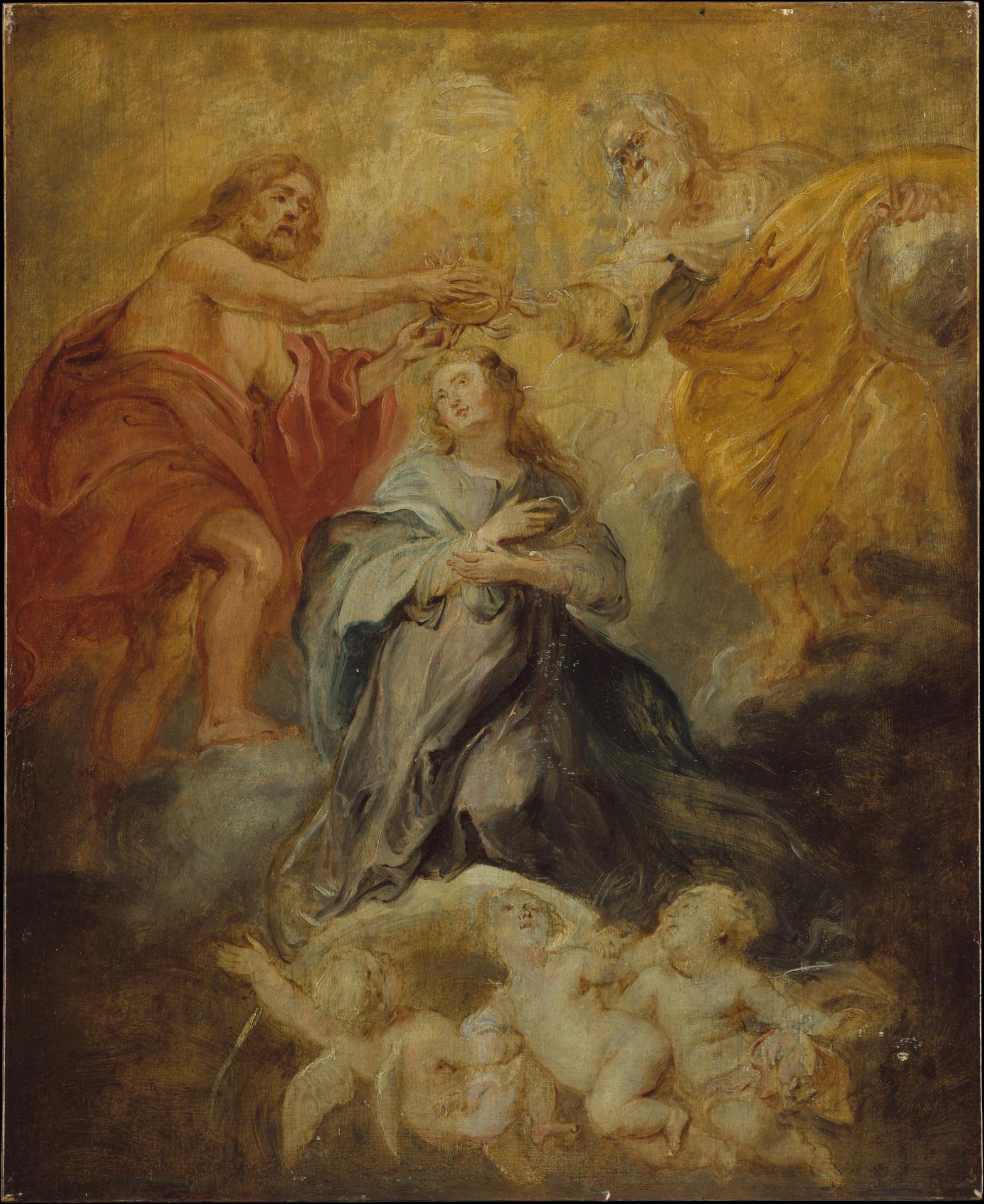
The Coronation of the Virgin
Original title: The Coronation of the Virgin
kurzbeschreibung
Peter Paul Rubens painted The Coronation of the Virgin Mary around 1632–33. The picture presents Mary being crowned by Christ and an angel. Executed in oil on wood, it measures 49.8 x 40.6 cm. It belongs to Rubens's religious output in the Baroque period.
Description
Three angels dominate the foreground in dynamic, flowing poses. On the right, an angel places the crown on Mary's head, while on the left another angel holds her hand. Behind them appears Christ in a red robe, handing over the crown. Warm gold and red tones define the palette, interspersed with soft light. The layout thrives on gesturing hands and billowing drapery.
Context
Created in the 1630s, when Rubens was active as a court painter and diplomat. The Coronation of the Virgin was a widespread motif in the Catholic Counter-Reformation. The painting may have served as a devotional image or for a private patron. Today it is kept in the Metropolitan Museum of Art.
Impact
The animated arrangement and bright light evoke a solemn, sublime mood. The warmth of the colors and the liveliness of the figures give the image a strong emotional appeal. The viewer feels drawn into the heavenly event.
Technique
Oil on wood allows for fine details and luminous colors. Rubens used chiaroscuro to create contrasts of light and shadow and to heighten the drama. Flowing brushstrokes and glazing technique are characteristic of his style.
AI-generated description text
Source: Metropolitan Museum of Art · Public Domain (CC0 1.0)