Les Invisibles (The Invisible Ones)
Original title: Les Invisibles (The Invisible Ones)
kurzbeschreibung
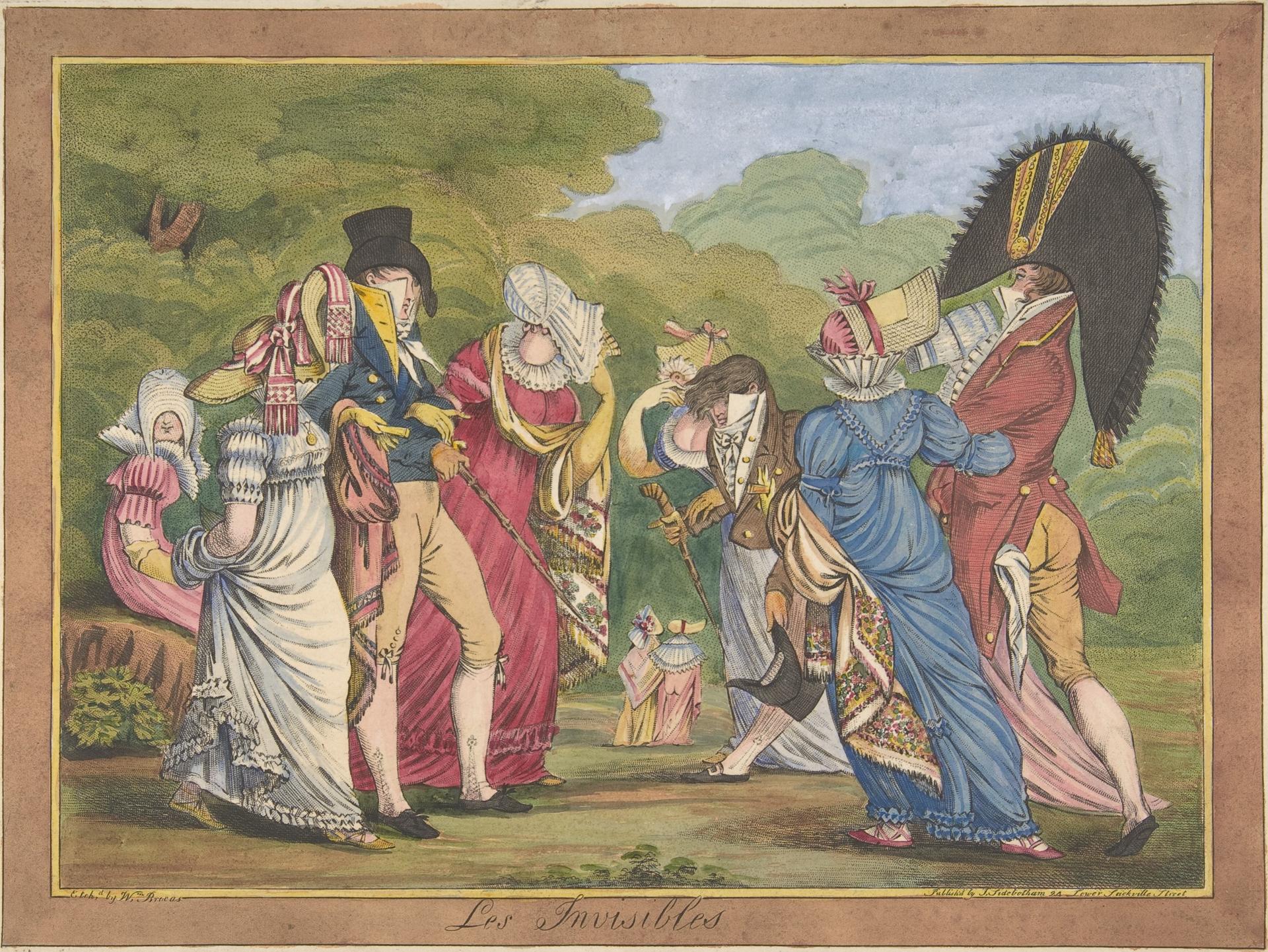
Made in 1810, William Brocas's hand-coloured etching with roulette brings together a crowd of people in a park or garden under the title "Die Unsichtbaren". The brightly coloured scene, filled with numerous figures, displays the fashions and social bustle of the period around 1810 and captures a range of encounters.
Description
People dressed in the styles of around 1810 fill a park or garden. One figure appears in uniform, a large plume adorning his hat; other figures are spread across the scene in varied poses, some in conversation, others in dispute. The clothing looks colourful and rich in embroidery and ornament. Trees and a clear sky close off the top. Strong colours, even light and a grouping of figures towards the middle of the picture shape the layout.
Context
Brocas, who worked as a painter and printmaker in Ireland, issued this sheet there in 1810. Etching with roulette followed by hand-colouring was a common method at the time for giving prints colour in small editions. The subject of a park society probably draws on the social life of the middle and upper classes in the early nineteenth century; the title "Die Unsichtbaren" suggests a satirical or socially critical intent. Brocas is best known for genre scenes and portraits.
Impact
The strong colours and the precise rendering of the figures give the sheet a lively and at the same time amusing presence. Even lighting and a clear arrangement produce a calm, almost stage-like quality that invites close looking.
Technique
For this etching the plate was worked with a roulette to obtain fine lines and tonal gradations. Colouring by hand followed, so that each coloured version has its own character. The sheet, printed on paper, measures 23.6 x 32.7 cm.
AI-generated description text
Source: Metropolitan Museum of Art · Public Domain (CC0 1.0)