Dr. Syntax with a Balky Horse Before an Inn
Original title: Dr. Syntax with a Balky Horse Before an Inn
kurzbeschreibung
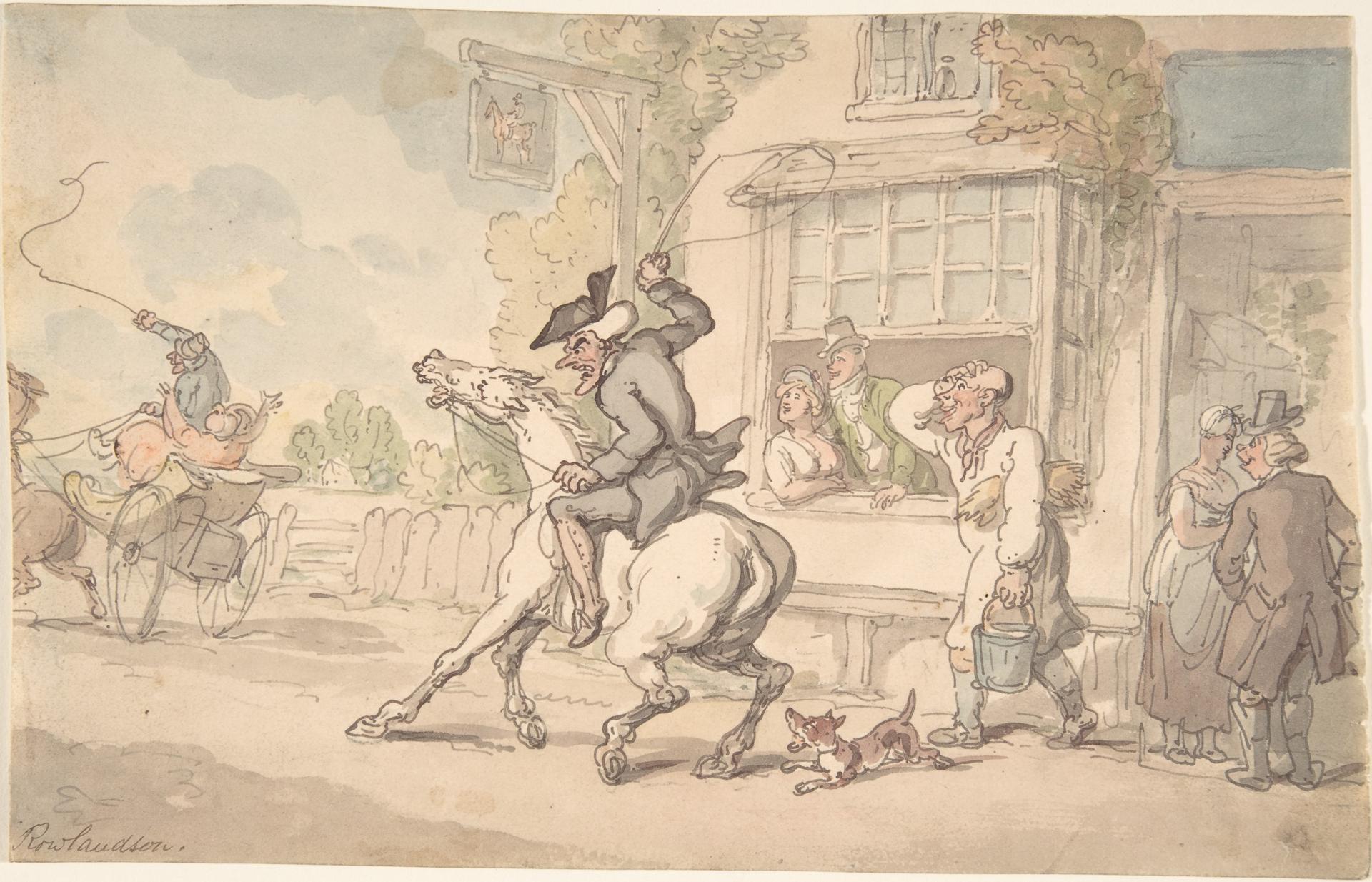
A white horse with its rider swinging a whip stands outside a country inn. In the saddle sits Dr. Syntax, the central figure of a popular satirical picture story. Thomas Rowlandson made this sheet in pen, ink and watercolor, in the late eighteenth or early nineteenth century. The horizontal format pairs a comic narrative with a lively account of the landscape.
Description
Up front a man rides a white horse, the animal's legs set to suggest movement. The rider wears a dark coat, trousers and hat, a whip in his hand. Behind him rises an inn with a sign showing a horse; several people watch from the window. A dog lies on the ground in the foreground, while a person with a bucket stands near the building. The arrangement draws the eye to the rider, and the figures behind are drawn with less detail.
Context
The sheet belongs to Rowlandson's series on Dr. Syntax, an invented character from William Combe's comic poem 'The Tour of Doctor Syntax in Search of the Picturesque' (1812). With the series the artist parodied the taste of the day for picturesque travel and the rising tourist trade. Rowlandson supplied the illustrations for the successful book series, which went through several editions.
Impact
Precise drawing and soft watercolor washes give the scene something lively and storytelling at once. The horse's slight restlessness and the curious looks of the inn's guests create a humorous tension of the kind that marks Rowlandson's satirical eye.
Technique
Pen and ink plus watercolor form the basis of the sheet, a combination typical of Rowlandson. Flowing lines define the figures, while the colors are laid on in gentle tones with blue and gray shades behind. The result is both quick, spontaneous effect and detailed characterization.
AI-generated description text
Source: Metropolitan Museum of Art · Public Domain (CC0 1.0)