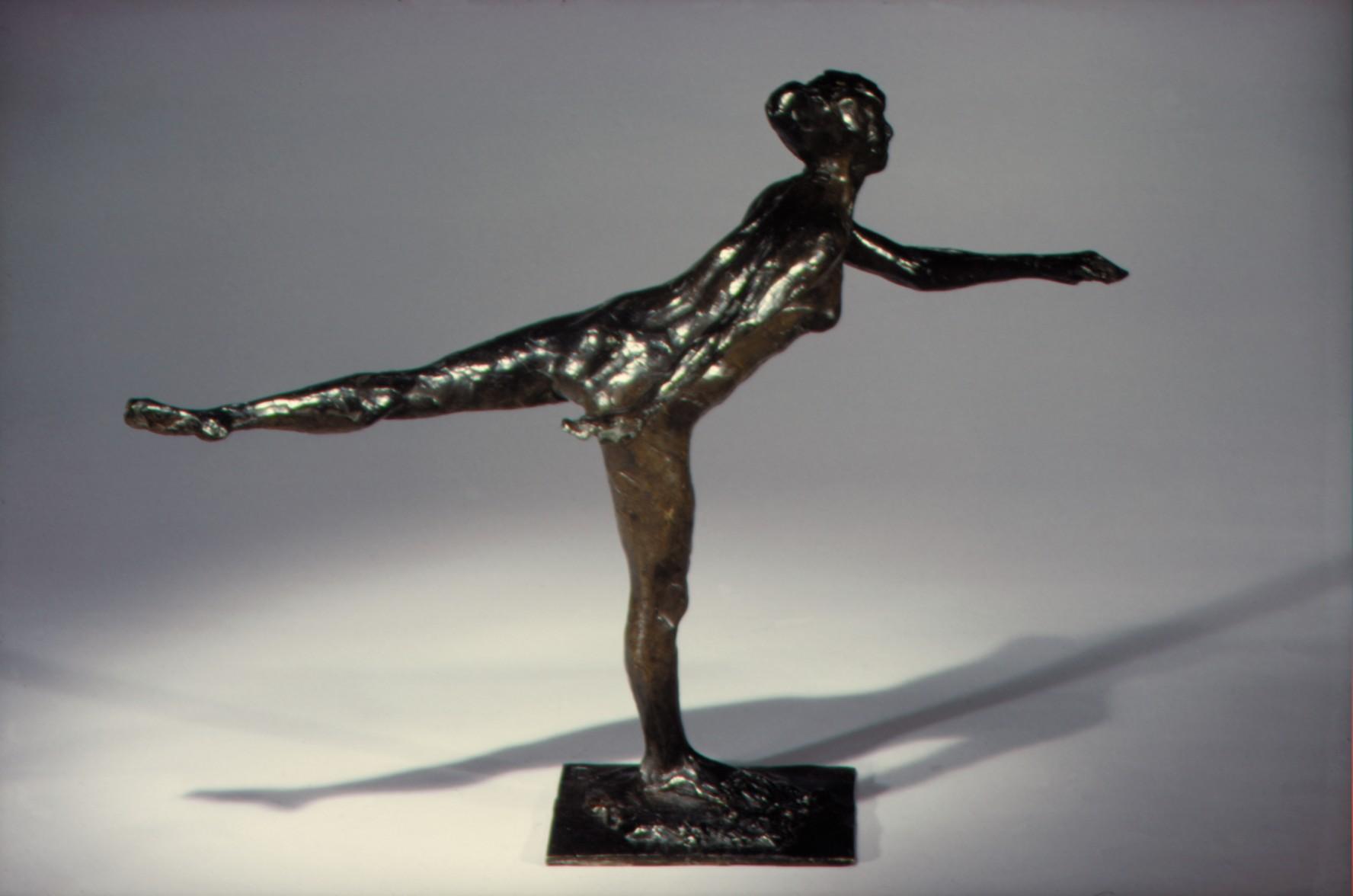
Second Arabesque (modeled before 1885, cast 1920, Met-Objekt 420)
Original title: Second Arabesque
kurzbeschreibung
Edgar Degas created the "Second Arabesque" as part of his series of dancer sculptures. The model was made before 1885, and the bronze cast followed in 1920. The statue shows a ballerina in a graceful dance pose.
Description
The ballerina stands on a square base. Her arms are spread, one leg extended backward, the other slightly lifted. Light falls from the left, making the bronze gleam, while a shadow forms on the right. The arrangement feels dynamic and underscores the grace of the dance.
Context
Degas modeled the figure before 1885; the cast was made posthumously in 1920. The artist often devoted himself to the theme of dance, both in paintings and sculptures. The arabesque is a classical ballet pose that recurs in his oeuvre.
Impact
The statue radiates an elegant lightness typical of Degas's dancers. Light and shadow on the bronze emphasize its plasticity and make the figure appear alive.
Technique
The bronze sculpture was made from a wax model using the lost-wax casting method, which preserved fine surface details. A natural patina covers the bronze and is highlighted by the reflections of light.
AI-generated description text
Source: Metropolitan Museum of Art · Public Domain (CC0 1.0)