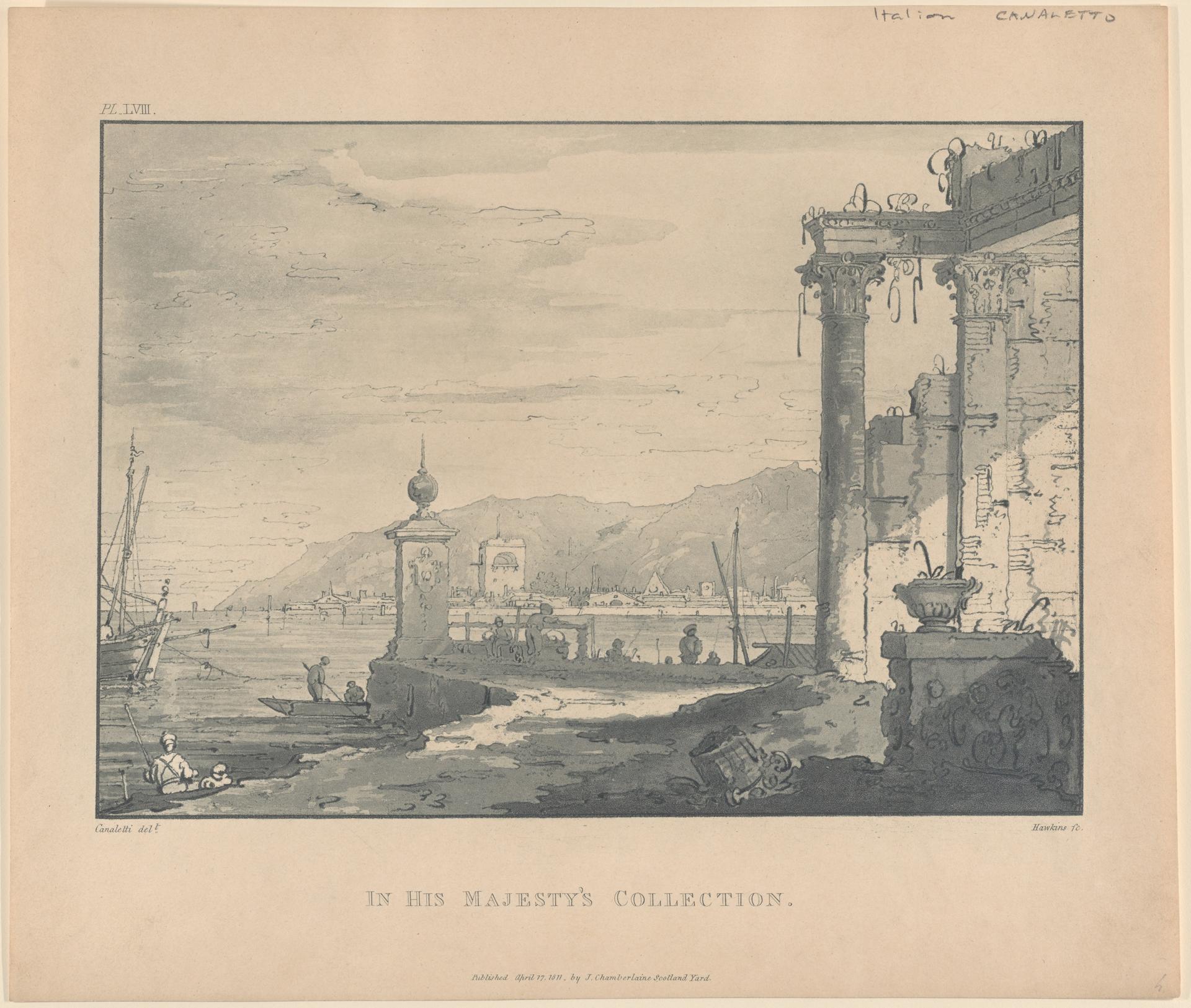
A coastal scene with a classical ruin at right
Original title: A coastal scene with a classical ruin at right
kurzbeschreibung
George Hawkins the elder produced this etching and aquatint in 1811, a coastal view measuring 19.7 × 28 cm. A classical ruin rises in the right foreground, while boats and a number of figures are scattered along the water. Mountains climb behind, and a monumental building emerges among them. The plate was printed in dark blue tones.
Description
At the right front, the remains of an ancient structure catch the eye first. Boats and people bring the left shore to life. Mountains close off the distance, with a large building standing before them. The layout stretches wide across the sheet, which reinforces the openness of the landscape. Dark blues make the light feel soft and undetermined, giving the view a calm underlying tone.
Context
Hawkins worked as a British artist around 1800, and this sheet dates from 1811, a period when views and landscape prospects were in demand in British art. Coastal scenes with ruins suited the taste of the day for picturesque and classicising motifs. Aquatint printmaking was a common means of circulating such landscape views in the eighteenth and early nineteenth centuries.
Impact
The dark blues and diffuse light give the scene a quiet, almost melancholy character. The ruin draws the eye and prompts reflection on transience, while figures and boats add liveliness. The wide-stretched arrangement feels balanced and holds the gaze a while longer.
Technique
Etching and aquatint are combined here and printed in dark blue on paper. The etching supplies the delicate lines, while the aquatint contributes the tonal areas and the painterly effect. Choosing blue as the printing ink is unusual and heightens the sense of night or twilight.
AI-generated description text
Source: Metropolitan Museum of Art · Public Domain (CC0 1.0)