Imaginary View with a Tomb by the Lagoon
Original title: Imaginary View with a Tomb by the Lagoon
kurzbeschreibung
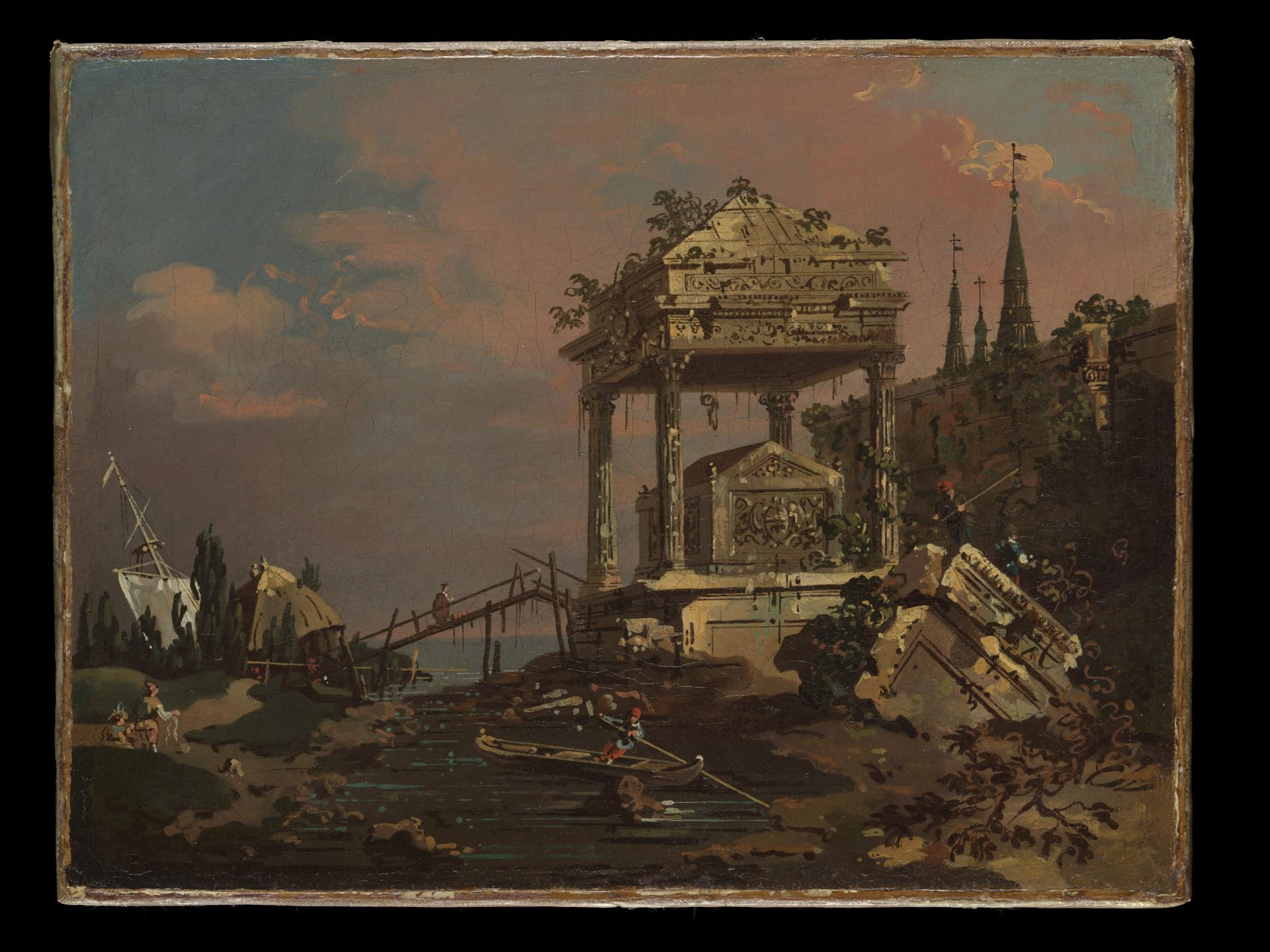
An ancient tomb, reached by a bridge, opens Canaletto's Imaginary View with a Tomb on the Lagoon. Painted in oil in the early 1740s, the picture unfolds an invented Venetian lagoon landscape where boats and buildings enliven the background. Giovanni Antonio Canal, known as Canaletto, stages the monument as the focal point of a freely conceived veduta.
Description
A temple-like tomb of antique form rises in the foreground, accessible over a bridge. Beside it a boat bobs on the still lagoon water; beyond, more buildings and bell towers step back into the distance. Tents stand on the left, and scattered figures animate the natural setting. Muted tones and lighting that suggests dusk or evening give the view a calm mood.
Context
This capriccio was made in the early 1740s, when Canaletto was already famous for his vedute of Venice. Such invented combinations of real or imagined architectural elements were highly popular with collectors. The painting was probably intended for the European market, which especially prized Venetian landscapes and ruins.
Impact
The monument as the center of the pictorial structure brings balance and calm. Evening light and restrained colors evoke a melancholy, reflective mood that draws the viewer into the quiet lagoon landscape.
Technique
Canaletto painted in oil on canvas, as was his custom. With fine brushstrokes and great attention to detail he rendered architecture and water—a precision that defines the quality of his capriccio landscapes.
AI-generated description text
Source: Metropolitan Museum of Art · Public Domain (CC0 1.0)