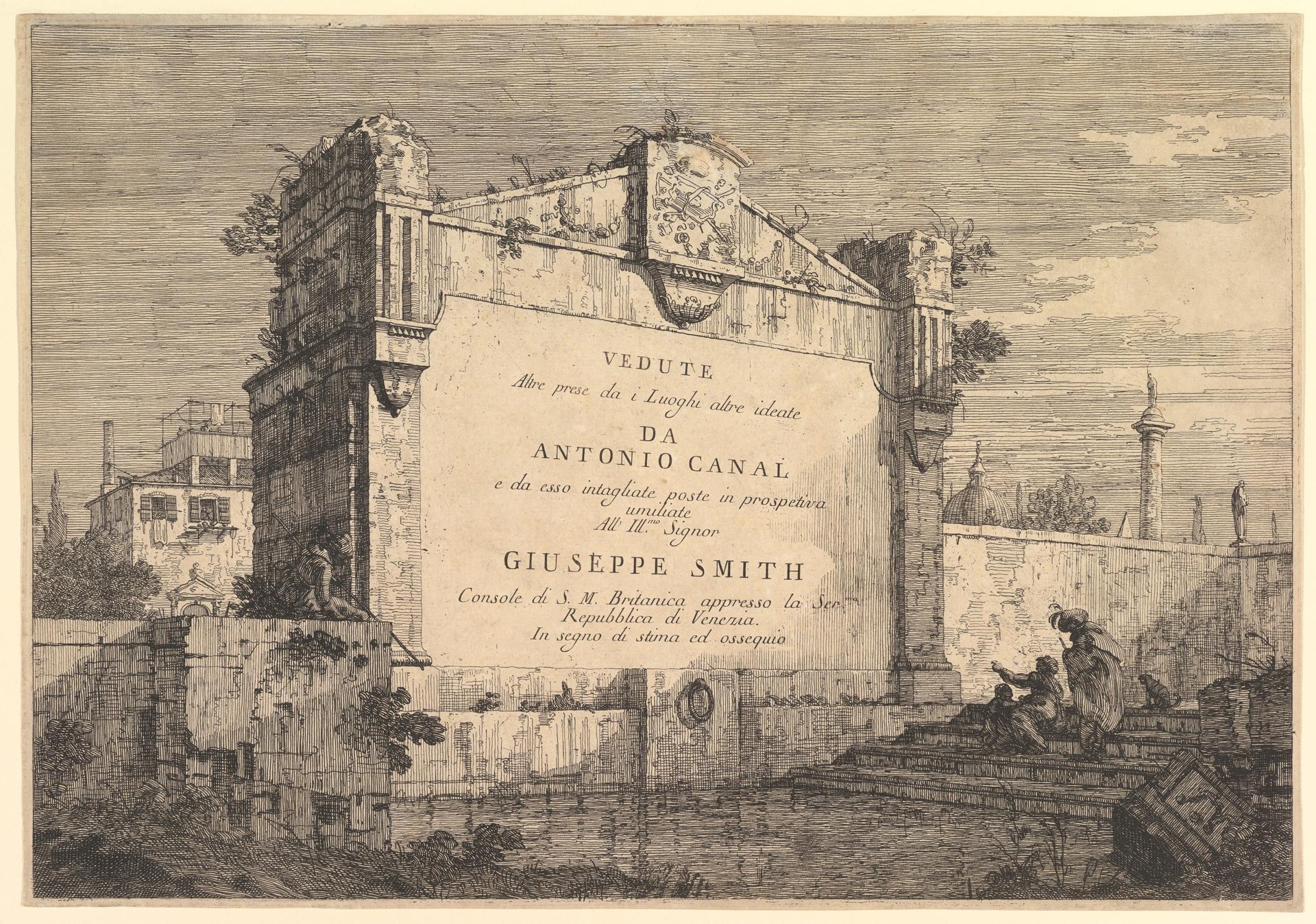
Title plate of "Vedute altre prese da i luoghi altre ideate"
Original title: Title plate of "Vedute altre prese da i luoghi altre ideate"
kurzbeschreibung
Canaletto (Giovanni Antonio Canal) made this etching between 1735 and 1746 as the title plate for a series of vedute. It shows a large, broken column with a relief and coat of arms, set within a landscape of ruins. The sheet is the second state of two and measures 30.1 × 43.2 cm; it stands as a prime example of eighteenth-century veduta art.
Description
A mighty column dominates the sheet, broken at the middle, its upper section tilting to the right. On its shaft sits a relief, and above that a coat of arms. To the left stands a smaller monument, also damaged. In the distance, further columns and buildings fade away. At the lower left, two figures have settled on a staircase and look up at the ruin. Muted light and dark shadows shape the image, which is mostly in shades of gray.
Context
Canaletto supplied this title page for a veduta series created between 1735 and 1746. The series combines real views ('da i luoghi') with invented groupings ('ideate'), as was common in Venetian art of those years. Canaletto was best known for his painted city views; printmaking also served him to spread his work. The sheet was made in Venice, the city where he lived and worked.
Impact
The ruined architecture and deep shadows give off a melancholy, sublime mood. Despite the break, the great column retains its power and lends the image something timeless, almost dramatic. How confidently the lines are drawn and how deliberately the layout is chosen reveals Canaletto's skill in rendering architecture.
Technique
Etched into a metal plate, the drawing is cut by acid into the exposed areas; when printed, the grooves hold the ink and transfer it to the paper. It is called the second state because the plate was reworked after the first printing. Fine hatching and graduated gray tones, as seen here, characterize Canaletto's printmaking approach.
AI-generated description text
Source: Metropolitan Museum of Art · Public Domain (CC0 1.0)