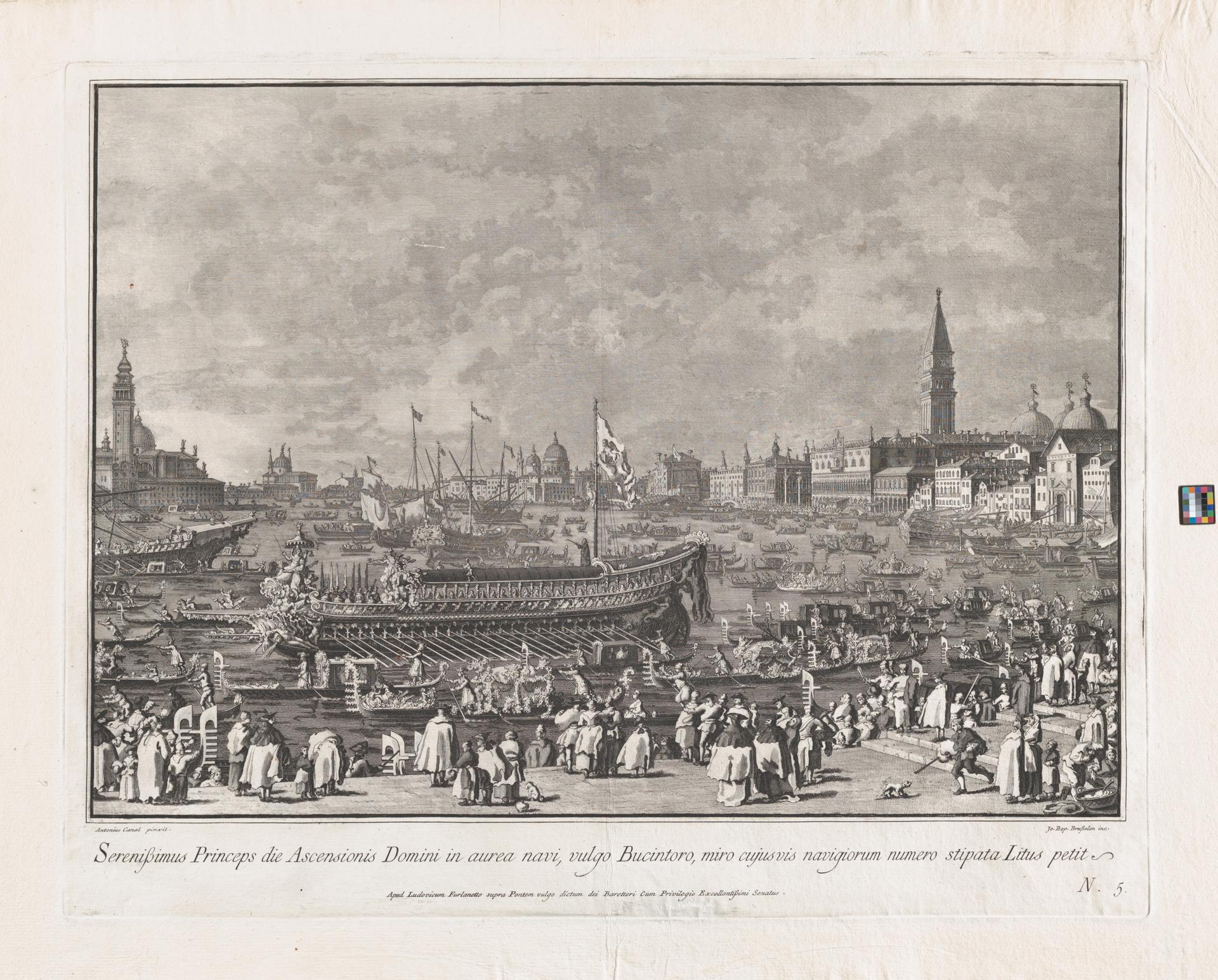
Plate 5: The Doge in the Bucintoro Departing for the Porto di Lido on Ascension Day, from 'Ducal Ceremonies and Festivals' (Le Feste Ducali)
Original title: Plate 5: The Doge in the Bucintoro Departing for the Porto di Lido on Ascension Day, from 'Ducal Ceremonies and Festivals' (Le Feste Ducali)
kurzbeschreibung
Giovanni Battista Brustolon's etching from around 1766 shows the Doge of Venice aboard the Bucintoro, the lavishly appointed state ship, heading for the Porto di Lido on Ascension Day. Unlike many pure city views, this sheet from the series 'Le Feste Ducali' ties the sumptuous vessel to the festive life of the Republic. It is executed as a copper engraving in the second of four states.
Description
A magnificently equipped ship with flags dominates the foreground and carries the Doge and his retinue. Around the vessel crowd numerous figures in historical dress, either watching the event or preparing for it. Behind, Venice's silhouette with domes and towers spreads out, while other boats are scattered across the lagoon. The layout feels balanced and nearly symmetrical; evenly distributed light makes buildings and people stand out clearly. The monochrome effect is determined by the techniques of etching and engraving.
Context
Brustolon based the print on drawings by Canaletto, who had recorded Venice's ceremonies. The series 'Le Feste Ducali' was produced in the mid-18th century, a time when the Republic emphasized its cultural identity through the depiction of traditional rituals. Among the most important state ceremonies was the Festa della Sensa, during which the Doge performed the symbolic marriage of Venice to the sea. Brustolon was known as a skilled reproducer of Canaletto's paintings, which he translated into copper engravings.
Impact
A solemn yet observantly factual mood emanates from the sheet, capturing the splendor of Venetian ceremonies. Ships, crowd, and architecture are rendered so precisely that a palpable depth emerges, inviting the eye to linger. The even lighting and clear arrangement give the whole a calm, dignified tone.
Technique
Etching and engraving were used on laid paper. This method allows fine lines and precise reproduction of details, as is characteristic of translating Canaletto's vedute. In the second of four states, the print shows careful workmanship with clear contours and a balanced relationship between light and shadow.
AI-generated description text
Source: Metropolitan Museum of Art · Public Domain (CC0 1.0)