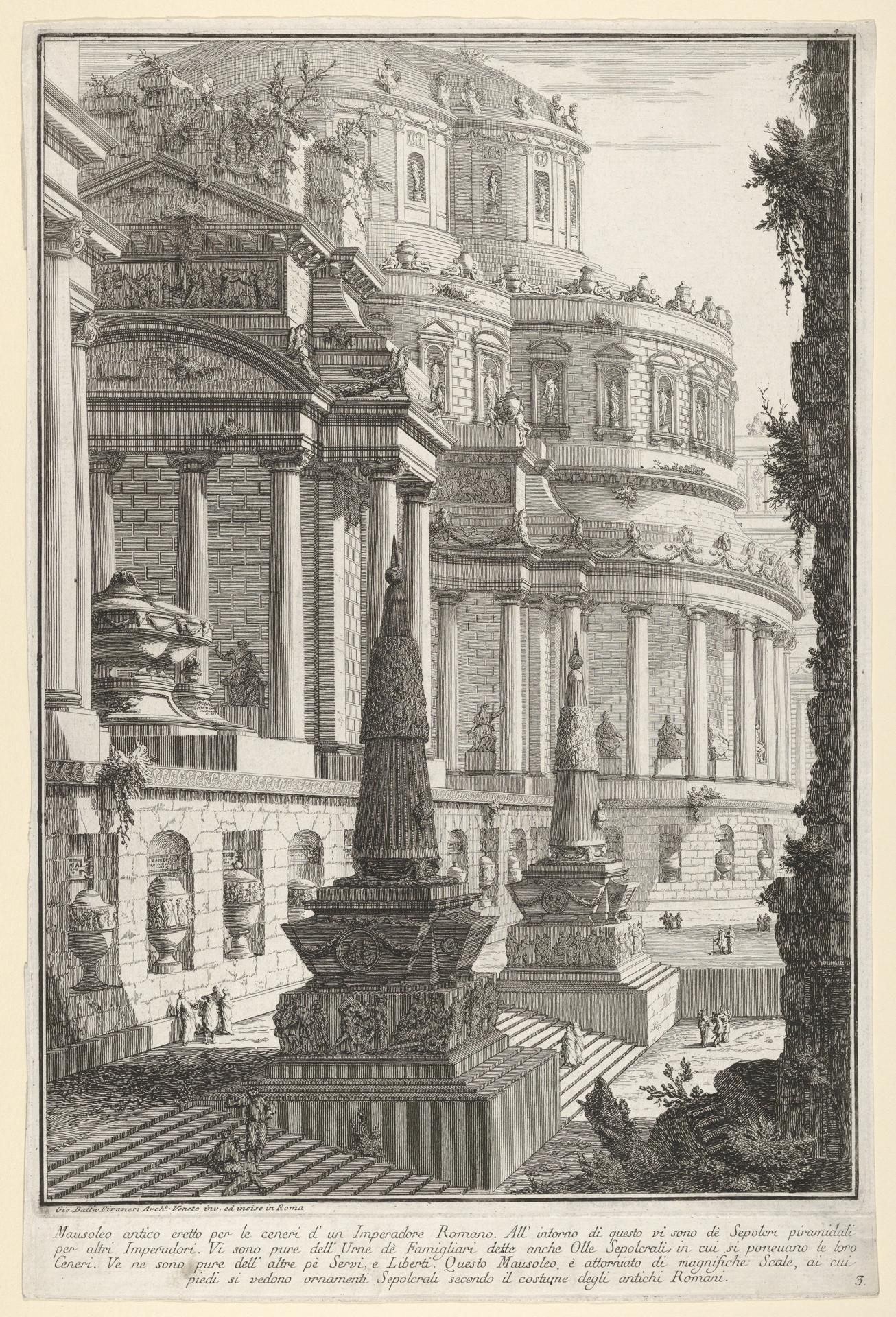
Plate 3: Ancient mausoleum erected for the ashes of a Roman emperor (Mausoleo antico eretto per le ceneri d'un imperadore romano), from "Part one of architecture and perspectives: drawn and etched by Gio. Batt'a Piranesi, Venetian Architect: dedicated to Nicola Giobbe"
Original title: Plate 3: Ancient mausoleum erected for the ashes of a Roman emperor (Mausoleo antico eretto per le ceneri d'un imperadore romano), from "Part one of architecture and perspectives: drawn and etched by Gio. Batt'a Piranesi, Venetian Architect: dedicated to Nicola Giobbe" (Prima parte di Architetture, e prospettive inventate, ed incise da Gio. Batt'a Piranesi Architetto Veneziano dedicate al Sig. Nicola Giobbe)
kurzbeschreibung
This ancient round mausoleum was intended to hold the ashes of a Roman emperor, and Giovanni Battista Piranesi captured it in an etching in 1743. The print belongs to the series Prima parte di Architetture, e prospettive, which the artist dedicated to the architect Nicola Giobbe. Architectural invention and echoes of excavated antiquity merge in it.
Description
A circular structure rises above several levels of columns, crowned by a dome adorned with sculpture. Two pyramid-shaped tombs with figural reliefs stand before it. Trees and shrubs frame the motif, and stairs in the foreground lead up toward the buildings. The image is executed in black and white, with precise, richly varied linework.
Context
The etching appeared as part of Piranesi's first architectural fantasies, published in Rome in 1743. In those years he engaged deeply with Roman antiquity, before he began his famous Vedute di Roma. The series was dedicated to the architect Nicola Giobbe and was meant to establish Piranesi's reputation as an architect and draftsman.
Impact
The print conveys a sublime, monumental mood that recalls the grandeur of ancient Rome. Real architectural motifs and fantastic additions combine into a theatrical effect that carries the viewer into a distant past.
Technique
For the etching, the lines were incised into an etched copper plate. With fine hatching and cross-hatching, Piranesi worked out light and shadow and brought out the sculptural details of the architecture. The paper format of roughly 39 x 26 cm allows for a detailed rendering.
AI-generated description text
Source: Metropolitan Museum of Art · Public Domain (CC0 1.0)