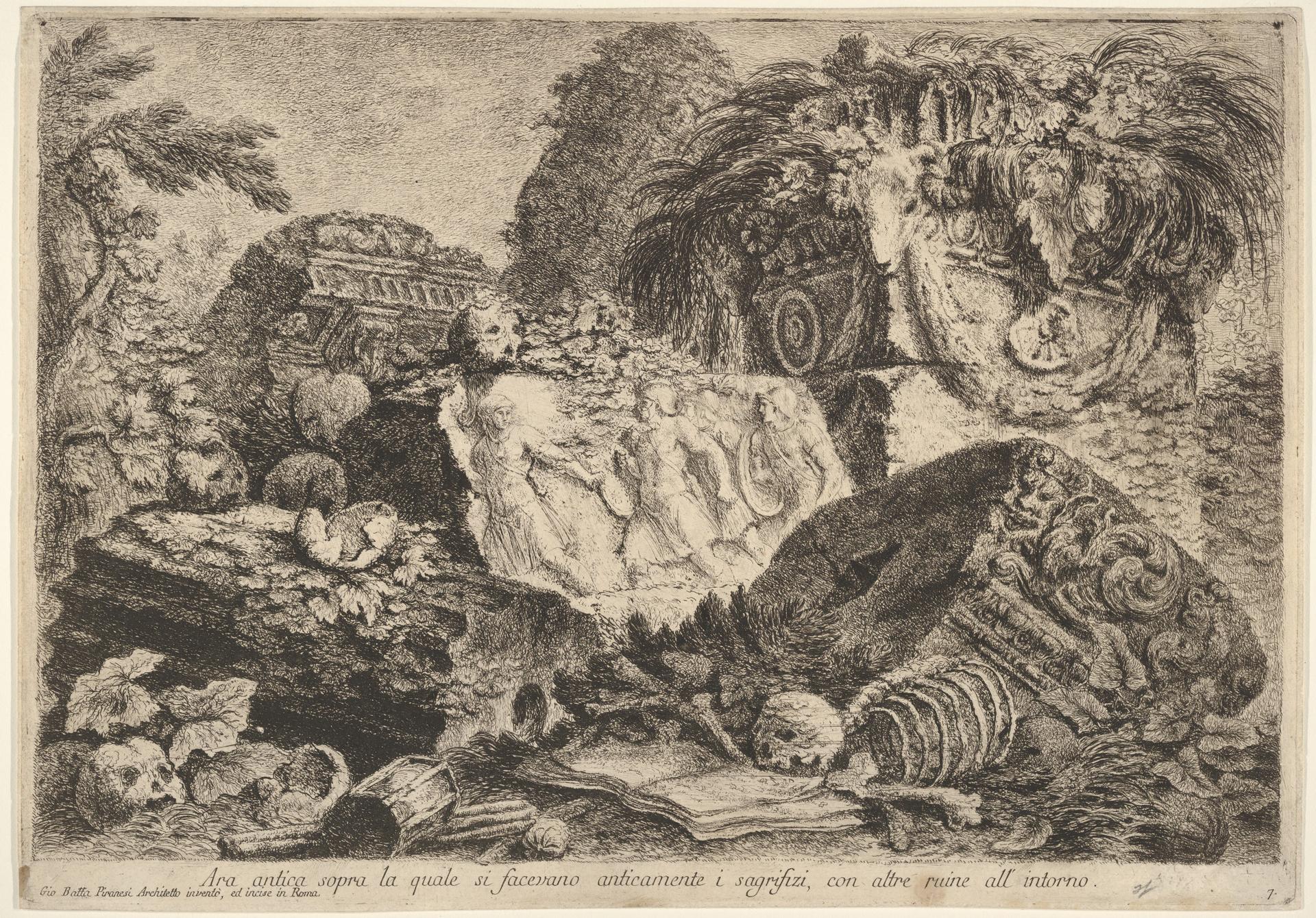
Plate 7: Ancient altar on which sacrifices were performed in antiquity, surrounded by other ruins (Ara antica sopra la quale si facevano anticamente i sagrifizi, con altre ruine all' intorno)
Original title: Plate 7: Ancient altar on which sacrifices were performed in antiquity, surrounded by other ruins (Ara antica sopra la quale si facevano anticamente i sagrifizi, con altre ruine all' intorno), from "Part one of architecture and perspectives: drawn and etched by Gio. Batt'a Piranesi, Venetian Architect: dedicated to Nicola Giobbe" (Prima parte di Architetture, e prospettive inventate, ed incise da Gio. Batt'a Piranesi Architetto Veneziano dedicate al Sig. Nicola Giobbe)
kurzbeschreibung
This print belongs to Giovanni Battista Piranesi's series 'Prima parte di Architetture, e prospettive' (1743) and shows an ancient sacrificial altar surrounded by other ruins. The landscape-format etching combines archaeological precision with an atmospheric approach to landscape.
Description
Column fragments and capitals lie in the foreground, framing the altar. On its top slab, a relief with a figure is inset. Behind, more ruins and trees rise in tiers. The layout extends horizontally and brings the altar slab into view. Soft, diffuse light, together with fine lines and hatching, draws out the surfaces of stone and plants.
Context
The 'Prima parte di Architetture, e prospettive' was created in Rome in 1743, where Piranesi pursued architectural studies. The etchings in this series present invented buildings and ruins inspired by antiquity. The work is dedicated to the Venetian architect Nicola Giobbe and testifies to Piranesi's interest in Roman architecture.
Impact
A melancholy mood of ruins emanates from the print, carried by the nuanced linework and subdued light. The viewer is transported into a past world in which the remains of ancient sacrificial rituals seem almost sacred.
Technique
The drawing was etched into a copper plate and printed as an etching. Fine lines and cross-hatching create tonal values and textures that recall washed drawings. This process allows both precise architectural details and atmospheric effects.
AI-generated description text
Source: Metropolitan Museum of Art · Public Domain (CC0 1.0)