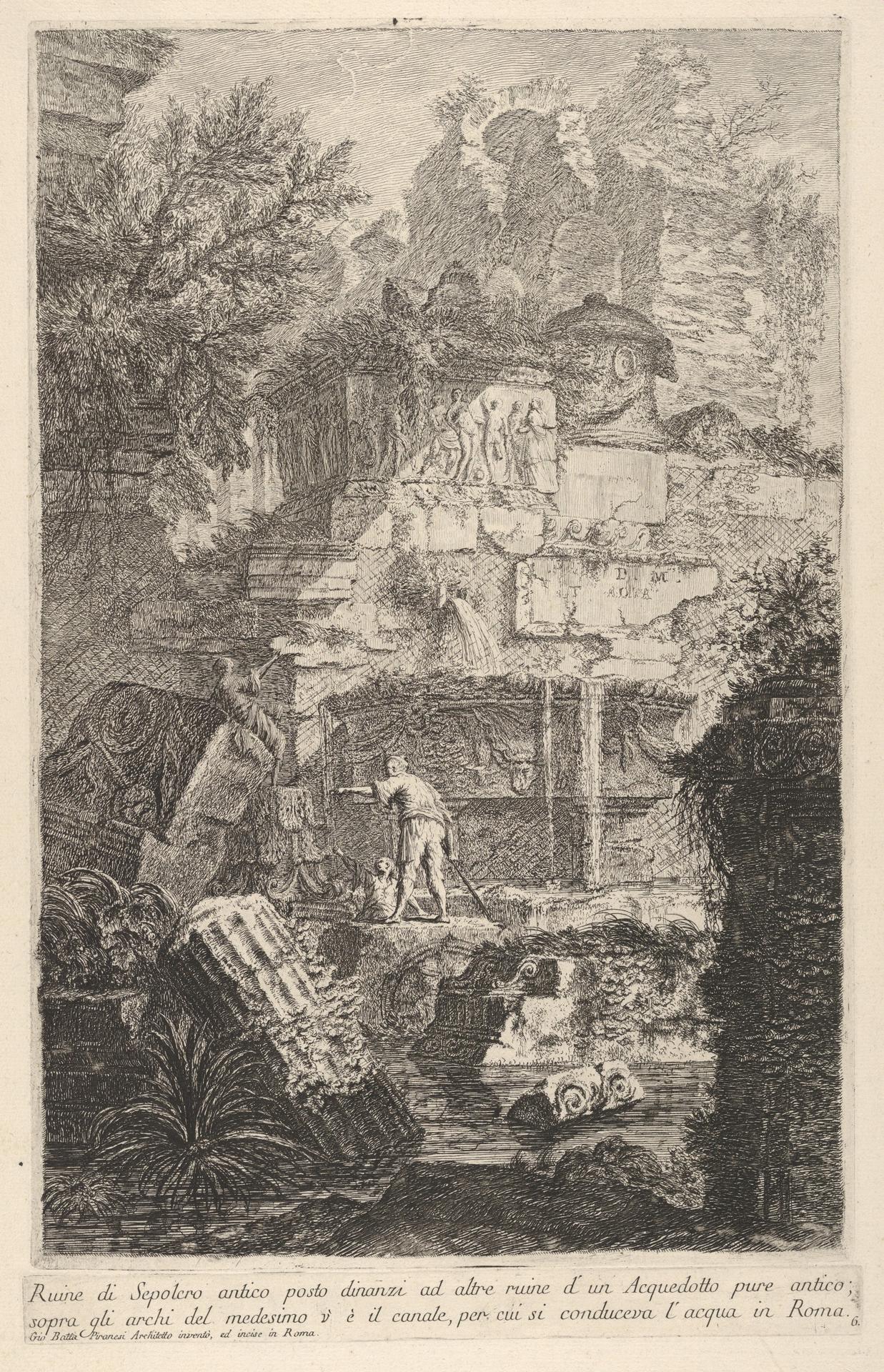
Plate 6: Ruins of an ancient tomb in front of ruins of an ancient aqueduct (...), from "Part one of architecture and perspectives: drawn and etched by Gio. Batt'a Piranesi, Venetian Architect: dedicated to Nicola Giobbe"
Original title: Plate 6: Ruins of an ancient tomb in front of ruins of an ancient aqueduct (...), from "Part one of architecture and perspectives: drawn and etched by Gio. Batt'a Piranesi, Venetian Architect: dedicated to Nicola Giobbe" (Prima parte di Architetture, e prospettive inventate, ed incise da Gio. Batt'a Piranesi Architetto Veneziano dedicate al Sig. Nicola Giobbe)
kurzbeschreibung
Giovanni Battista Piranesi made this etching in 1743 as part of the series 'Prima parte di Architetture, e prospettive'. A crumbling tomb stands in the foreground, while the ruin of an aqueduct runs through the landscape behind it. Real Roman remains and invented passages merge into a single image.
Description
A water fountain fed by a column covered in relief carvings fills the near part of the picture. Two figures are at work there, one carrying a tool, the other holding an object. Plants and shrubs trail over rocks and masonry. Further ruins and trees close off the distance. Thin black lines record the structures with clarity and precision.
Context
The 'Prima parte' appeared in Rome in 1743 and was Piranesi's first major venture in printmaking. Its plates bring together imagined and actual Roman ruins, which the artist pushes toward the ideal and the dramatic. The series is dedicated to Nicola Giobbe, a Venetian patron. Trained as an architect, Piranesi stressed the grandeur and the decay of ancient buildings in his etchings.
Impact
Monumental ruins and sparse vegetation set a mood somewhere between melancholy and the sublime. Careful shading and precise linework give the sheet an almost architectural clarity and carry the viewer back into the past.
Technique
Etching means scratching the drawing into a copper plate and biting it with acid. Piranesi used fine parallel lines and cross-hatching to model light and shadow. The sheet measures 37 x 24.5 cm and shows the artist's characteristic technique, with clear contours and richly detailed structures.
AI-generated description text
Source: Metropolitan Museum of Art · Public Domain (CC0 1.0)