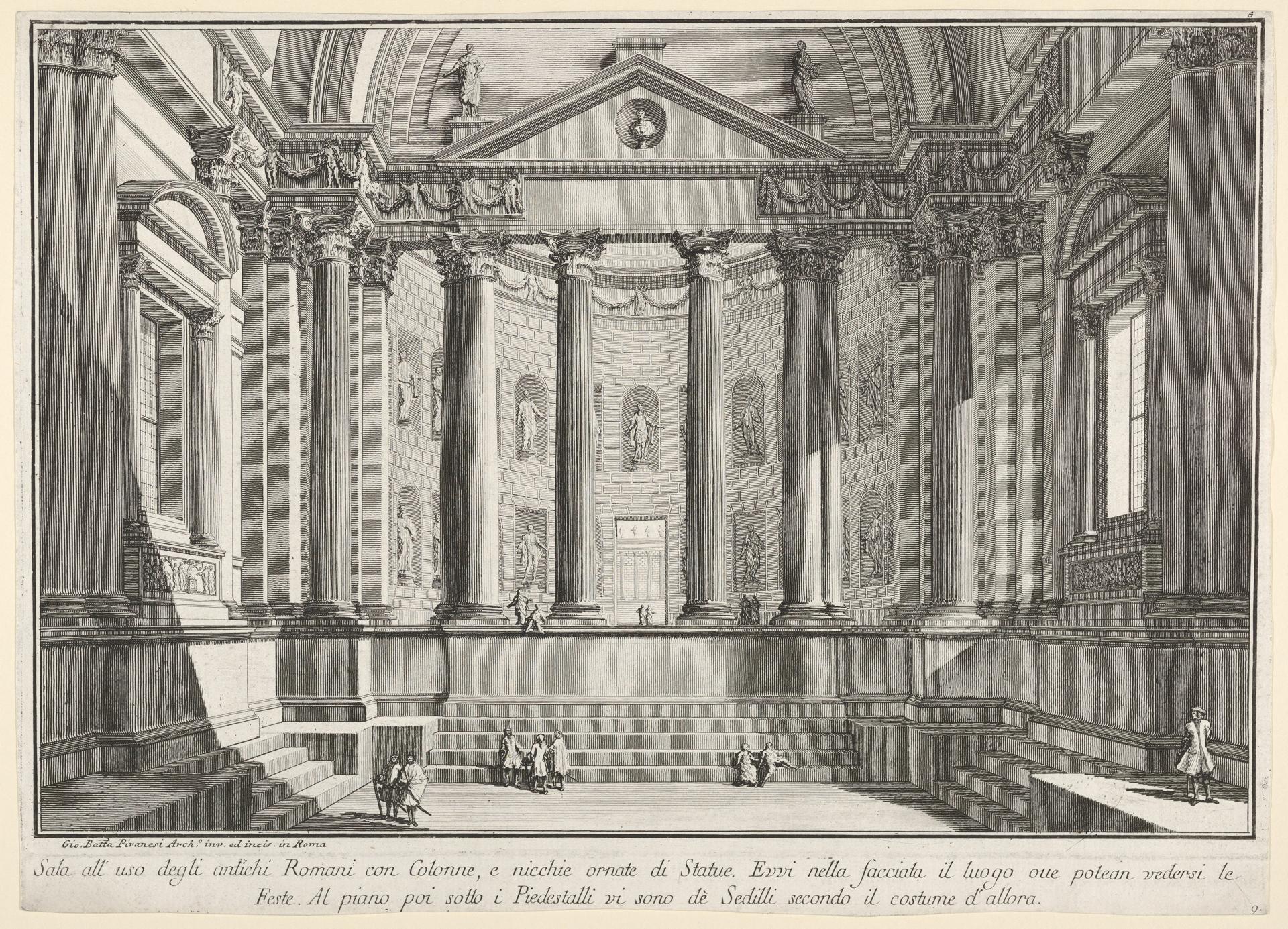
Plate 9: Colonnaded hall according to the custom of the ancient Romans (...), from "Part one of architecture and perspectives: drawn and etched by Gio. Batt'a Piranesi, Venetian Architect: dedicated to Nicola Giobbe"
Original title: Plate 9: Colonnaded hall according to the custom of the ancient Romans (...), from "Part one of architecture and perspectives: drawn and etched by Gio. Batt'a Piranesi, Venetian Architect: dedicated to Nicola Giobbe" (Prima parte di Architetture, e prospettive inventate, ed incise da Gio. Batt'a Piranesi Architetto Veneziano dedicate al Sig. Nicola Giobbe)
kurzbeschreibung
A spacious hall with Corinthian columns, statues in niches, and a stepped floor: Giovanni Battista Piranesi etched this plate in 1743 as part of the series 'Prima parte di Architetture, e prospettive'. The sheet measures 26.5 x 37 cm. Architectural invention and precise knowledge of ancient building forms are fused here.
Description
Small figures stand on the podiums and steps that run through the entire pictorial space. A central axis organizes the layout, to which the side sections are symmetrically subordinated. Corinthian columns support an entablature with triglyphs and frieze; between them, niches open with statues in varying poses. Reliefs cover the walls, and light falling from above brings out the sculptural forms in the monochrome lines of the etching.
Context
Piranesi had been in Rome since 1740, devoting himself to the study of ancient buildings; this etching was also created there in 1743. With the 'Prima parte' series he presented his first published architectural work and honored his Venetian patron Nicola Giobbe. Through such images he intervened in the contemporary debate over the primacy of Roman or Greek architecture.
Impact
The vast, almost stage-like space transports the viewer into an imagined antiquity. The precise rendering of individual forms and the monumental perspective evoke admiration and astonishment at the grandeur of Roman architecture.
Technique
Etching was done on a copper plate; fine lines and hatching create gradations of light and shadow. The paper size of 26.5 x 37 cm follows the conventions of eighteenth-century printed series, which were circulated in editions.
AI-generated description text
Source: Metropolitan Museum of Art · Public Domain (CC0 1.0)