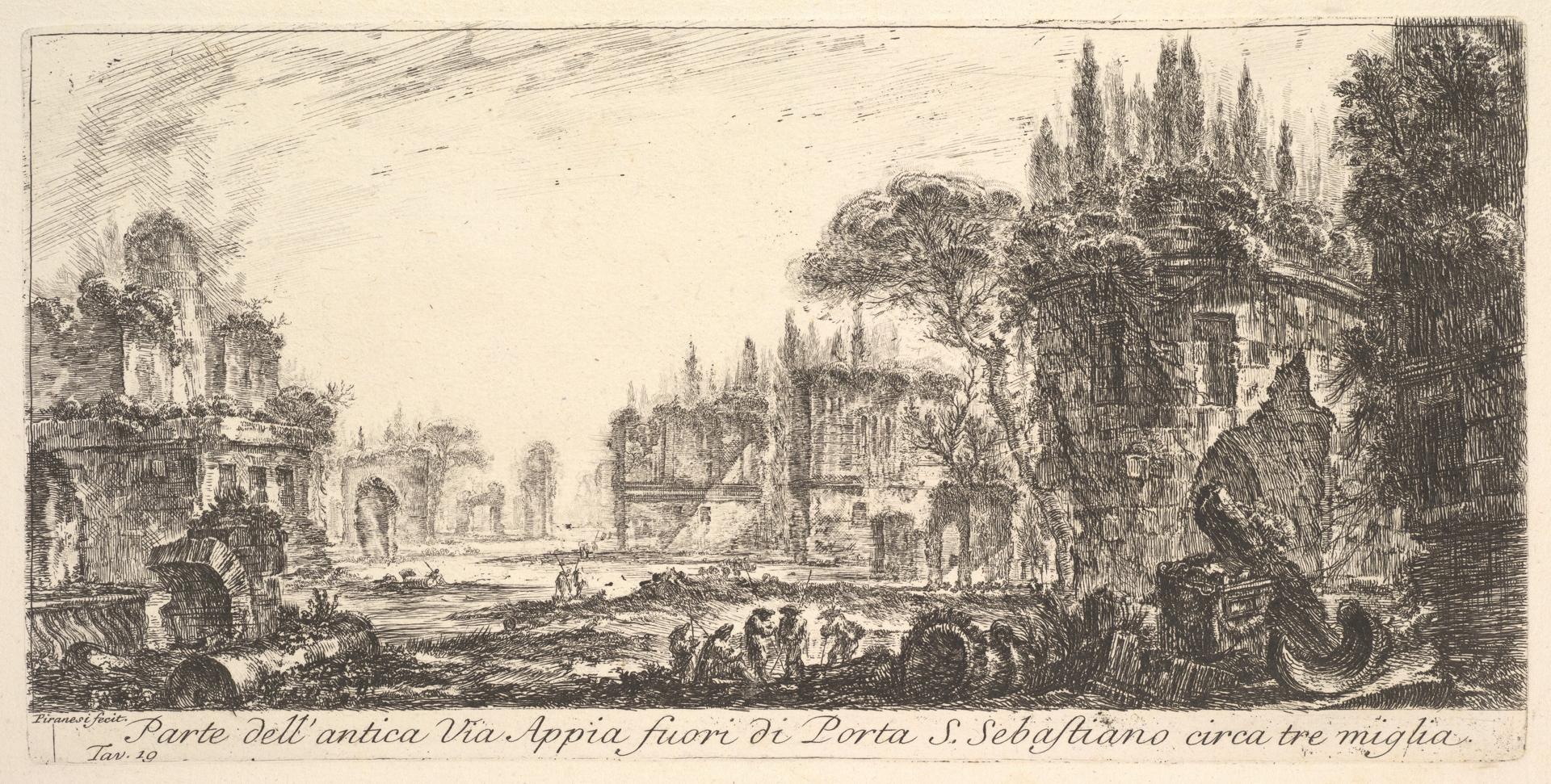
Plate 19: Part of the ancient Appian Way about three miles outside Porta S. Sebastiano, from "Alcune Vedute di Archi Trionfali ed altri monumenti inalzati da Romani parte de quali se veggono in Roma e parte per l'Italia"
Original title: Plate 19: Part of the ancient Appian Way about three miles outside Porta S. Sebastiano, from "Alcune Vedute di Archi Trionfali ed altri monumenti inalzati da Romani parte de quali se veggono in Roma e parte per l'Italia" (Some Views of Triumphal Arches and other monuments erected by the Romans, some of which are in Rome and some elsewhere in Italy)
kurzbeschreibung
This etching by Giovanni Battista Piranesi dates from around 1748 and reproduces a stretch of the ancient Via Appia about three miles outside Rome's Porta S. Sebastiano. It belongs to the series 'Alcune Vedute di Archi Trionfali ed altri monumenti'. The image presents a landscape with ruins, trees, and a few small figures along the historic road.
Description
The layout stretches wide, with trees and ruins providing strong vertical accents. Along the bottom edge, ruins and trees flank the road, and a few people can be seen on the ground, perhaps working or resting. Further back, more ruins and trees line the way. The print is monochrome; varying line thickness and direction capture the surfaces of masonry and vegetation. The light feels even and diffuse, suggested by the regular distribution of strokes, as is typical of etching with its fine, parallel lines.
Context
Piranesi made this view during his early years in Rome, where he had lived since the 1740s. The 'Alcune Vedute' was one of his first collections of vedute and focused on ancient monuments. The Via Appia, one of the most important Roman consular roads, was a popular subject in the 18th century for artists documenting the ruins of antiquity. The etching reflects the growing interest in Roman archaeology and the Grand Tour.
Impact
A quiet, almost melancholy mood emanates from the print, carried by the diffuse light and the decaying ruins. The fine hatching creates atmospheric depth and draws the viewer into the historic landscape. Nature and ancient remains come together, emphasizing the transience of human constructions.
Technique
For this etching, a copper plate was bitten with acid and then printed. Fine, parallel lines and variations in thickness and direction are characteristic of Piranesi's style. The image was printed on paper; the plate measures 13.3 x 27 cm, the sheet 32.5 x 48 cm.
AI-generated description text
Source: Metropolitan Museum of Art · Public Domain (CC0 1.0)