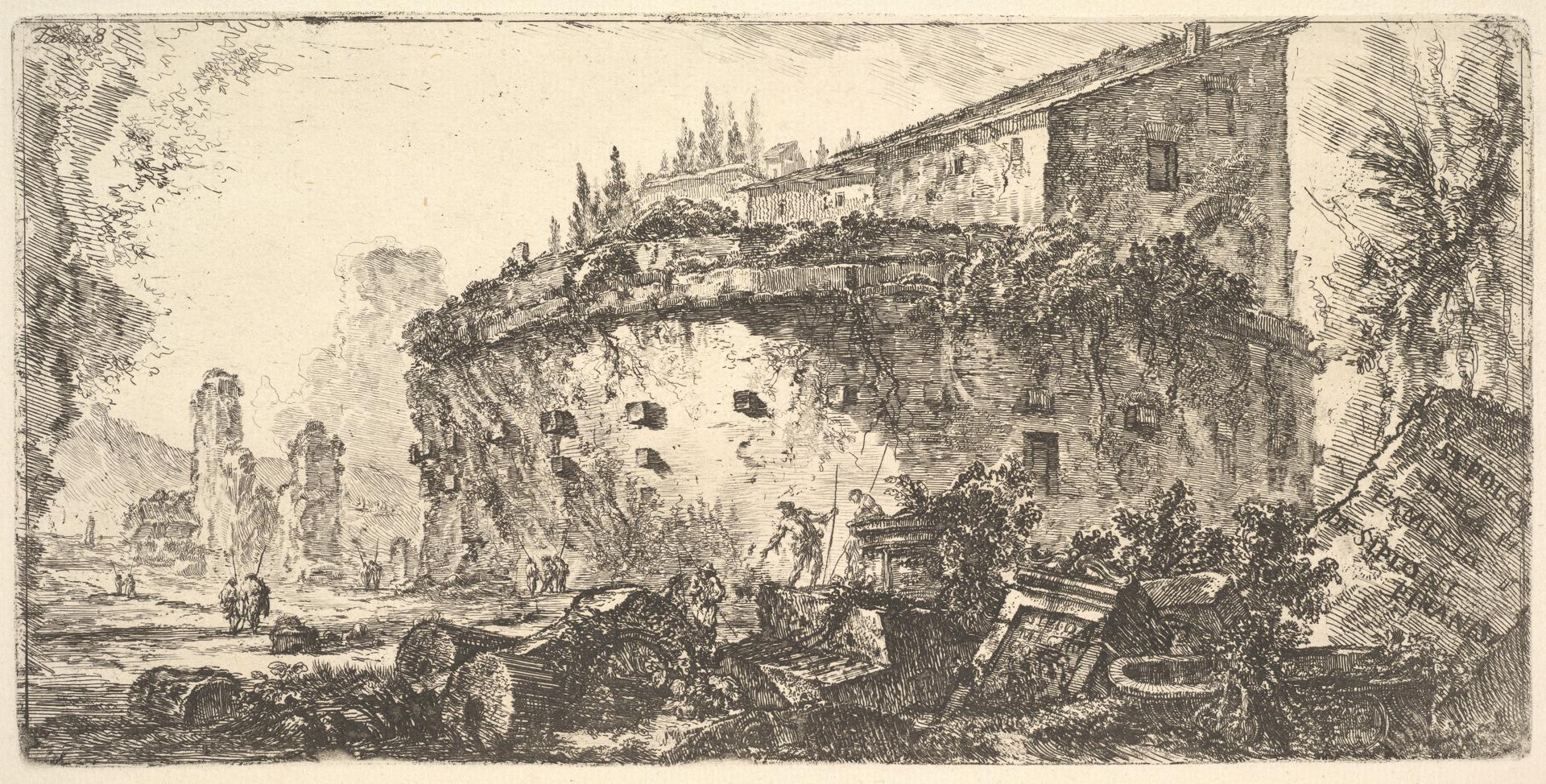
Plate 18: The Tomb of the Scipios (Sepolcro della famiglia de' Scipioni), from "Alcune Vedute di Archi Trionfali ed altri monumenti inalzati da Romani parte di quali se veggono in Roma e parte per l'Italia"
Original title: Plate 18: The Tomb of the Scipios (Sepolcro della famiglia de' Scipioni), from "Alcune Vedute di Archi Trionfali ed altri monumenti inalzati da Romani parte di quali se veggono in Roma e parte per l'Italia"
kurzbeschreibung
Unlike the other plates in the series, this etching by Giovanni Battista Piranesi (ca. 1748) focuses entirely on the tomb of the Scipios on the Via Appia in Rome. It belongs to the collection "Alcune Vedute di Archi Trionfali ed altri monumenti inalzati da Romani" and is one of the early vedute with which Piranesi documented Italian antiquities.
Description
Trees and fragments of wall fill the foreground of the sheet, while behind them rises a larger ruined structure with columns and a wall. Scattered across the area, individual figures stand, walk, or sit. The layout runs horizontally, though the wall in the rear sets a strong vertical axis. Because it is an etching, the color remains monochrome; light and shadow arise solely from the strokes and lines.
Context
The view was made around 1748, when Rome was marked by archaeological investigations. The tomb of the Scipios, which was only rediscovered in 1780, was then only partially visible but was regarded as a well-known ancient monument. With the series, Piranesi addressed travelers and collectors of the Grand Tour who wanted to see Roman antiquity documented.
Impact
The calm, clear arrangement and careful linework give the sheet the air of an objective record of the site. The sparsely distributed staffage figures bring life to the ruin scene without pushing themselves into the foreground.
Technique
For this etching, the lines were incised into an etched plate and then printed. Fine hatching and precise linework characterize Piranesi's early vedute technique.
AI-generated description text
Source: Metropolitan Museum of Art · Public Domain (CC0 1.0)