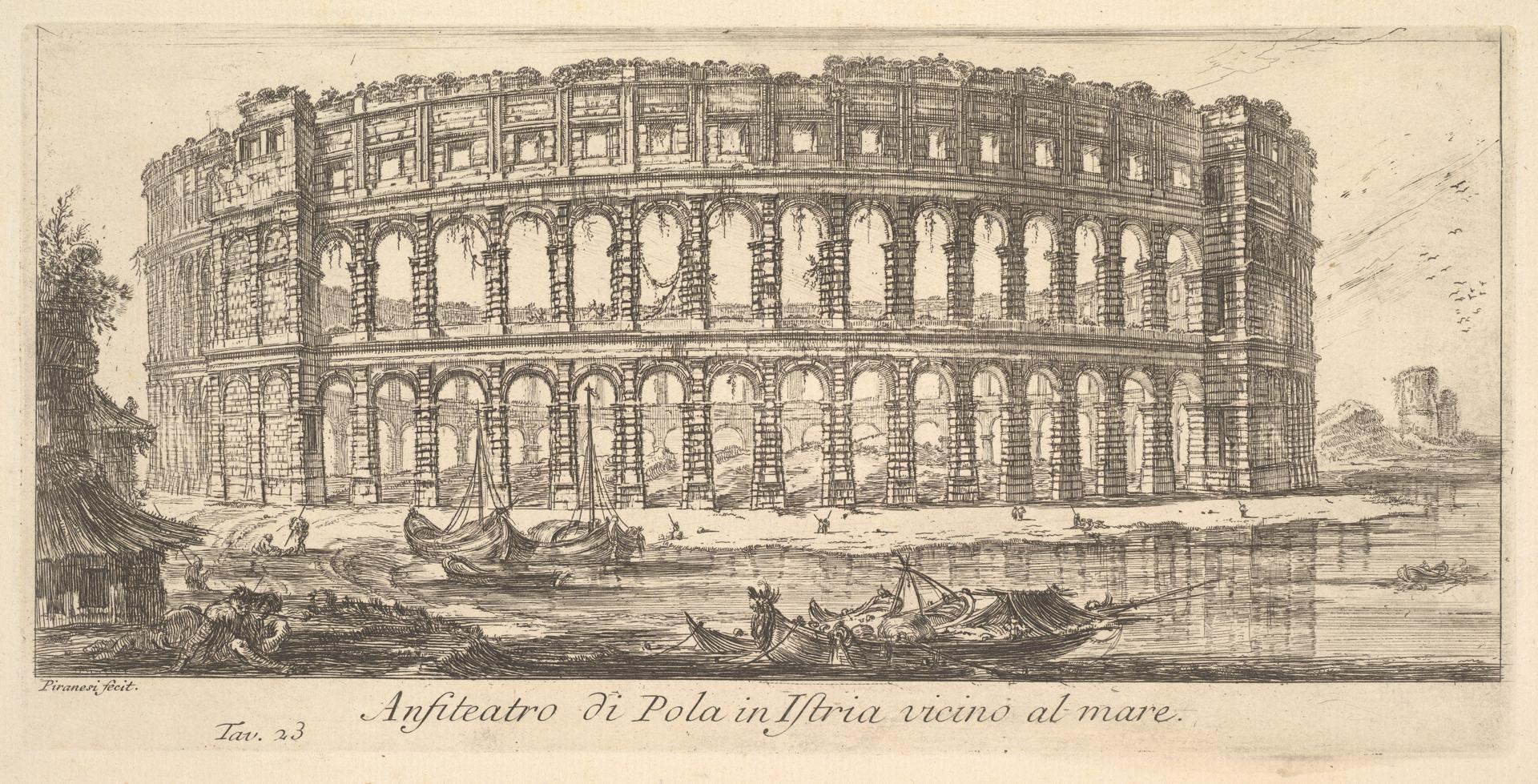
Plate 23: Amphitheater of Pola in Istria near the sea (Anfiteatro di Pola in Istria vicino al mare), from "Alcune Vedute di Archi Trionfali ed altri monumenti inalzati da Romani parte di quali se veggono in Roma e parte per l'Italia"
Original title: Plate 23: Amphitheater of Pola in Istria near the sea (Anfiteatro di Pola in Istria vicino al mare), from "Alcune Vedute di Archi Trionfali ed altri monumenti inalzati da Romani parte di quali se veggono in Roma e parte per l'Italia" (Some Views of Triumphal Arches and other monuments erected by the Romans, some of which are in Rome and some elsewhere in Italy)
kurzbeschreibung
Boats rest on the water before the semicircular Amphitheatre of Pola, captured in an etching by Giovanni Battista Piranesi around 1748. The print belongs to his series 'Alcune Vedute di Archi Trionfali ed altri monumenti inalzati da Romani', in which he documented Roman structures. This view combines ancient architecture with a coastal landscape and a lively foreground.
Description
Several tiers of arcades define the semicircular amphitheatre, its stone visibly weathered. Boats on the water in the foreground emphasize the seaside setting. To the left, a few people stand near a small building. The layout is symmetrical, with the amphitheatre as the central element, its scale heightened by the boats and figures. Light falling from above accentuates the shadows and texture of the structure.
Context
Piranesi made this etching as part of a series documenting Roman triumphal arches and other ancient monuments in Italy. Pola, today Pula in Croatia, was a Roman colony; its amphitheatre is well preserved. During this period Piranesi was deeply engaged with Roman architecture and spread its image through his works. The veduta served both as documentation and as an artistic presentation of ancient building art.
Impact
The precise rendering of the architecture and its integration into the landscape convey a sense of the ancient structure's grandeur. Fine hatching creates a calm, contemplative mood that invites reflection on transience. The ruin and the lively foreground connect past and present.
Technique
In etching, lines are bitten into a metal plate through a wax ground. Varying etching times and line spacing produce the fine hatching and nuanced greys. The paper size of about 32.8 × 47.5 cm allows a detailed representation typical of Piranesi's printmaking.
AI-generated description text
Source: Metropolitan Museum of Art · Public Domain (CC0 1.0)