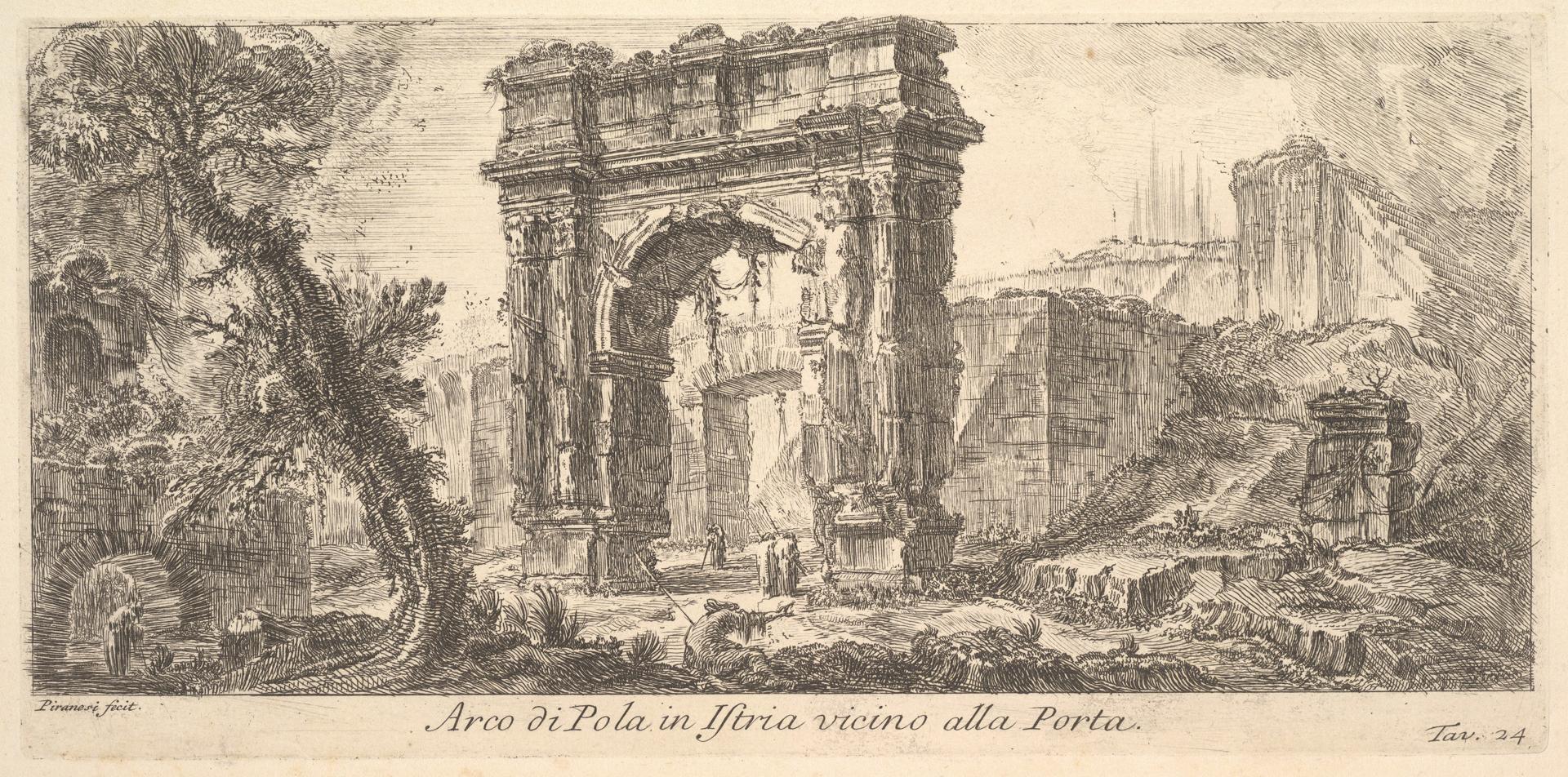
Plate 24: Arch of Pola in Istria near the Gate (Arco di Pola in Istria vicino alla Porta), from "Alcune Vedute di Archi Trionfali ed altri monumenti inalzati da Romani parte di quali se veggono in Roma e parte per l'Italia"
Original title: Plate 24: Arch of Pola in Istria near the Gate (Arco di Pola in Istria vicino alla Porta), from "Alcune Vedute di Archi Trionfali ed altri monumenti inalzati da Romani parte di quali se veggono in Roma e parte per l'Italia" (Some Views of Triumphal Arches and other monuments erected by the Romans, some of which are in Rome and some elsewhere in Italy)
kurzbeschreibung
Giovanni Battista Piranesi made this etching around 1750 as part of the series 'Alcune Vedute di Archi Trionfali'. It presents the Triumphal Arch of Pola in Istria in a horizontal format, with a plate area of 12.7 × 26.1 cm. The Roman arch appears as a ruined structure in a desolate area. With his precisely worked etching technique, Piranesi captured such ancient testimonies of Italy.
Description
The viewer's gaze is immediately drawn to the centrally placed arch, its stone surface bearing clear traces of decay; several passageways and columns are in varying states of preservation. From the left, a tree reaches toward the structure, while to the right debris and rock formations continue. Behind, a landscape with trees and shrubs, interspersed with further rocks, extends. Fine gradations from light to dark create spatial depth in the black-and-white etching and make the structure legible. The horizontal view conveys calm and abandonment, with the arch serving as the fixed point of reference.
Context
Around 1750, Piranesi published in Rome the series 'Alcune Vedute di Archi Trionfali', from which this print comes. It depicts the Roman triumphal arch of Pola, erected in the 1st century AD in honor of the Sergii family. Piranesi aimed to document ancient buildings of Italy in their architecture and decay. The series belongs to his studies of Roman architecture, which he made accessible in several publications.
Impact
The sight of the ruined arch in an almost deserted area evokes melancholy in the viewer. Clear lines and strong contrasts of light and shadow give the monument a dignified, timeless presence. The eye lingers on the details of decay and prompts reflection on the transience of former greatness.
Technique
In etching, the drawing is incised into a wax layer on a copper plate, and the metal is then etched. Piranesi worked with thin, precise lines to make the texture of stone and vegetation visible. Light and dark were achieved through varying etching times and through hatching.
AI-generated description text
Source: Metropolitan Museum of Art · Public Domain (CC0 1.0)