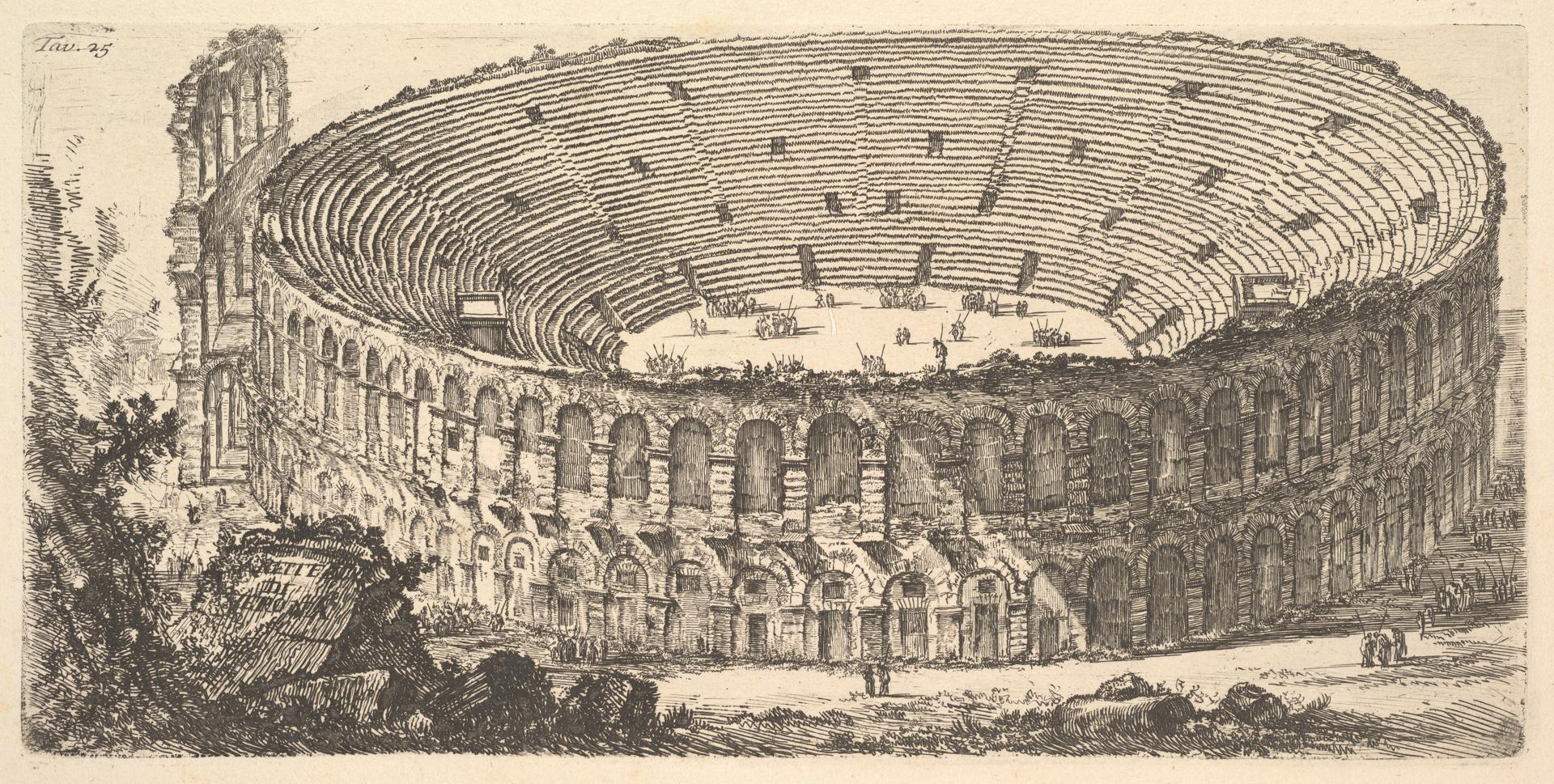
Plate 25: Amphitheater of Verona (Anfiteatro di Verona), from "Alcune Vedute di Archi Trionfali ed altri monumenti inalzati da Romani parte di quali se veggono in Roma e parte per l'Italia"
Original title: Plate 25: Amphitheater of Verona (Anfiteatro di Verona), from "Alcune Vedute di Archi Trionfali ed altri monumenti inalzati da Romani parte di quali se veggono in Roma e parte per l'Italia" (Some Views of Triumphal Arches and other monuments erected by the Romans, some of which are in Rome and some elsewhere in Italy)
kurzbeschreibung
Giovanni Battista Piranesi's etching of the Amphitheater of Verona dates from around 1748. It records the Roman amphitheater in Verona and belongs to a series of views documenting triumphal arches and other ancient monuments in Italy. The print is executed as a line etching on paper.
Description
The layout presents the semicircular amphitheater, its arcades and columns following one another at regular intervals. Sketchy outlines of trees and shrubs in the foreground suggest the entrance area. Inside the structure, several figures can be seen on the stage or at its center. Light falls from above, picking out the architectural forms. The view stays in black and white and follows a realistic manner.
Context
This etching forms part of Piranesi's early series of vedute, with which he documented Roman buildings across Italy. Made in Rome in the 1740s, the series reflects his engagement with classical architecture. The amphitheater at Verona ranked among the best-preserved Roman structures outside Rome and served him as an important example of ancient building practice.
Impact
The precise rendering of the architecture gives the sheet a sober, documentary character. At the same time, the handling of light creates a solemn mood that emphasizes the monumentality of the structure.
Technique
For this etching, the lines were incised into a metal plate and bitten with acid. The fine hatching allows a detailed rendering of the architecture and its shading. The sheet was printed with black ink on paper.
AI-generated description text
Source: Metropolitan Museum of Art · Public Domain (CC0 1.0)