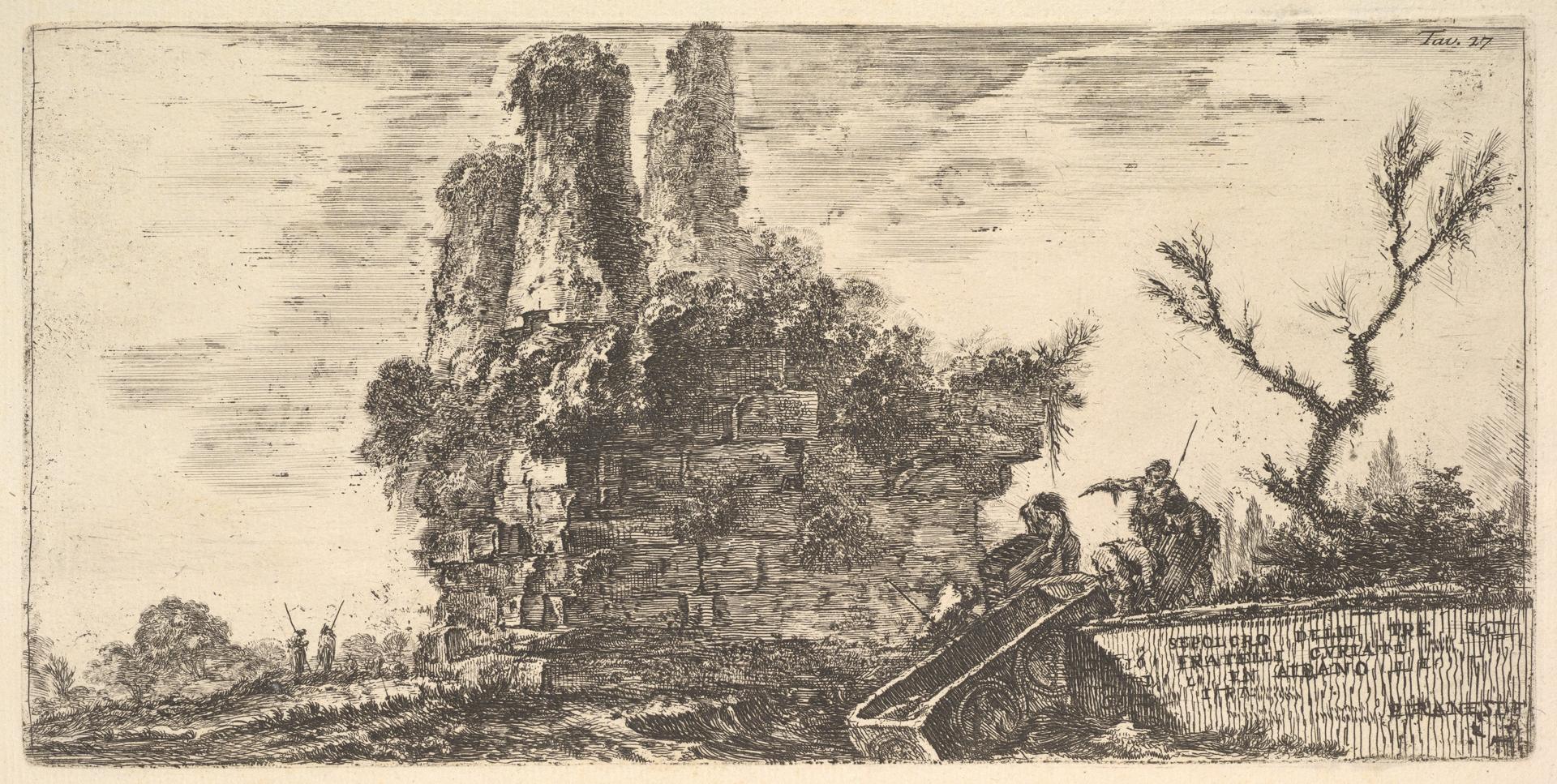
Plate 27: Tomb of the three Curiatii brothers in Albano (Sepolcro delle tre fratelli Curiati in Albano), from "Alcune Vedute di Archi Trionfali ed altri monumenti inalzati da Romani parte di quali se veggono in Roma e parte per l'Italia"
Original title: Plate 27: Tomb of the three Curiatii brothers in Albano (Sepolcro delle tre fratelli Curiati in Albano), from "Alcune Vedute di Archi Trionfali ed altri monumenti inalzati da Romani parte di quali se veggono in Roma e parte per l'Italia" (Some Views of Triumphal Arches and other monuments erected by the Romans, some of which are in Rome and some elsewhere in Italy)
kurzbeschreibung
Unlike many vedute in the same series, this sheet by Giovanni Battista Piranesi focuses not on a triumphal arch but on the tomb of the three Curiatii brothers in Albano. The etching belongs to the series 'Alcune Vedute di Archi Trionfali ed altri monumenti', was made around 1748, and measures 13.2 × 26.8 cm on the plate. The ancient ruin is shown with staffage figures.
Description
Stretching across the image is the ruin of the tomb, while in the foreground two people sit on a wall and talk; a third stands to the side with a stick. Further back, some figures walk away, and trees and bushes frame the structure. The sky is lightly clouded, and the light falls evenly without harsh shadows. The print is in black and white, with fine lines and hatching.
Context
This etching is part of a series in which Piranesi documents Roman triumphal arches and other monuments. The series was created in the 1740s, when he settled in Rome and pursued archaeological studies. The tomb of the Curiatii in Albano was a well-known ancient monument and was often visited by travelers in the 18th century.
Impact
A calm, almost idyllic mood pervades the sheet, carried by the staffage figures and the gentle landscape. The fine linework makes the ruin appear at once monumental and vulnerable. Thus emerges the impression of an idealized past that reaches into the present of the 18th century.
Technique
For the etching, the drawing was scratched into an acid-resistant layer on a copper plate and then etched. Fine lines and hatching create graduated tones and textures. Printed with black ink on paper, the result is the monochrome effect of the sheet.
AI-generated description text
Source: Metropolitan Museum of Art · Public Domain (CC0 1.0)