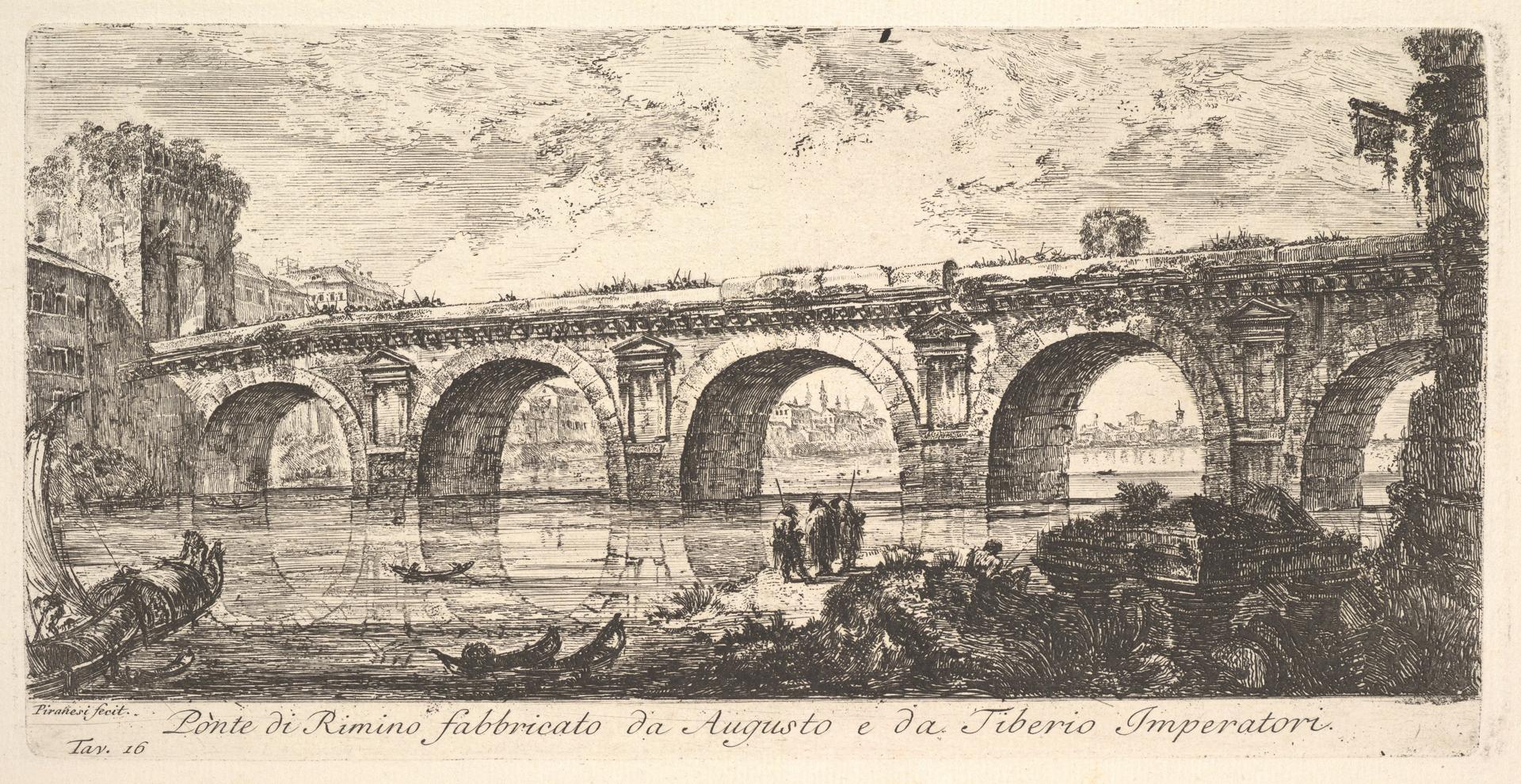
Plate 16: The Bridge at Rimini built by the Emperors Augustus and Tiberius (Ponte di Rimino fabbricato da Augusto e da Tiberio Imperatori), from "Antichità Romane fuori di Roma"
Original title: Plate 16: The Bridge at Rimini built by the Emperors Augustus and Tiberius (Ponte di Rimino fabbricato da Augusto e da Tiberio Imperatori), from "Antichità Romane fuori di Roma"
kurzbeschreibung
Giovanni Battista Piranesi devoted this etching to the Roman bridge at Rimini, built under Augustus and Tiberius. The print belongs to the series 'Antichità Romane fuori di Roma' and dates from around 1748; the plate measures 13.3 × 26.5 cm.
Description
The bridge spans the river in several arches, carried by sturdy piers, and dominates the middle of the image. Small figures make their way across it. On the left bank, boats rest on the water, while trees and shrubs line the right edge. Behind the bridge, buildings suggest an urban setting; clouds hang in the sky and the light remains subdued.
Context
In the 1740s Piranesi was working on the series 'Antichità Romane fuori di Roma', with which he recorded ancient structures outside Rome. The bridge at Rimini, erected in the 1st century AD, is regarded as an important testament to Roman engineering. The sheet was made during a period when Piranesi was active between Venice and Rome, before he devoted himself entirely to archaeology.
Impact
Dense hatching and the precise rendering of the masonry give the ancient bridge a monumental character. At the same time, the figures on the structure enliven the view, so that architecture and everyday scene merge into an atmospheric historical landscape.
Technique
The drawing was etched into a copper plate coated with wax, which was then exposed to an acid bath. The fine linework and graduated hatching produce a high level of detail depth that is characteristic of Piranesi.
AI-generated description text
Source: Metropolitan Museum of Art · Public Domain (CC0 1.0)