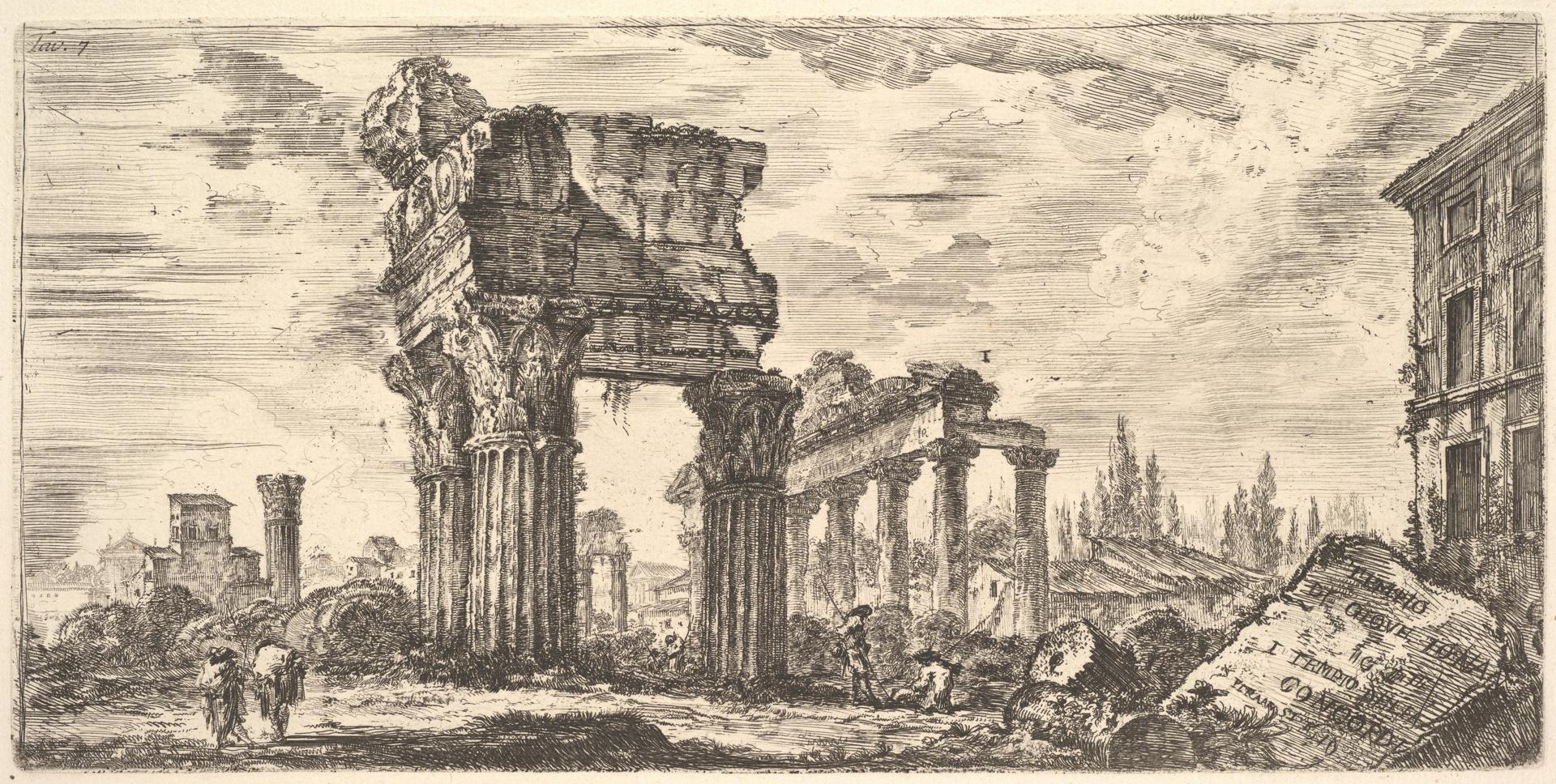
Plate 7: Temple of Jupiter Tonans (Jupiter the Thunderer). 1. Temple of Concord. (Tempio di Giove Tonans. 1. Tempio della Concordia.), from "Antichità Romane de' Tempi della Repubblica, e de' primi Imperatori"
Original title: Plate 7: Temple of Jupiter Tonans (Jupiter the Thunderer). 1. Temple of Concord. (Tempio di Giove Tonans. 1. Tempio della Concordia.), from "Antichità Romane de' Tempi della Repubblica, e de' primi Imperatori"
kurzbeschreibung
Made around 1748, this etching by Giovanni Battista Piranesi belongs to his series 'Antichità Romane de' Tempi della Repubblica, e de' primi Imperatori'. It presents the ruins of the Temple of Concord in Rome, combining a careful archaeological record with a painterly view of the site.
Description
Broken columns and fragments of the temple run from the foreground into the distance, some shafts snapped off, sections of the roof collapsed. Beyond them further buildings and trees appear, hinting at the surrounding city. Two figures walk along a path at the left, while on the right stands a building with windows and doors. Diffused light draws out the surfaces of the columns and ruins.
Context
The series took shape in the 1740s, when archaeological research in Rome was pursued with great energy. As its title indicates, the print links the remains of the Temple of Jupiter with the neighbouring Temple of Concord. Piranesi recorded ancient architecture to document both its grandeur and its decay, shaped by the rising taste for classicism.
Impact
A melancholy grandeur emanates from the sheet, characteristic of Piranesi. The precise rendering of the ruins joins documentary clarity with a romantic mood.
Technique
For this etching the lines were bitten into a copper plate. Fine hatching produces graded tones of grey and a range of textures typical of Piranesi.
AI-generated description text
Source: Metropolitan Museum of Art · Public Domain (CC0 1.0)