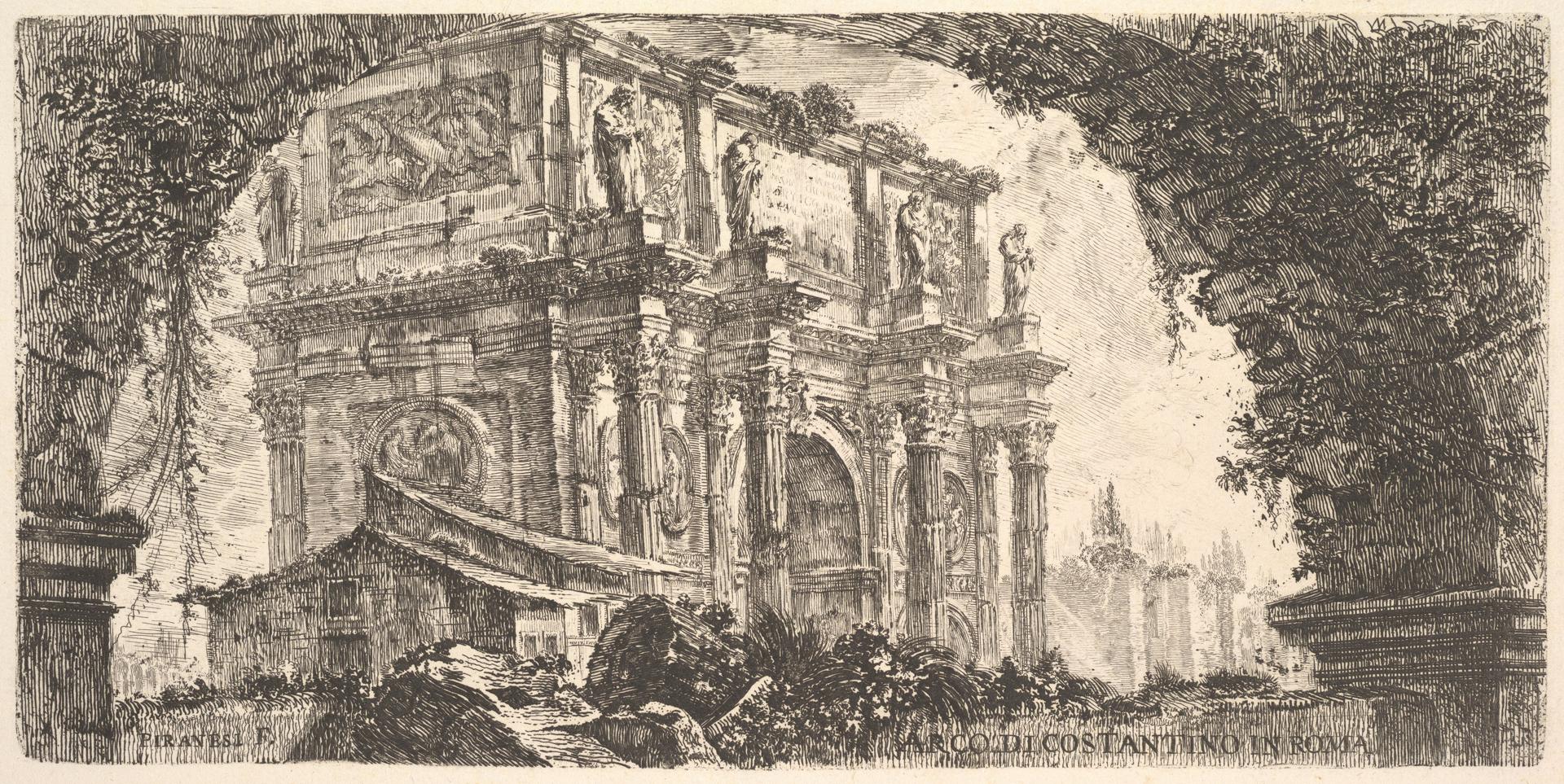
Plate 9: Arch of Constantine in Rome (Arco di Costantino in Roma), from "Antichità Romane de' Tempi della Repubblica, e de' primi Imperatori"
Original title: Plate 9: Arch of Constantine in Rome (Arco di Costantino in Roma), from "Antichità Romane de' Tempi della Repubblica, e de' primi Imperatori"
kurzbeschreibung
Unlike the other plates in his Roman series, Piranesi devotes this sheet of around 1748 entirely to the Arch of Constantine. The view belongs to 'Antichità Romane de' Tempi della Repubblica, e de' primi Imperatori' and was made as an etching.
Description
The layout is strictly axial: the arch stands at the centre, its columns and reliefs worked out in detail. Trees and shrubs frame the structure on both sides and anchor it in its surroundings. The whole sheet remains black and white, yet graded hatching creates transitions of light and shadow that bring out the physicality of the architecture. In its precision the view follows the architectural drawing of the eighteenth century.
Context
With his etchings Piranesi aimed to record Roman antiquities systematically and publish them in several series. The 'Antichità Romane' fell in a period when Rome became the goal of the Grand Tour and the centre of antiquarian research. Through precise renderings he wanted to convey the scale of Roman architecture to a wide audience.
Impact
The strict symmetry and restrained linework give the sheet a calm, monumental mood. Attention is drawn to the architectural accuracy and historical weight of the arch; the landscape remains incidental and does not come to the fore.
Technique
For the etching the drawing was scratched into a metal plate, which was then bitten with acid. Finely graded lines and hatching produce different grey values that model light and shadow. The plate measures 13.9 × 26.5 cm, the sheet 32.5 × 47.7 cm.
AI-generated description text
Source: Metropolitan Museum of Art · Public Domain (CC0 1.0)