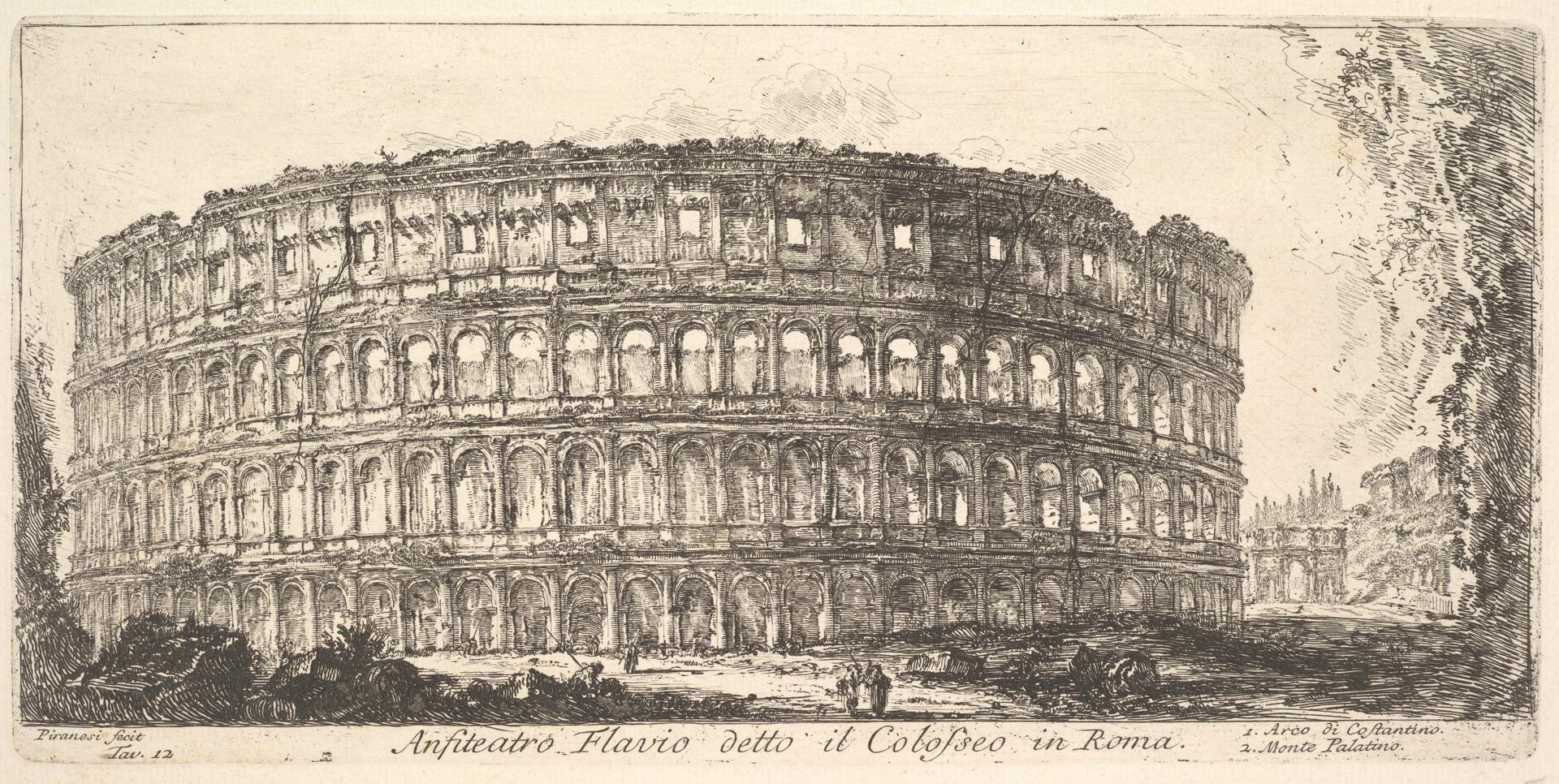
Plate 12: Flavian Amphitheater, called the Colosseum. 1. Arch of Constantine. 2. Palatine Hill. (Anfiteatro Flavio detto il Colosseo in Roma. 1. Arco di Costantino. 2. Monte Palatino.), from "Antichità Romane de' Tempi della Repubblica, e de' primi Imperatori"
Original title: Plate 12: Flavian Amphitheater, called the Colosseum. 1. Arch of Constantine. 2. Palatine Hill. (Anfiteatro Flavio detto il Colosseo in Roma. 1. Arco di Costantino. 2. Monte Palatino.), from "Antichità Romane de' Tempi della Repubblica, e de' primi Imperatori"
kurzbeschreibung
Giovanni Battista Piranesi devotes this sheet from the series 'Antichità Romane de' Tempi della Repubblica, e de' primi Imperatori' to the Flavian Amphitheatre in Rome, the so-called Colosseum. The etching, made around 1748, presents the building in side view, with the Arch of Constantine and the Palatine rising behind it.
Description
The layout places the Colosseum at the centre and arranges it symmetrically. Regularly articulated arcades with window openings run across the storeys. Behind the amphitheatre appear the Arch of Constantine and the Palatine Hill. Light falling from the upper left sharpens the shadows and the structure of the rows of arches. Black and white with graded hatching governs the print.
Context
This etching belongs to a series in which Piranesi documented the ancient monuments of Rome. It was made in the 1740s, when the artist was living in Rome and studying Roman architecture in depth. The sheet makes visible how closely the Colosseum, the Arch of Constantine and the Palatine stood together in the ancient cityscape.
Impact
Precise draughtsmanship and deliberate lighting give the sheet a sober architectural clarity. The symmetrical arrangement and the emphatic division of the arcades produce a calm, monumental mood.
Technique
The work was executed as an etching, an intaglio process in which the drawing is scratched into a copper plate and bitten with acid. Piranesi used fine and forceful lines to convey the texture of the stone and the depth of the arcades. The plate measures 13.4 × 27.4 cm; the sheet is printed on larger paper.
AI-generated description text
Source: Metropolitan Museum of Art · Public Domain (CC0 1.0)