Prima Parte di Architettura, e Prospettive inventate, ed incise da Giambatista Piranesi Architetto Veneziano fra gli Arcadi Salcindio Tiseio; Lettere di Giustificazione a Milord Charlemont plates, which were adapted to appear in the Opere Varie; Opere Varie; Grotteschi; Carceri; Archi Trionfali, and Trofei di Ottaviano Augusto
Original title: Prima Parte di Architettura, e Prospettive inventate, ed incise da Giambatista Piranesi Architetto Veneziano fra gli Arcadi Salcindio Tiseio; Lettere di Giustificazione a Milord Charlemont plates, which were adapted to appear in the Opere Varie; Opere Varie; Grotteschi; Carceri; Archi Trionfali, and Trofei di Ottaviano Augusto
kurzbeschreibung
This volume gathers etchings by Giovanni Battista Piranesi made between 1761 and 1809. It includes plates from several series, among them the Carceri and the Grotteschi, along with sheets intended for the Opere Varie. Architectural inventions and Roman monuments appear throughout, all produced in etching.
Description
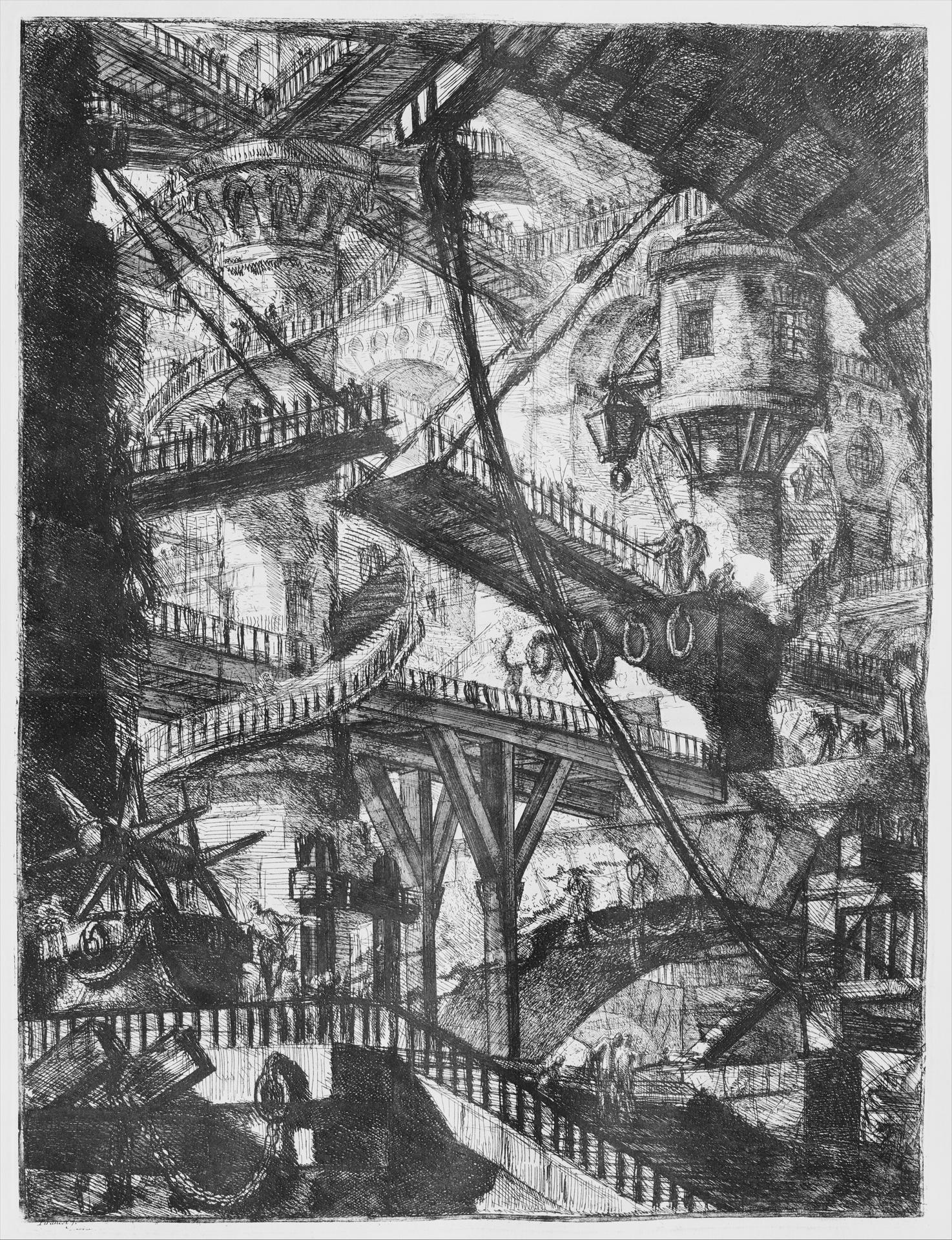
A layered architectural structure with bridges and several levels stands out, shaped in a style touched by the Gothic, with pointed roofs and round arches. Figures are scattered across the individual levels, which keeps the image lively. Many beams and supports divide the structure and give it stability. Towers and further building elements rise toward the rear, recalling a city or a palace. Everything remains monochrome in shades of grey, and light falling from above sharpens contours and details.
Context
Piranesi, resident in Rome from 1740, made these etchings there. They reveal his enthusiasm for ancient Roman architecture as well as a critical stance toward the architectural theories of his day. The Carceri first appeared around 1745 and were revised in 1761; the Grotteschi date from the 1740s. From 1761 onward the plates for the Opere Varie were assembled, and they were issued posthumously in several editions into the nineteenth century.
Impact
From the very first glance the print pulls the viewer into an invented architectural world that feels at once monumental and oppressive. Precisely guided lines meet dramatic light, creating the theatrical mood so characteristic of Piranesi's style.
Technique
Piranesi worked these sheets in etching, combining line biting with fine hatching. The work was done on copper plates treated with acid to yield delicate lines and deep shadows. The prints survive in various states and editions, a sign of the strong demand for his work.
AI-generated description text
Source: Metropolitan Museum of Art · Public Domain (CC0 1.0)