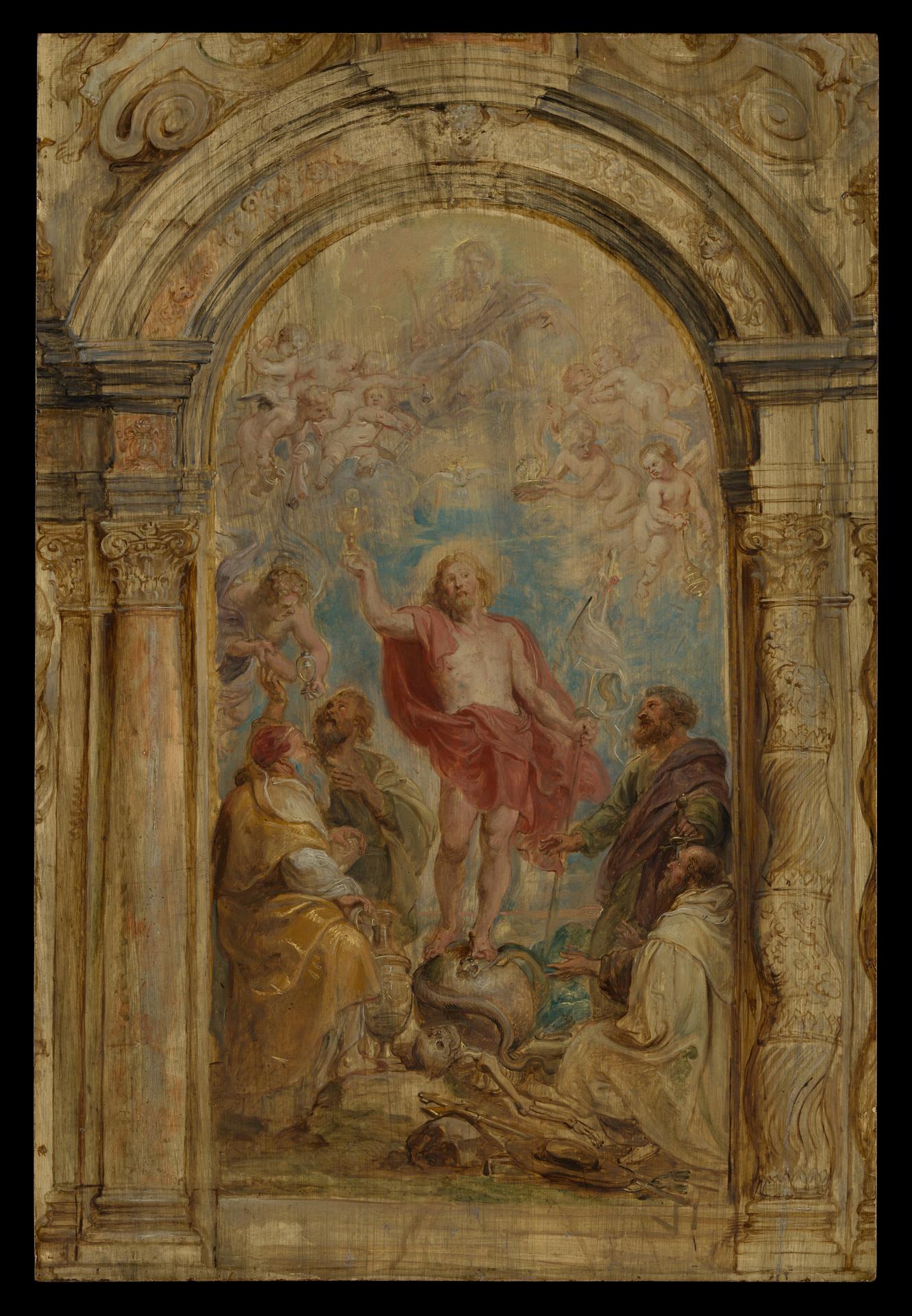
The Glorification of the Eucharist
Original title: The Glorification of the Eucharist
kurzbeschreibung
Peter Paul Rubens painted The Glorification of the Eucharist around 1630–32 in oil on wood. It presents a religious scene: Christ raises the chalice and host aloft, surrounded by angels and other spiritual figures.
Description
Christ stands on a platform, presenting the chalice and host. Two figures, likely apostles or prophets, frame him. Beneath the platform lie lifeless bodies, a reference to the sacrifice for humanity's redemption. Angels and celestial beings appear behind, pointing to Christ's divine status. The layout is symmetrical, centered entirely on the middle figure, who is set off by light falling from above.
Context
The picture was made between 1630 and 1632, when Rubens was working as the leading Baroque painter in Antwerp. It probably served as an oil sketch for a larger altarpiece or as an independent devotional image. The Catholic Counter-Reformation placed the Eucharist at the center of worship, which explains the subject. Rubens was known for casting complex theological content into dramatic images.
Impact
The symmetrical arrangement and Christ's central position create a solemn, devotional mood. Warm reds stand against cool blues and heighten the drama, while light from above emphasizes Christ. The dead figures and the heavenly beings together convey a deep spiritual message of sacrifice and redemption.
Technique
Executed in oil on wood, which allows fine details and a rich color palette. Rubens worked in a Baroque manner, with dynamic brushstrokes and strong light-and-shadow modeling. Glazes let him capture luminous tones and the precise drape of the garments.
AI-generated description text
Source: Metropolitan Museum of Art · Public Domain (CC0 1.0)