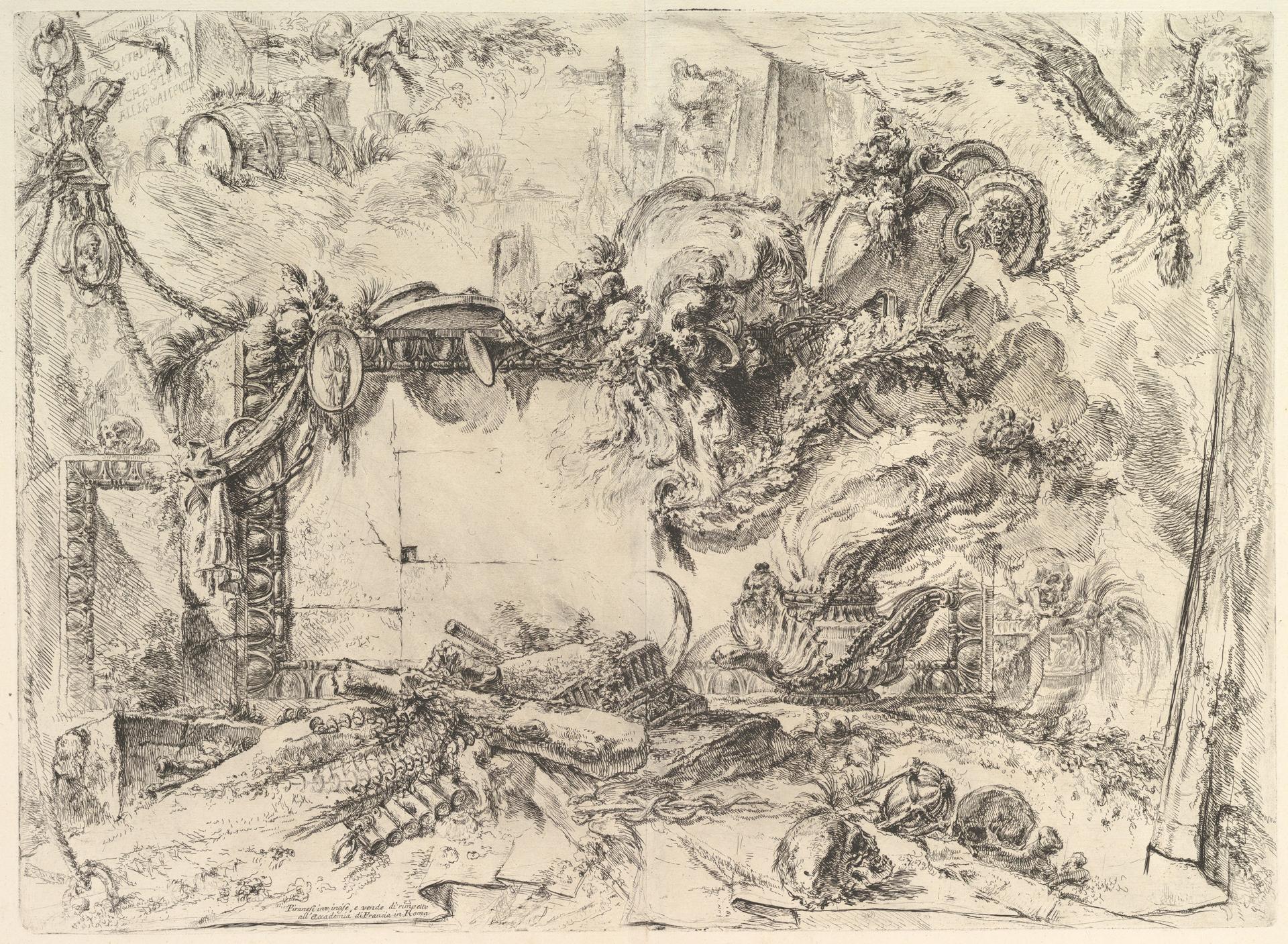
The Monumental Tablet, from "Grotteschi" (Grotesques)
Original title: The Monumental Tablet, from "Grotteschi" (Grotesques)
kurzbeschreibung
Giovanni Battista Piranesi's etching "The Monumental Tablet," made around 1748, sets an expansive relief crowded with figures within an architectural framework. The print belongs to the "Grotteschi" series and survives in the second of four states (Robison).
Description
A monumental relief forms the core of the image, enclosed by an elaborate frame with ornaments and sculptural decoration. Across the relief plate, a restless throng of figures presses forward in agitated ranks, surrounded by cloud formations, scrollwork, and further embellishment. Hints of buildings and landscape recede behind them. Stones, plant tendrils, and ornaments line the lower edge, bringing the composition to a close. Fine, varying hatching captures the whole in monochrome.
Context
The "Grotteschi" series arose during Piranesi's early Roman years, when he was deeply engaged with ancient ruins and the ornamental tradition. Grotesque motifs familiar from Roman wall painting offered inspiration. These etchings appeared at a time when Piranesi was beginning to establish himself as a draughtsman and architect—before his vedute brought him fame.
Impact
The abundance of detail and the pressing arrangement of figures produce an image that is both sumptuous and unsettling. Thin lines and densely layered planes create an intense, almost unreal depth that draws the eye into the ornamental world.
Technique
Etching was used together with supplementary techniques such as engraving, drypoint, and scratching, which allowed the finest details and surface textures to be worked out. The variation in line strength and the combination of several techniques open a broad range of tonal values and sculptural effect.
AI-generated description text
Source: Metropolitan Museum of Art · Public Domain (CC0 1.0)