The Fall of Satan
Original title: The Fall of Satan
kurzbeschreibung
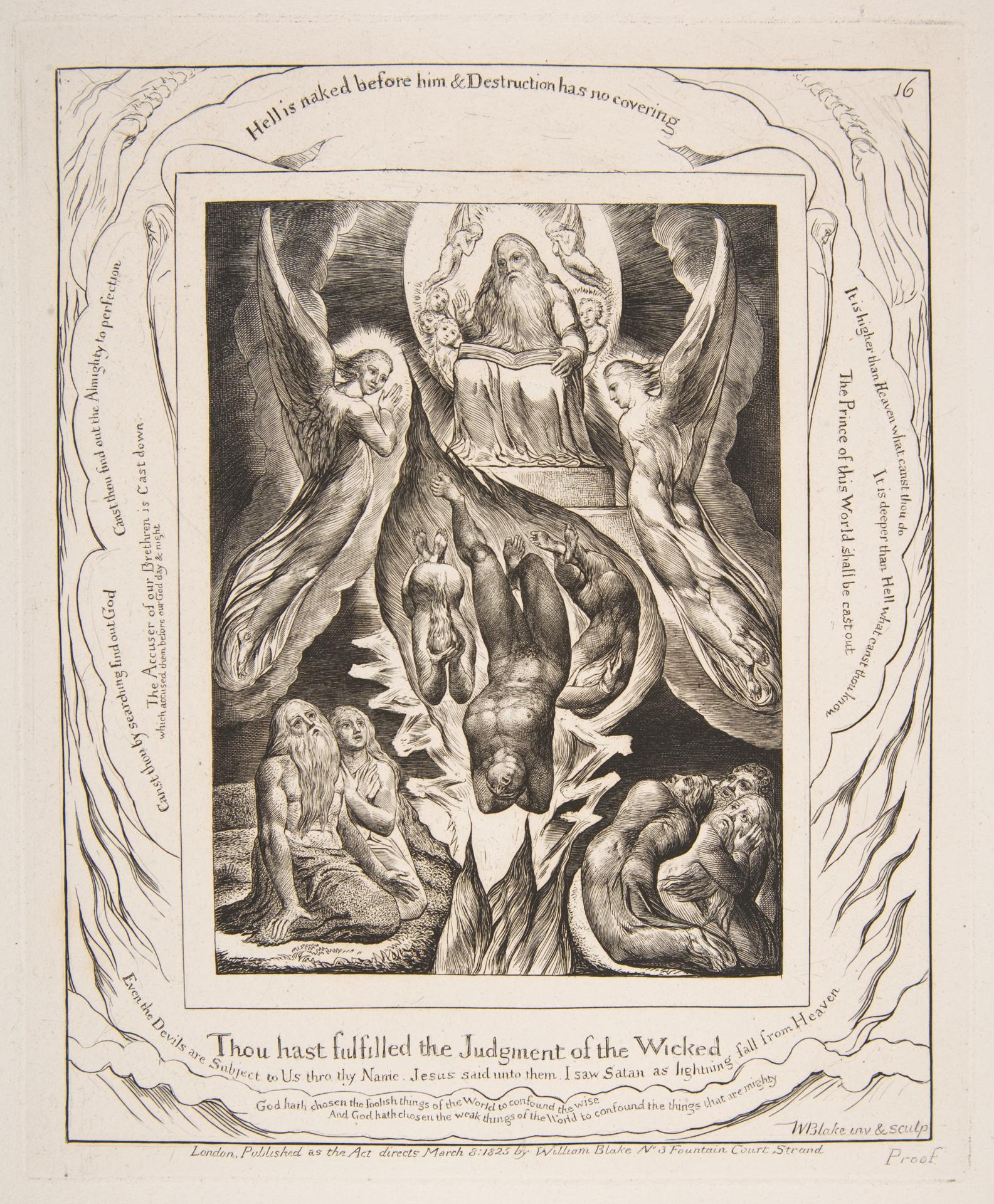
William Blake's engraving Der Fall Satans (The Fall of Satan, 1825–26) depicts the devil's expulsion from heaven. It belongs to his series of illustrations for John Milton's Paradise Lost and combines expressive figures with engraved biblical quotations.
Description
A throne and a central figure govern the upper part of the image, which is laid out symmetrically. Satan plunges downward in violent motion, surrounded by angels who drive him down or accompany him. Black and white with strong light-dark contrasts give the bodies a sculptural presence. The border consists of texts with biblical quotations and descriptions. The figures are worked out in detail, their poses expressing drama and movement.
Context
Between 1807 and 1827 Blake worked on illustrations for Milton's Paradise Lost; the engravings, however, appeared only after his death. This print falls in his late years, when he further developed his own printing methods. The fall of Satan is a core motif of Christian iconography, which Blake varied several times.
Impact
The harsh contrasts and Satan's agitated posture create dramatic tension. The symmetrical arrangement draws the eye to the heavenly order, while the devil's fall as a counter-movement makes the threat of chaos palpable.
Technique
For this copperplate engraving the lines were cut into the metal plate. Blake combined conventional engraving methods with his own relief etching to bring text and image together in a single, unified print.
AI-generated description text
Source: Metropolitan Museum of Art · Public Domain (CC0 1.0)