Songs of Innocence: Infant Joy
Original title: Songs of Innocence: Infant Joy
kurzbeschreibung
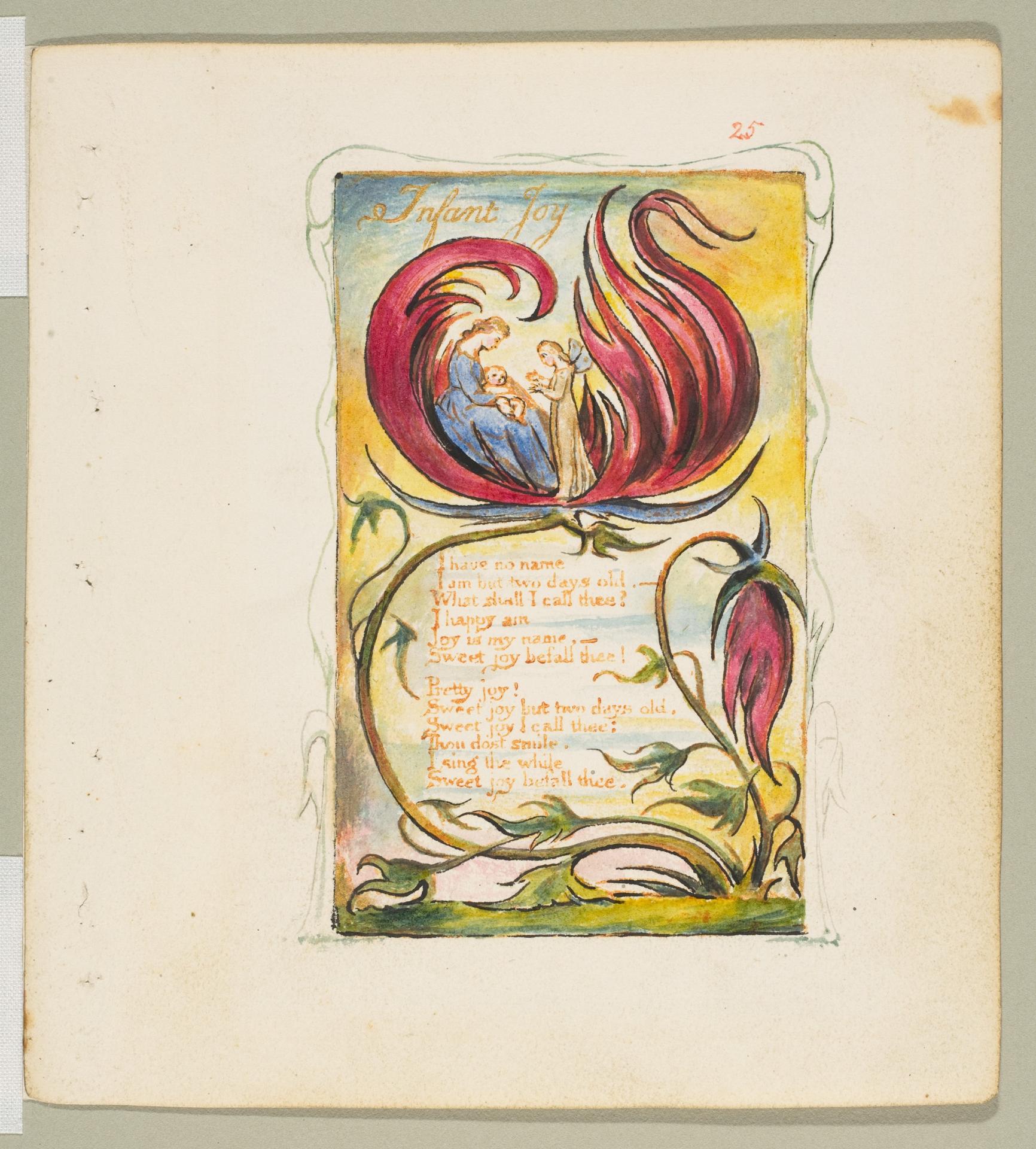
William Blake made "Songs of Innocence: Infant Joy" in 1789; this sheet was printed around 1825. The hand-coloured relief etching presents a stylised scene of two figures holding a child, encircled by a red ring of flame and floral ornament. Word and image merge into a single fabric of poetry and design.
Description
A round, stylised arrangement anchors the page: two figures in traditional robes hold an infant, framed by a glowing red that reads as flame. Beneath them sits a text panel with the verse lines "I have no name, I am but two days old...". Along the lower edge, leaves and blossoms in green and pink unfold, while the ground behind stays a pale yellow. Colours are vivid and the layout symmetrical and harmonious.
Context
Blake first published the Songs of Innocence in 1789 as part of a combined project of art and poetry. To make the prints he etched text and image onto a copper plate, then coloured the impressions by hand. This copy belongs to a later printing run of about 1825, produced in the final years of his life. The poem "Infant Joy" dwells on the innocence and gladness of a newborn, in keeping with the Romantic tradition of nature and childhood verse.
Impact
Bright colour and symmetry give the sheet a quiet, ceremonial mood. The red flame around the figures creates an aura of warmth and shelter, while the floral elements reinforce an idyllic atmosphere.
Technique
In relief etching the non-printing parts of the copper plate were bitten away, leaving the raised lines and areas to take up the ink. The impression was pulled in orange-brown ink, then the sheet was coloured by hand with watercolour and shell gold. This method let Blake treat each copy individually, so prints vary slightly from one another.
AI-generated description text
Source: Metropolitan Museum of Art · Public Domain (CC0 1.0)