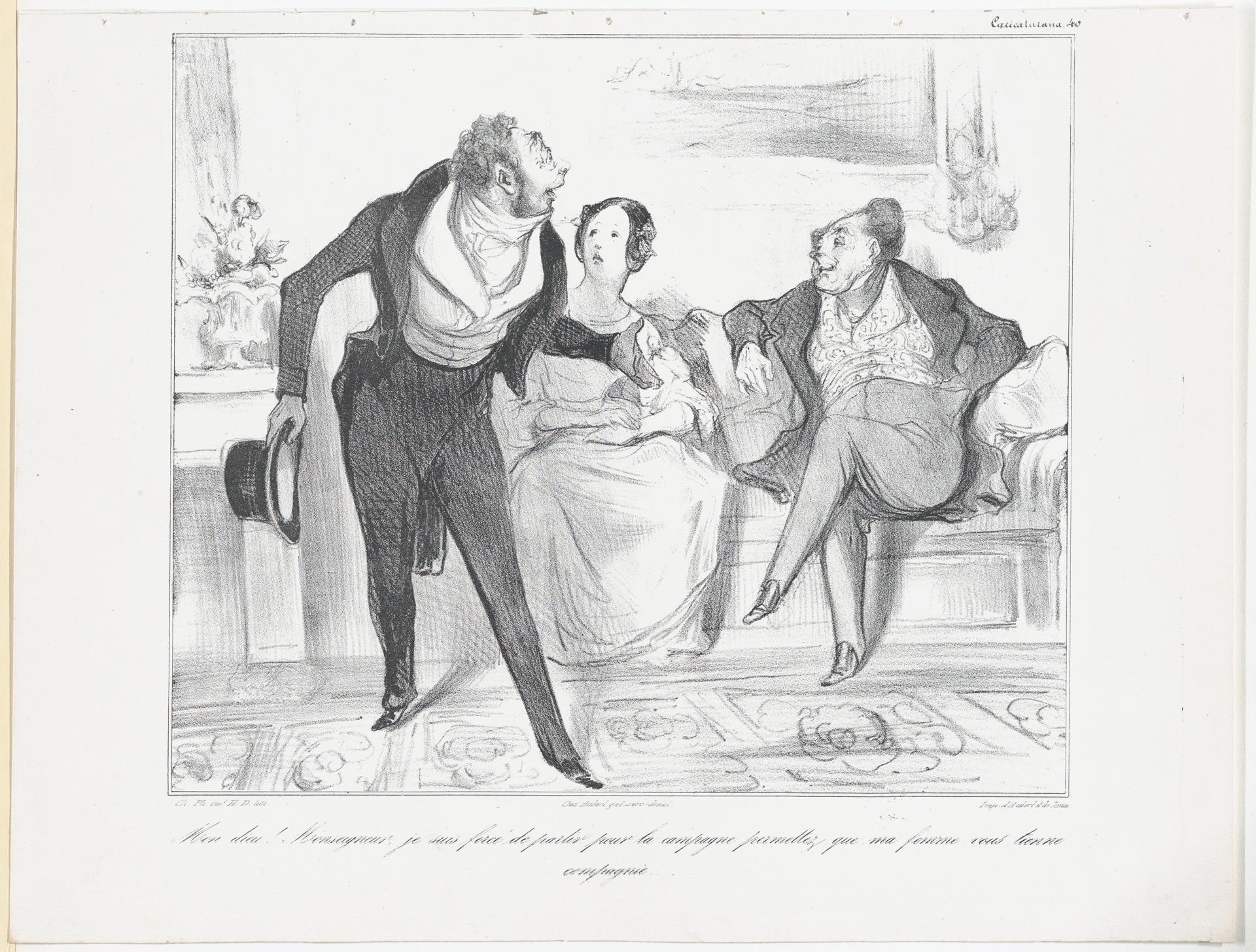
Plate 40: My God! Monseigneur, I am forced to leave for the countryside, allow me to leave my wife behind to keep you company, from 'Caricaturana,' published in Les Robert Macaires
Original title: Plate 40: My God! Monseigneur, I am forced to leave for the countryside, allow me to leave my wife behind to keep you company, from 'Caricaturana,' published in Les Robert Macaires
kurzbeschreibung
Three figures occupy an interior: a standing man looks up in surprise, while a woman and a seated gentleman on a sofa also glance upward. This scene comes from Honoré Daumier's 1838 lithograph, part of the 'Caricaturana' series. The print was published in 'Les Robert Macaires' and exists as the second state of two (Delteil).
Description
A formally dressed man stands at the center, his expression one of surprise or concern as he gazes upward. A woman in a long-sleeved dress sits on a sofa, also looking up, while another man, similarly formal, sits beside her and turns toward the others. A window and a wall with decorative elements are suggested behind them. The monochrome lithograph has even lighting, and the exaggerated facial expressions heighten its caricatural style.
Context
Created in 1838, this lithograph belongs to the 'Caricaturana' series, which appeared in the satirical journal 'Les Robert Macaires'. Daumier used the series to critique the bourgeoisie and the social ills of the July Monarchy. The character Robert Macaire, a swindler and impostor, recurs in Daumier's work as a symbol of the era's moral decay. The print is the second state of two (Delteil) and was printed on wove paper.
Impact
The exaggerated expressions and dynamic arrangement of the figures give the lithograph an immediate humorous and satirical effect. Even lighting and clear lines draw the eye to the central figure, heightening the drama of the situation. The caricatural distortion invites a smile without blunting the social critique.
Technique
The lithograph on wove paper relies on the chemical repulsion of grease and water. Daumier employed this process to produce the fine lines and shading essential to the facial expressions and the interior scene. The print is the second state of two, indicating that the plate was reworked after the first pull.
AI-generated description text
Source: Metropolitan Museum of Art · Public Domain (CC0 1.0)