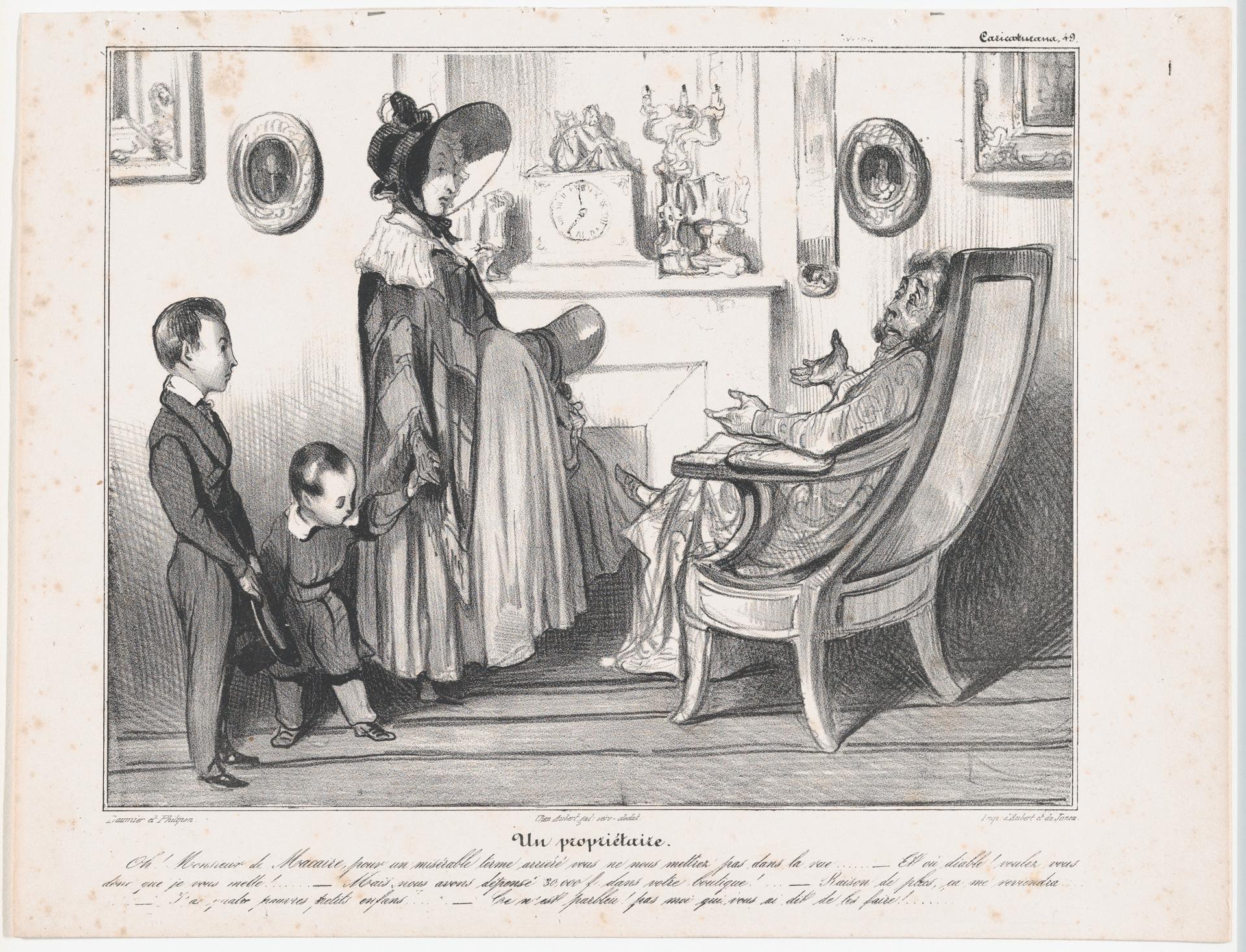
Plate 49: A Landlord, from 'Caricaturana,' published in Les Robert Macaires
Original title: Plate 49: A Landlord, from 'Caricaturana,' published in Les Robert Macaires
kurzbeschreibung
Unlike many satirical sheets of those years, which rely on blunt exaggeration, this lithograph works through quiet confrontation: a landlord sits facing a woman and two children. Honoré Daumier's print of 1838 belongs to the 'Caricaturana' series and appeared in 'Les Robert Macaires'. The surviving impression is the second state of two (per Delteil).
Description
A man settled in a chair holds forth with a sweeping gesture, addressing a woman in a large hat and long-sleeved dress along with two children. His listeners look attentive, and the children stand close beside him. Pictures on the wall, a clock, and a sculpture furnish the room. A French text along the lower margin frames the scene.
Context
Made in 1838, the sheet takes its place in Daumier's 'Caricaturana', a series built on the popular rogue Robert Macaire from a play of 1834. It mocked social types and the grievances of the July Monarchy. The lithograph was published in the journal 'Les Robert Macaires', which Daumier co-edited.
Impact
A precise character study and a satirical edge interpenetrate: the landlord comes across as a self-satisfied talker. The calm, pointed arrangement draws the eye to how the figures interact and to the social friction between them. In its critique of bourgeois authority, the lithograph remains remarkably current.
Technique
Lithography on wove paper: the drawing is made with greasy chalk on stone and then printed. Daumier valued the process for its speed and wide circulation, typical of satirical sheets of the period. This impression survives in the second state, which points to later reworking.
AI-generated description text
Source: Metropolitan Museum of Art · Public Domain (CC0 1.0)