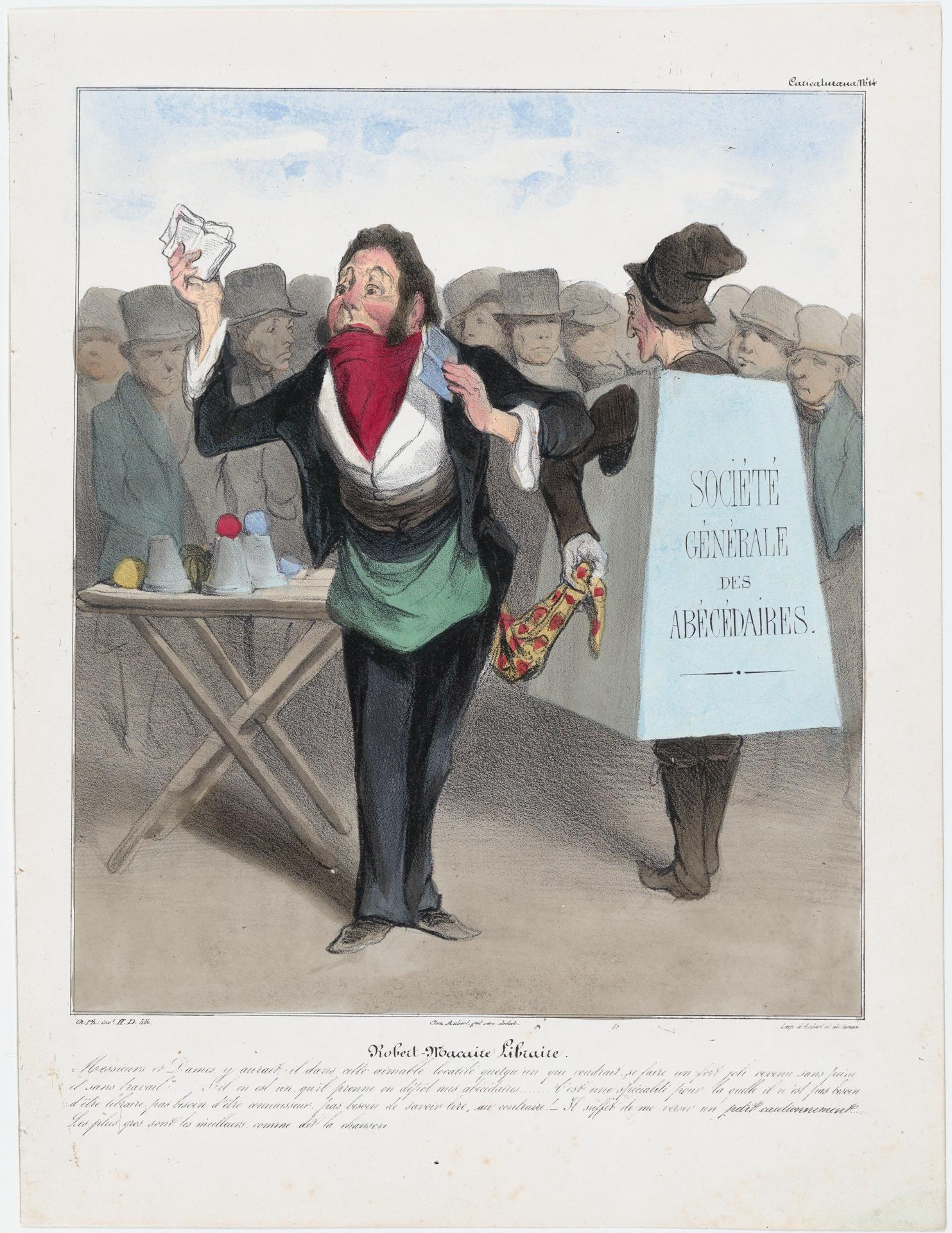
Plate 14: Robert Macaire bookseller, from 'Caricaturana,' published in Les Robert Macaires
Original title: Plate 14: Robert Macaire bookseller, from 'Caricaturana,' published in Les Robert Macaires
kurzbeschreibung
Honoré Daumier made this lithograph in 1838, a humorous caricature of a bookseller in a market scene. The print belongs to the 'Caricaturana' series and appeared in the publication 'Les Robert Macaires'. It is executed as a colored lithograph on wove paper.
Description
In the foreground stands a man in a red apron, black jacket, white shirt, and green vest; he holds a sheet of paper in his hand with an expression of surprise or shock. A second figure beside him carries a sign reading 'SOCIÉTÉ GÉNÉRALE DES ABÉCÉDAIRES'. Behind them, several people in various clothes are visible with objects such as shoes and bowling pins. The setting is a street or marketplace; the colors are mainly blue, red, green, and brown. Even light without visible shadows emphasizes the illustrative character.
Context
The 'Caricaturana' series began in 1836 in collaboration with the writer Charles Philipon and was published in the satirical journal 'Le Charivari'. The figure Robert Macaire, originally from a play, became a symbol of unscrupulous business dealings and fraud. Through him, Daumier addressed social ills and the bourgeoisie of July Monarchy France. Two states of the lithograph exist; this impression is the second.
Impact
The exaggerated facial expressions and bright colors make the caricature immediately comic and memorable. The distortion underscores the absurdity of the situation without becoming grotesque. Even lighting and clear contours give the print illustrative clarity.
Technique
The work was produced as a colored lithograph on wove paper: the drawing is transferred to a stone and printed. The colors were added afterward, presumably by hand or with stencils. This is the second state of two, meaning that corrections or additions were made after the first printing.
AI-generated description text
Source: Metropolitan Museum of Art · Public Domain (CC0 1.0)