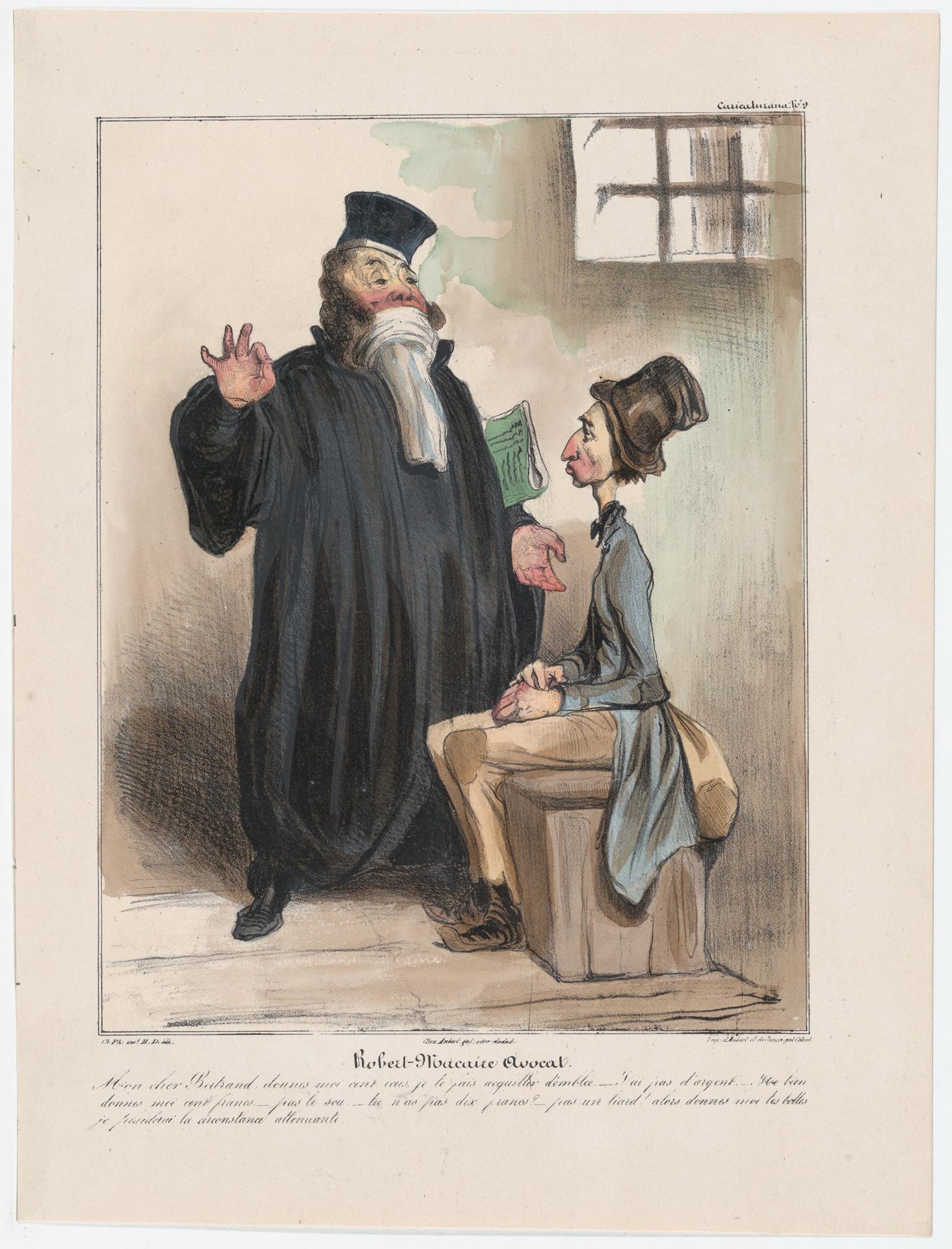
Plate 9: Robert Macaire, barrister, from 'Caricaturana,' published in Les Robert Macaires
Original title: Plate 9: Robert Macaire, barrister, from 'Caricaturana,' published in Les Robert Macaires
kurzbeschreibung
In this 1838 lithograph Honoré Daumier turns his satirical eye on the lawyer Robert Macaire. The sheet belongs to the 'Caricaturana' series and appeared in the publication 'Les Robert Macaires'. It is a hand-coloured stone print reproducing the second of three states as catalogued by Delteil.
Description
Two men meet in a room with a wide window. On the left a figure in a black suit and cap stands with a paper bag held to his mouth, arms in motion. Facing him sits a man in a top hat, pale blue shirt and brown trousers, his gaze fixed on the speaker. Tones stay mostly muted; only the clothing and the top hat provide accents. Even light falls across the sheet, with no strong shadows.
Context
With Robert Macaire, Daumier created a satirical figure embodying the unscrupulous businessman and charlatan of July Monarchy France. The 'Caricaturana' series had been running in the journal 'Le Charivari' since 1836. In those years Daumier faced growing censorship over his political caricatures and turned increasingly to satirical observation of social types.
Impact
Exaggerated gestures and the uneven balance of power between the two figures generate a tension that is comic and critical at once. The paper bag held over the standing man's mouth gives the sheet an absurd touch that invites a smile while pointing to the lawyer's rhetoric.
Technique
Fine strokes and dense hatching build contours and tonal values in this colour lithograph on wove paper, a printing method common in Daumier's day. What survives is the second of three states, which points to later reworking of the stone. The colours were probably applied by hand or through stencils, as was usual in caricature production of the period.
AI-generated description text
Source: Metropolitan Museum of Art · Public Domain (CC0 1.0)