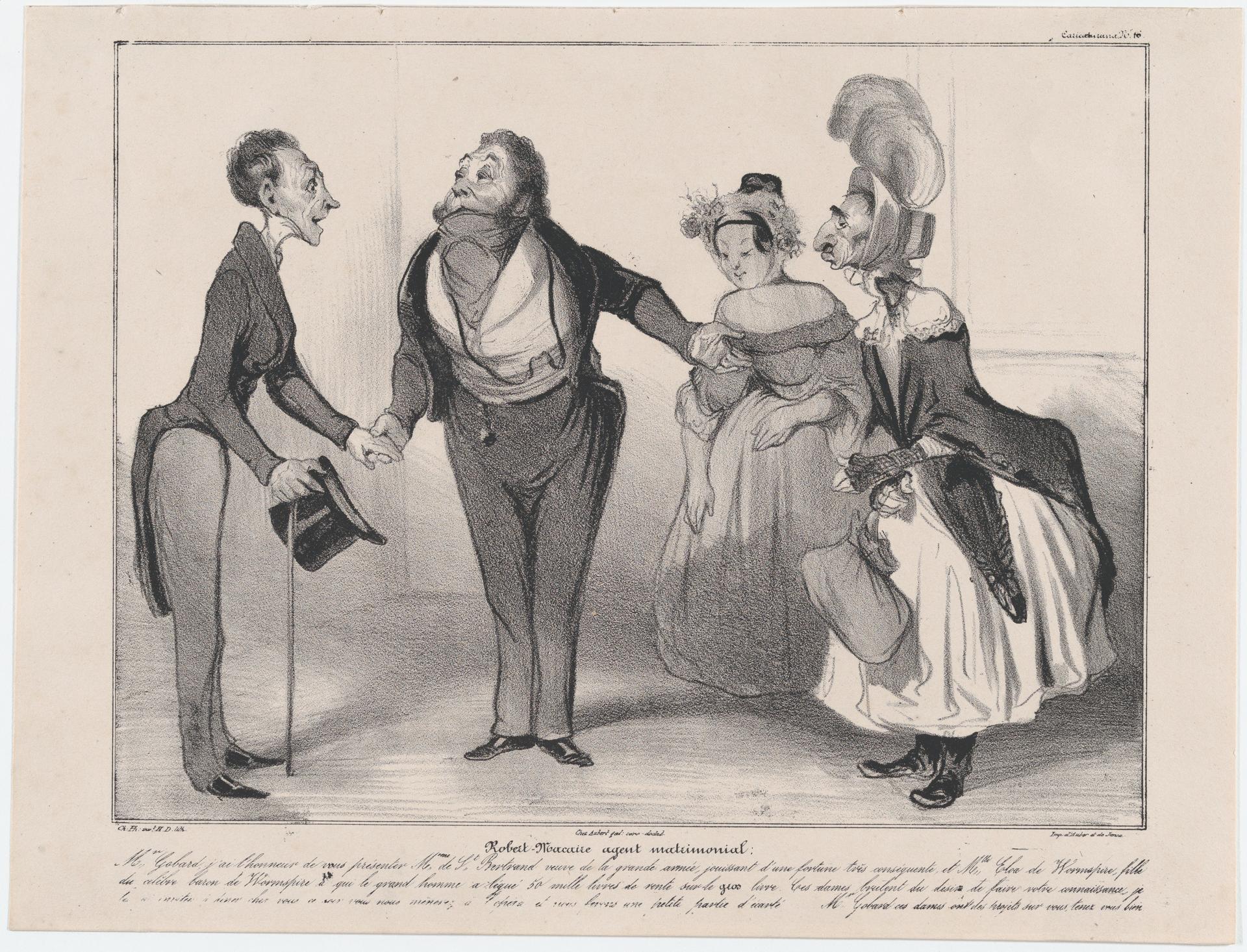
Plate 16: Robert Macaire matrimonial agent, from 'Caricaturana,' published in Les Robert Macaires
Original title: Plate 16: Robert Macaire matrimonial agent, from 'Caricaturana,' published in Les Robert Macaires
kurzbeschreibung
A jovial 1838 lithograph by Honoré Daumier featuring four figures: a conspicuously dressed man holds a woman by the hand while turning to another man. The print belongs to the 'Caricaturana' series and is a black-and-white impression on wove paper.
Description
Four people are staggered across the sheet: on the left, a gentleman in a top hat with a cane; in the middle, the man in a smart suit, holding the hand of a woman in traditional dress and headdress; beside her, another woman with a worried expression. Postures and facial expressions suggest a conversation or negotiation. The monochrome print uses sharply set light and shadow edges that outline clothing and faces. Caricatural exaggeration of features and a lively arrangement of figures define the image.
Context
Published in 1838 within the series 'Les Robert Macaires,' which builds on the successful 'Caricaturana' series. Daumier shaped the figure of the cunning impostor Robert Macaire into an emblem of bourgeois ruthlessness. The lithograph dates from the July Monarchy, when Daumier regularly produced satirical sheets for the Parisian public. The series attacked social ills and individual professions—here that of the marriage broker.
Impact
The exaggerated proportions and crowded lineup of figures produce immediate comic effect. Harsh light-dark contrasts lend the scene a theatrical quality that reinforces the satirical tone.
Technique
Executed as a lithograph on wove paper, second state of two (Delteil). The lithographic process allows both fine shading and sharp contours that serve the caricatural intent. The printing plate was worked with greasy chalk, resulting in graded gray values and a lively flow of lines.
AI-generated description text
Source: Metropolitan Museum of Art · Public Domain (CC0 1.0)