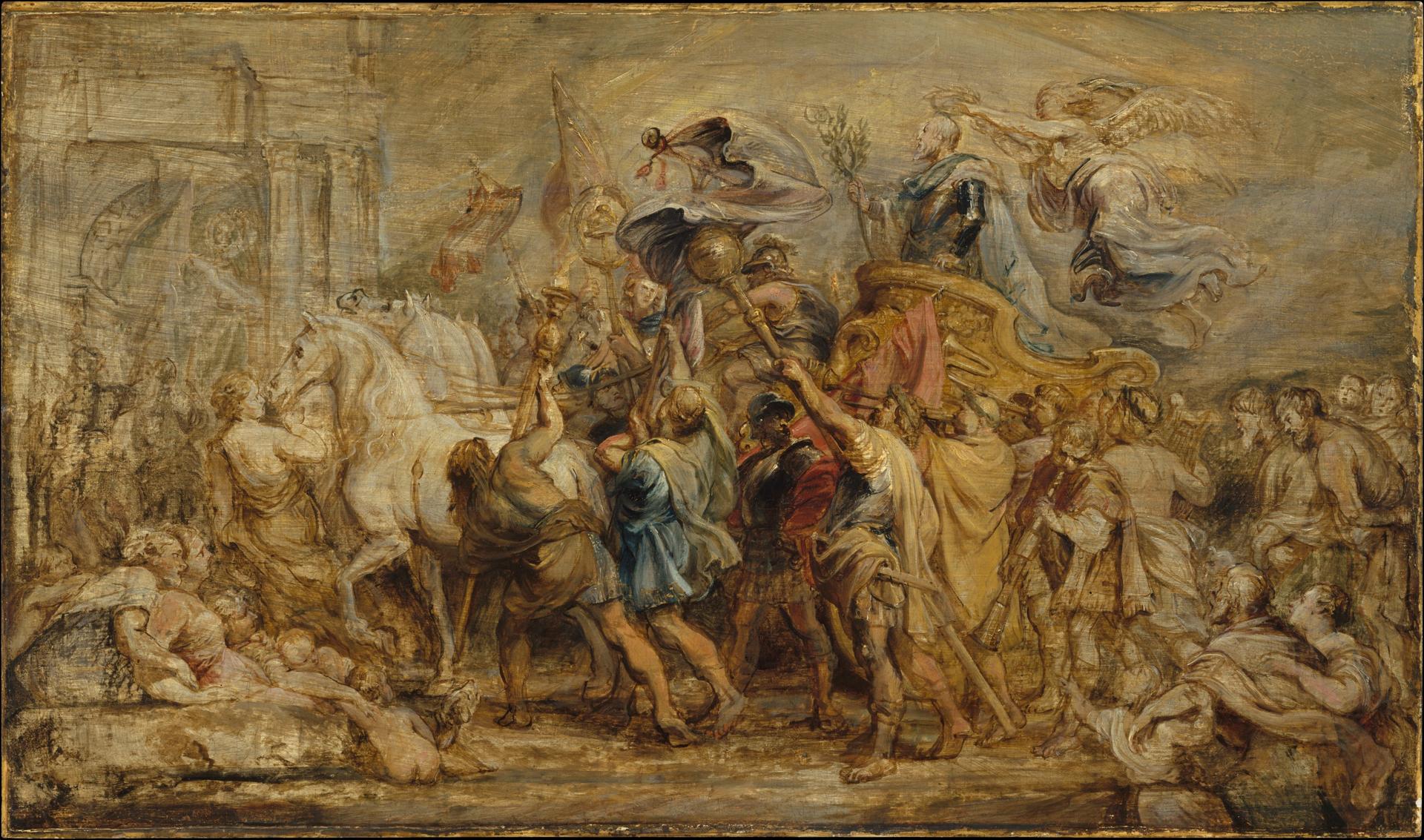
The Triumph of Henry IV
Original title: The Triumph of Henry IV
kurzbeschreibung
Peter Paul Rubens painted this triumphal procession of a ruler around 1630 in oil on wood. A white horse carries the central figure, surrounded by armored men, while angels and other supernatural beings sweep through the air above them. Earthy tones dominate, accented with gold and red, giving the whole a regal resonance.
Description
A white horse anchors the middle, hemmed in by several figures, some in armor and helmets. Behind them, more people in traditional dress appear, like onlookers or participants in the train. Above the horse and foreground figures, angels and supernatural beings rise into the sky, a sign of divine support for victory. The palette remains mostly earthy, with accents of gold and red that heighten the royal mood. Diffused light bathes the action in a dramatic, almost mystical atmosphere.
Context
Rubens made this picture around 1630, when he was working as a painter for various European courts. It belongs to a group of works treating historical and allegorical subjects, often celebrating the rule of monarchs. Rubens knew how to weave complex pictorial structures with mythological and political messages. The triumphal procession was a favorite theme of Baroque painting for expressing power and divine legitimation.
Impact
Dynamism and grandeur shape the layout and draw the viewer into the solemn mood of the triumph. Earthly and heavenly elements merge into an exalted, almost sacred aura that underscores the significance of the ruler shown.
Technique
Rubens turned to oil on wood, a method common in his day that allows fine details and vivid colors. The handling reveals the agitated brushwork typical of the Baroque and a sure command of light and shadow to create depth and movement.
AI-generated description text
Source: Metropolitan Museum of Art · Public Domain (CC0 1.0)