Le Charivari, December 1, 1832–May 31, 1833
Original title: Le Charivari, December 1, 1832–May 31, 1833
kurzbeschreibung
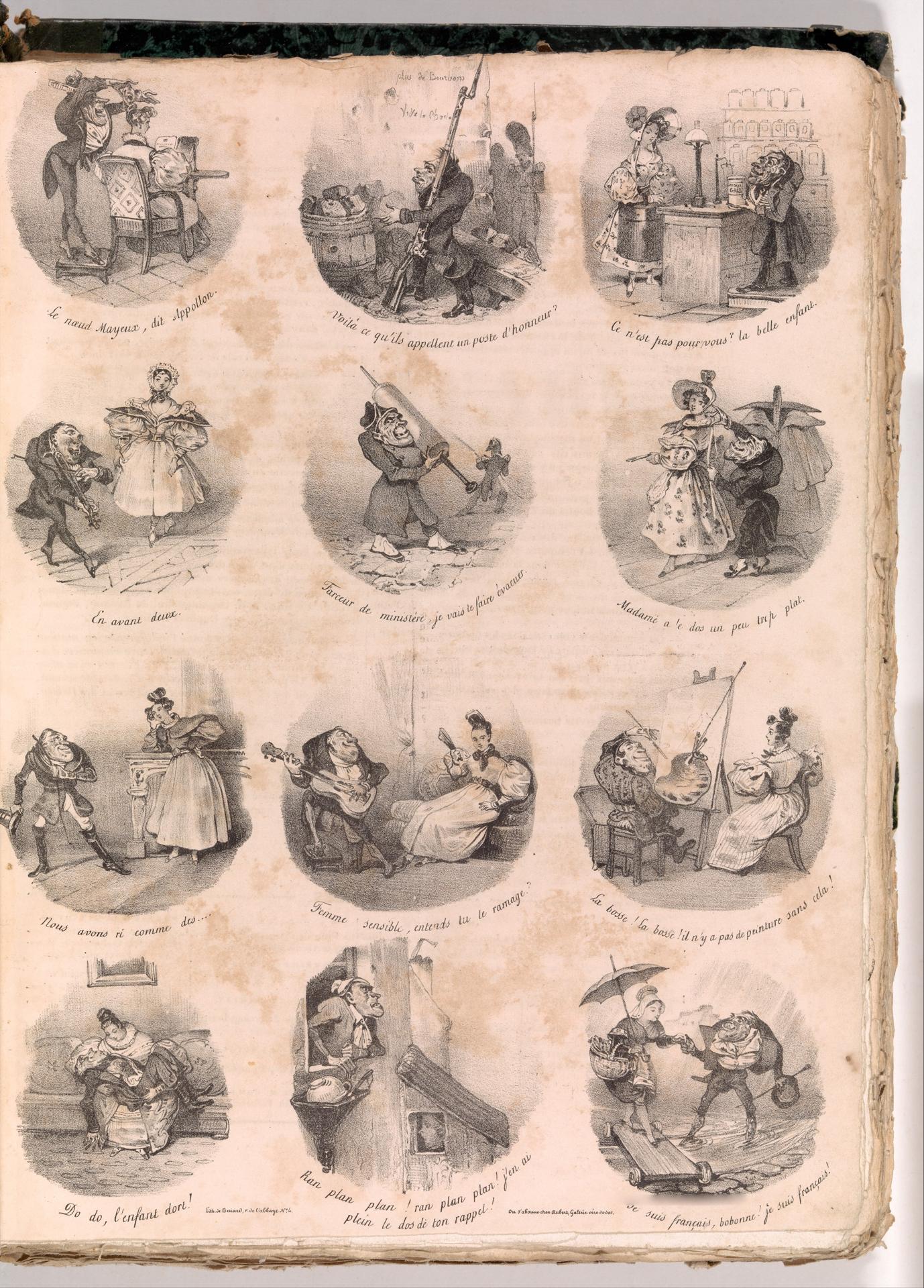
Honoré Daumier, a regular contributor to the satirical journal Le Charivari, assembled this bound album of lithographs and wood engravings from 1832 to 1833. The twelve plates, arranged in a square formation, come from that publication and present caricatural scenes of everyday Parisian life.
Description
Twelve individual motifs are spread across the album's pages in a square arrangement. Each image presents people in various situations, with figures exaggerated into caricature through oversized facial features and body language. The scenes range from ordinary occurrences to comedic performances. French captions beneath the images provide context or the title of each scene. The palette remains largely in grayscale, and the paper shows signs of aging.
Context
In the 1830s, Daumier was a core member of the staff at the satirical journal Le Charivari, known for its political and social caricatures. These lithographs were made during a period of political unrest in France after the July Revolution of 1830. Daumier used printmaking to comment on contemporary types and grievances in Parisian society. The album gathers a selection of these works from half a year of the journal.
Impact
The caricatural exaggerations give the scenes an immediate, often comic effect. The detailed prints invite close looking and reveal the artist's satirical bite. The aging of the paper reinforces the album's historical character.
Technique
The plates are executed as lithographs and wood engravings, typical print techniques of the 19th century. Lithography allows for fine, detailed lines, while wood engraving produces stronger contrasts. The grayscale palette and the patina of age are characteristic of these prints.
AI-generated description text
Source: Metropolitan Museum of Art · Public Domain (CC0 1.0)