The Third-Class Carriage
Original title: The Third-Class Carriage
kurzbeschreibung
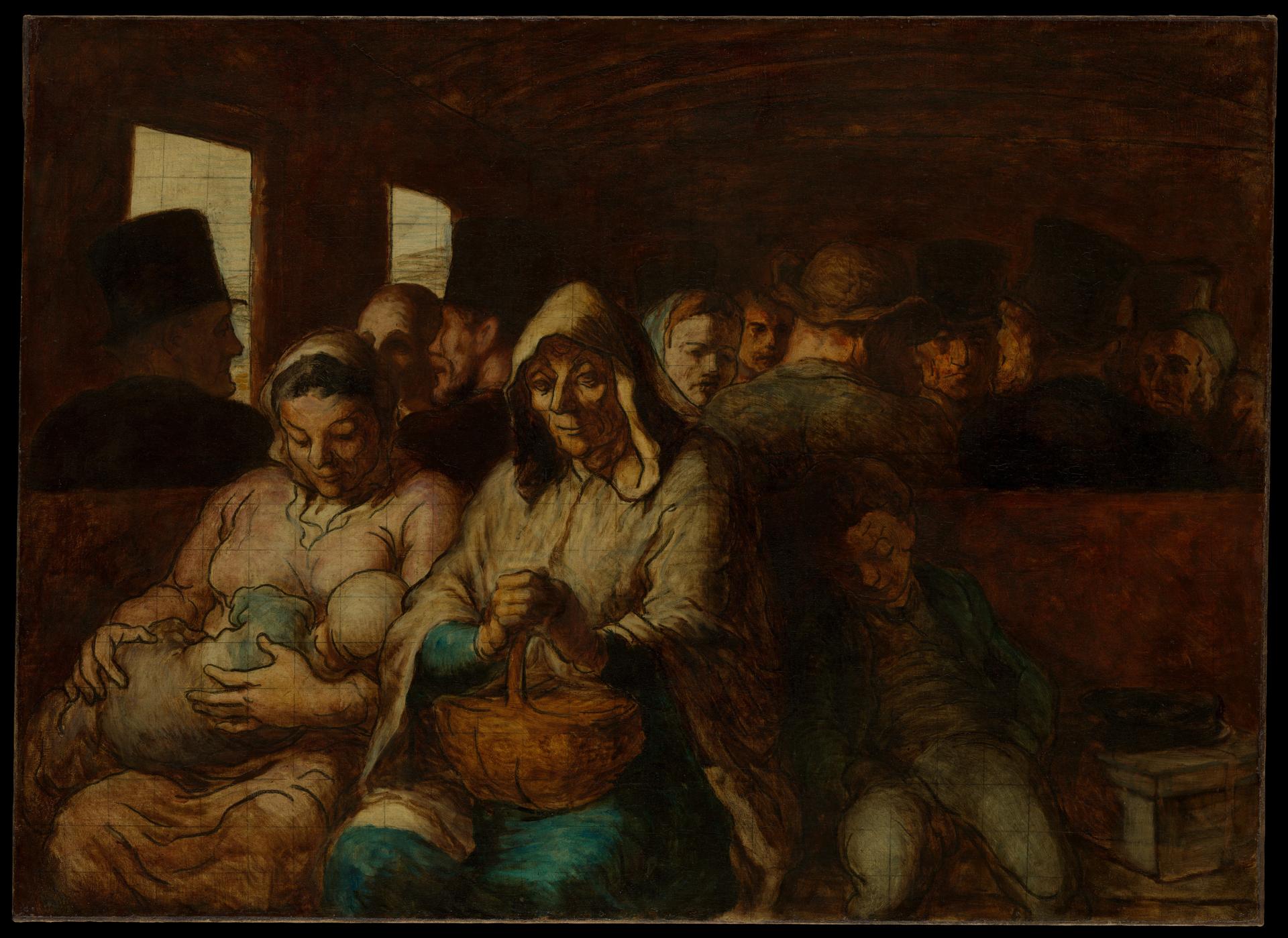
Honoré Daumier’s 1864 painting Der Wagen dritter Klasse shows the inside of a crowded third-class railway compartment. The oil on canvas (65.4 x 90.2 cm) captures the everyday life of ordinary travelers.
Description
A woman with a child on her lap sits at the front, while another woman beside her holds a basket. Around them people press together in the narrow compartment; some sit on benches, others stand or move in the central aisle. The figures’ clothing is traditional, and their faces are rendered lifelike with delicate colors and soft contours. Dim light enters from the left, casting a warm, diffuse glow over the scene. Earthy dark tones dominate the palette, and the layout feels cramped and densely packed.
Context
This picture was made in the 1860s, when the railway was gaining increasing importance in France and third class had become the usual means of transport for many workers and peasants. Daumier, otherwise known for his socially critical caricatures, turned here to a serious subject: the living conditions of the lower classes. Left unfinished, the painting became known only after his death.
Impact
The tight arrangement and earthy colors evoke an oppressive yet also calm and dignified mood. The way ordinary people are portrayed feels sympathetic and unvarnished, inviting the viewer to engage inwardly.
Technique
Daumier worked in oil on canvas in a rather sketchy manner, with loose brushstrokes and subdued color. Soft contours shape the figures, giving the picture a painterly, almost impressionistic quality.
AI-generated description text
Source: Metropolitan Museum of Art · Public Domain (CC0 1.0)