Le Charivari, December 1, 1832 - May 31, 1835
Original title: Le Charivari, December 1, 1832 - May 31, 1835
kurzbeschreibung
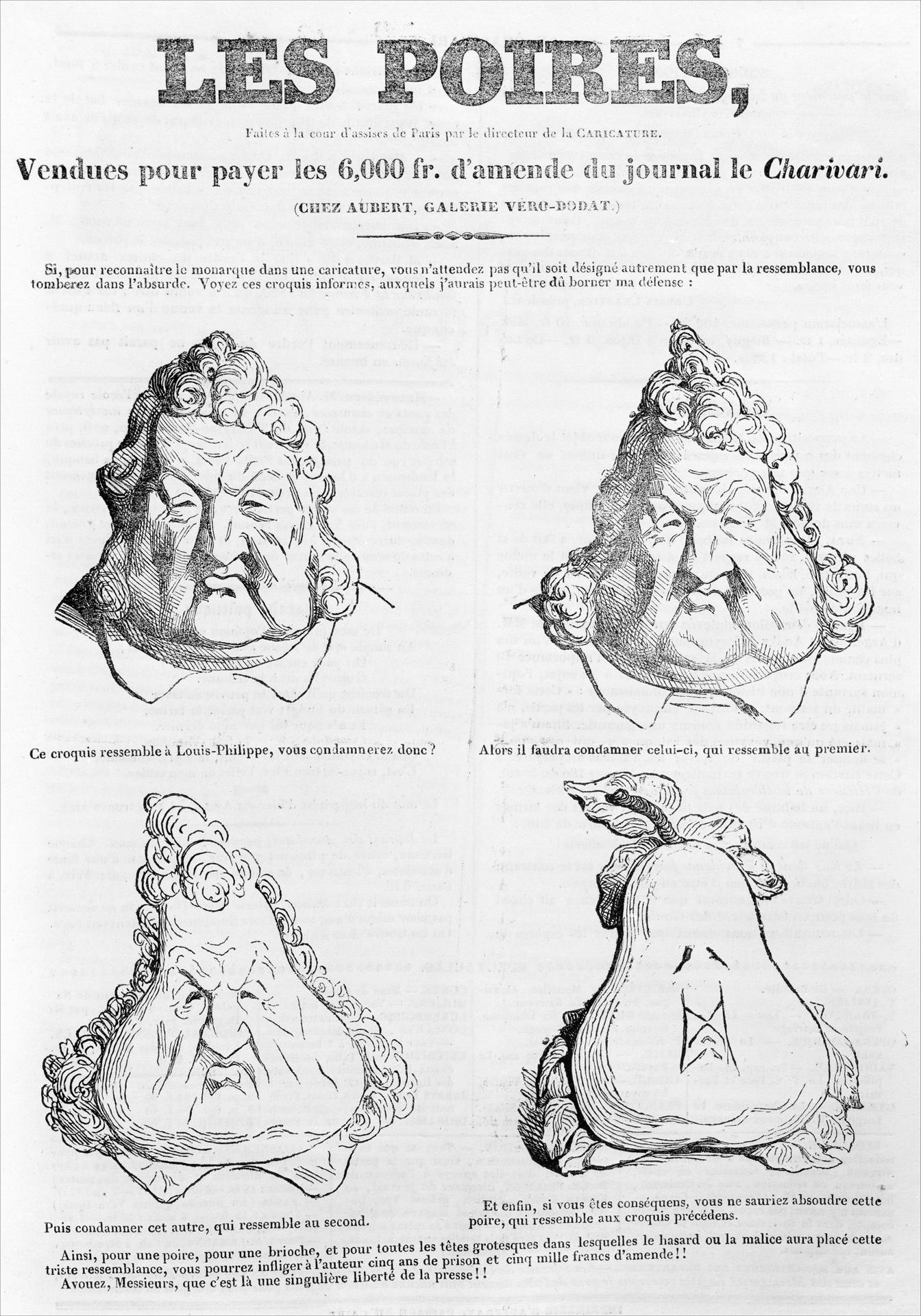
This bound album by Honoré Daumier, produced between 1832 and 1835, brings together lithographs and wood engravings in a collection of satirical caricatures. The title page features the famous pear caricature, which depicts the French king Louis-Philippe as a pear. Image and text together attack the curtailment of press freedom.
Description
Four stylized portraits with exaggerated features and expressions ranging from neutral to aggressive fill the sheet; they evoke rulers' faces and are framed by curly hair. In the lower area, fruits overlap the faces, and these fruits themselves have facial features. The pears, as they are recognizable, are assigned to the portrayed figures. French texts at the bottom refer to the sale of the caricatures and criticize the lack of press freedom.
Context
The caricatures were made during the July Monarchy under King Louis-Philippe. Because his head was associated with a pear, the pear became a symbol of the king. Publication in the satirical magazine 'Le Charivari' led to censorship and to Daumier's temporary imprisonment for insulting the king. The album documents the artistic engagement with political repression.
Impact
Grotesque portraits and symbolic fruits together have an immediate satirical effect. The exaggeration of facial features makes the caricature recognizable as mockery even without background knowledge. The contrast between the serious ruler faces and the ridiculous pears undermines the authority of those depicted.
Technique
Lithography, supplemented by wood engravings, allowed inexpensive mass production. Lithography permitted fine lines and shading that emphasize the caricatural details. The combination with wood engraving points to an elaborate printing technique optimized for publication in a magazine.
AI-generated description text
Source: Metropolitan Museum of Art · Public Domain (CC0 1.0)