Jacob Hurd
Original title: Jacob Hurd
kurzbeschreibung
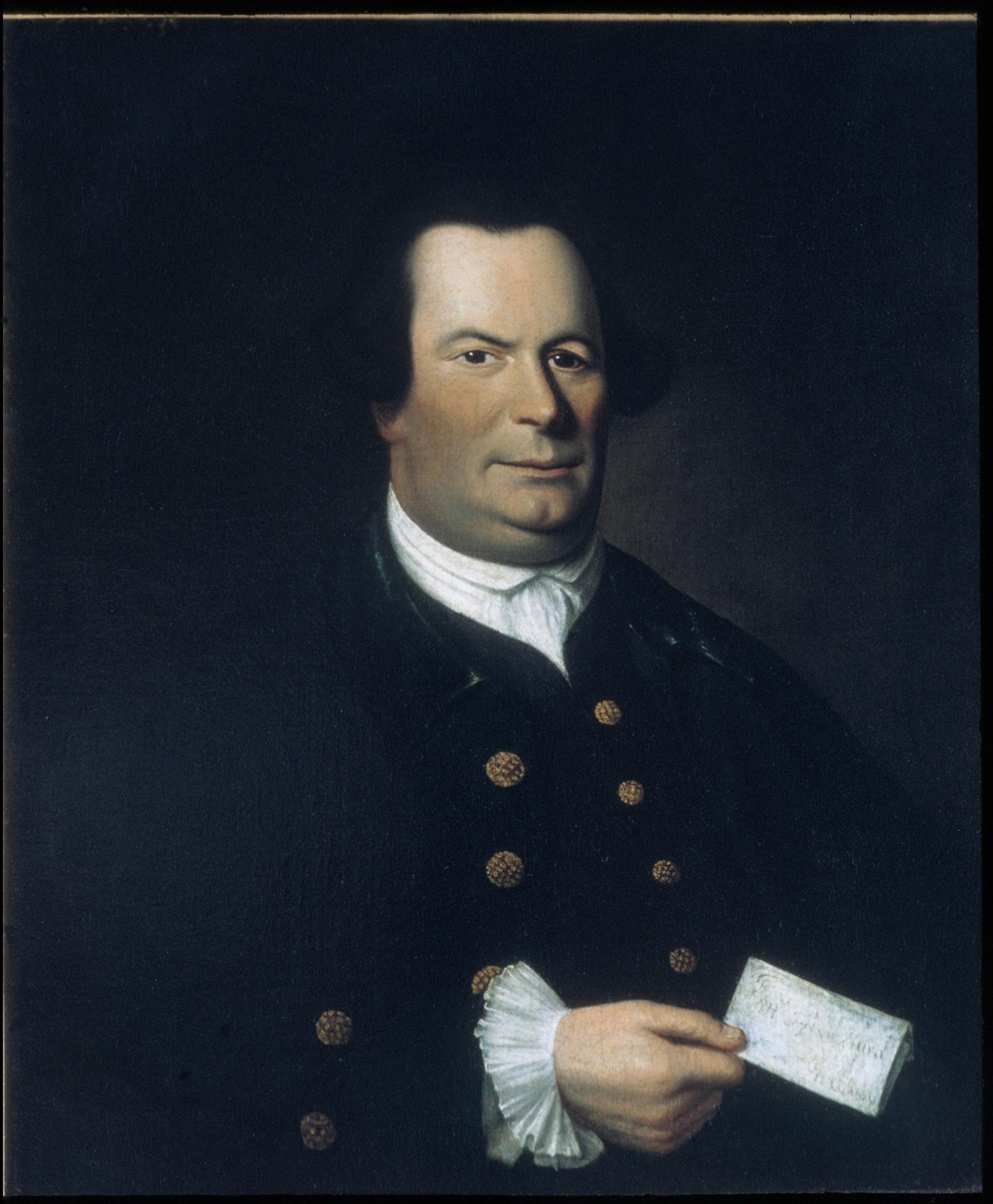
William Johnston painted the silversmith Jacob Hurd in oil on canvas around 1762. The sitter appears in formal dress, holding a document, against a dark background.
Description
The man wears a dark, ceremonial coat with gold buttons and a white shirt cuff at the collar. His right hand grasps an open document or letter. The background remains uniformly dark, making the figure stand out clearly. The colors are muted, with tension between the dark fabric and the light areas of shirt and buttons. No other figures or objects appear in the image.
Context
Johnston, an 18th-century American portraitist, worked in Boston. Jacob Hurd was a respected silversmith there; the portrait dates from the years Johnston was active in New England. It belongs to colonial portraiture, which often depicted prosperous citizens in formal attire.
Impact
Calm and dignity emanate from the portrait, carried by the dark coloring and the direct engagement. The composed posture and serious expression create distance without diminishing respect — a trait typical of portraits of this period.
Technique
The painting is executed in oil on canvas, as was customary for portraits in the 18th century. The brushwork brings out fine details of the clothing while holding back the modeling of the face; light and shadow serve to emphasize the figure.
AI-generated description text
Source: Metropolitan Museum of Art · Public Domain (CC0 1.0)