Joseph Sherburne
Original title: Joseph Sherburne
kurzbeschreibung
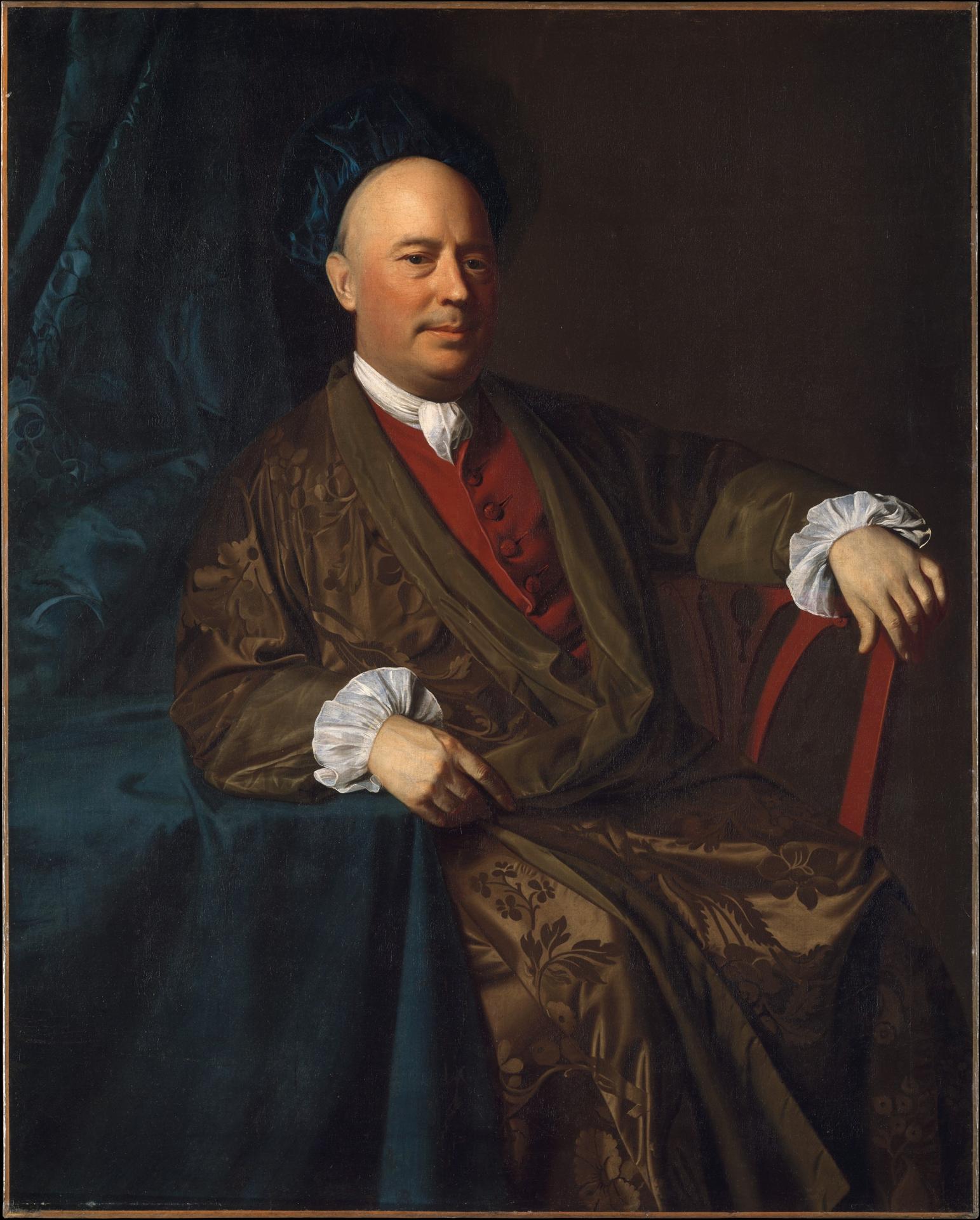
John Singleton Copley painted this portrait of Joseph Sherburne between 1767 and 1770 in oil on canvas. Sherburne appears in an elegant, floral-patterned gown with a red collar and white shirt, seated on a chair with a red cushion. The picture is one of the telling examples of Copley's portraiture in colonial America.
Description
The sitter wears a dark brown, floral-patterned gown, a red shirt collar, and a white shirt with sleeves rolled up at the forearms. Seated on a chair with a red back cushion, he turns his gaze slightly to the left; his expression is calm and composed. A dark curtain in the background separates the figure slightly and draws the eye to the man. Light falling from the side brings out the texture and color of the gown and the folds of the chair.
Context
Copley was the leading portrait painter in colonial Boston and focused on wealthy merchants and notables. Joseph Sherburne, a successful merchant, explains the representative character of the portrait. The painting was made before the American Revolution, when the colonial elite paid attention to self-presentation befitting their status. Without formal European training, Copley developed his own naturalistic style that made him famous.
Impact
Dignity and prosperity are conveyed through the detailed rendering of fabrics and accessories. The sitter's calm posture and direct gaze create a distant but respectful presence. The dark background and side lighting give the picture a solemn, almost theatrical atmosphere.
Technique
Copley worked with oil paint on canvas in a glazing technique typical of his time to achieve fine color transitions and fabric textures. The precise brushwork is evident in the detailed floral pattern and the folds of drapery. At 50 x 40 inches, the format corresponds to a representative knee-length portrait, as was common in 18th-century portraiture.
AI-generated description text
Source: Metropolitan Museum of Art · Public Domain (CC0 1.0)