Gulian Verplanck
Original title: Gulian Verplanck
kurzbeschreibung
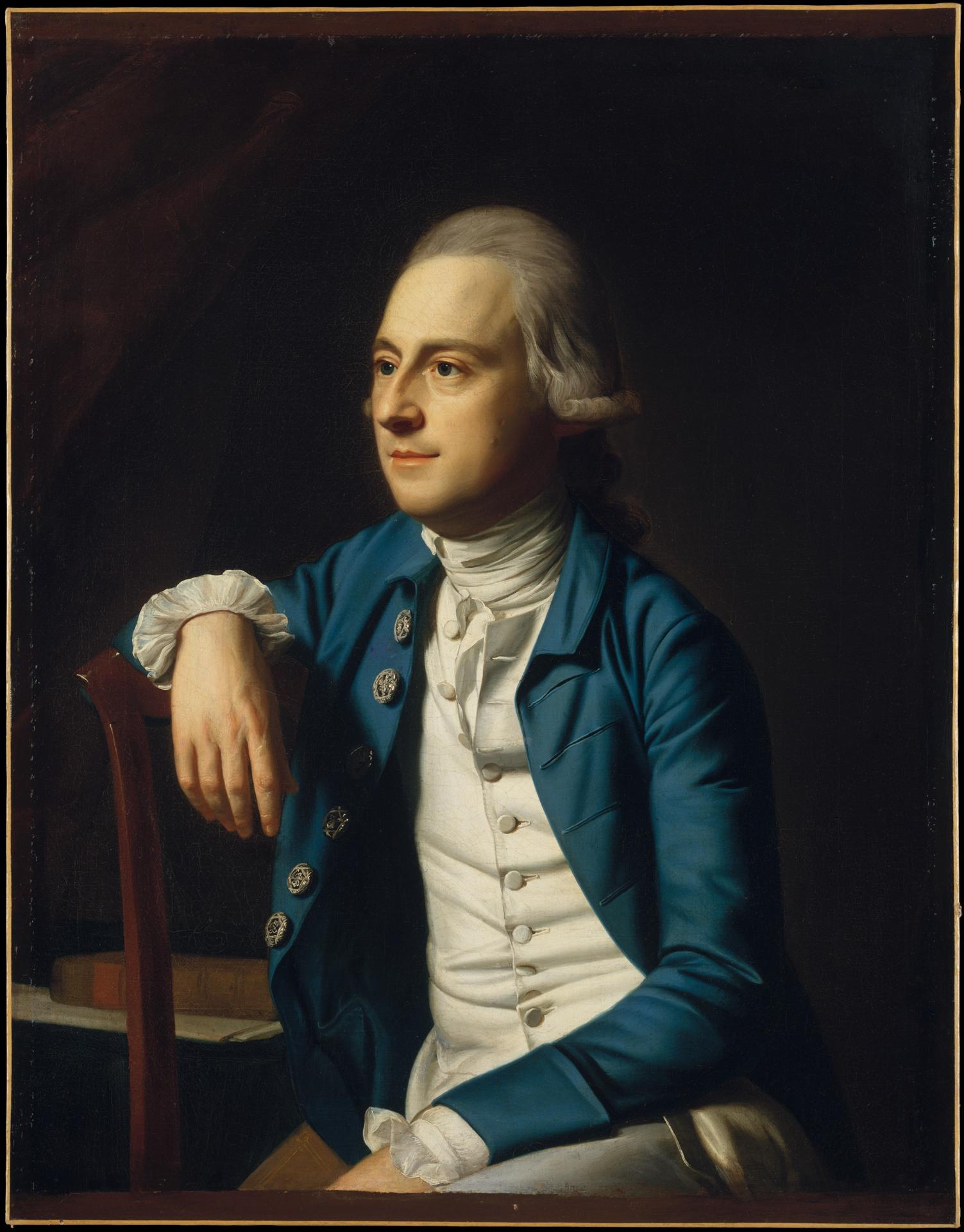
In 1771, John Singleton Copley painted the New York merchant Gulian Verplanck. This oil on canvas shows a seated man in an interior, with books and a window behind him.
Description
A man sits in a room, wearing a blue-green jacket with silver buttons and a white waistcoat. His gray hair is tied in a queue. One arm rests on a wooden table, and he looks to the left. Books stand behind him, and part of a window is visible. Light falls from the upper left, casting soft shadows on the jacket and table. The palette is muted, emphasizing blues and grays.
Context
Copley, then the leading portraitist of the American colonies, created the painting in 1771 in Boston. It was made during the artist's trip to New York, where the prominent merchant Verplanck lived. Portraits of this kind recorded the social rank and wealth of the sitters. Books and an elegant interior point to Verplanck's education and refinement.
Impact
From the first glance, the sitter's calm, dignified posture holds the viewer's attention. The subdued colors contribute to an atmosphere of thoughtfulness and civic elegance. Soft light and a symmetrical arrangement guide the eye to the face and its expression, making the portrait intimate yet formal.
Technique
Oil paint on canvas, as was usual for 18th-century portraits, forms the basis. Fine brushwork is evident in the precise rendering of fabrics and buttons. Glazing techniques create the soft transitions between light and shadow.
AI-generated description text
Source: Metropolitan Museum of Art · Public Domain (CC0 1.0)